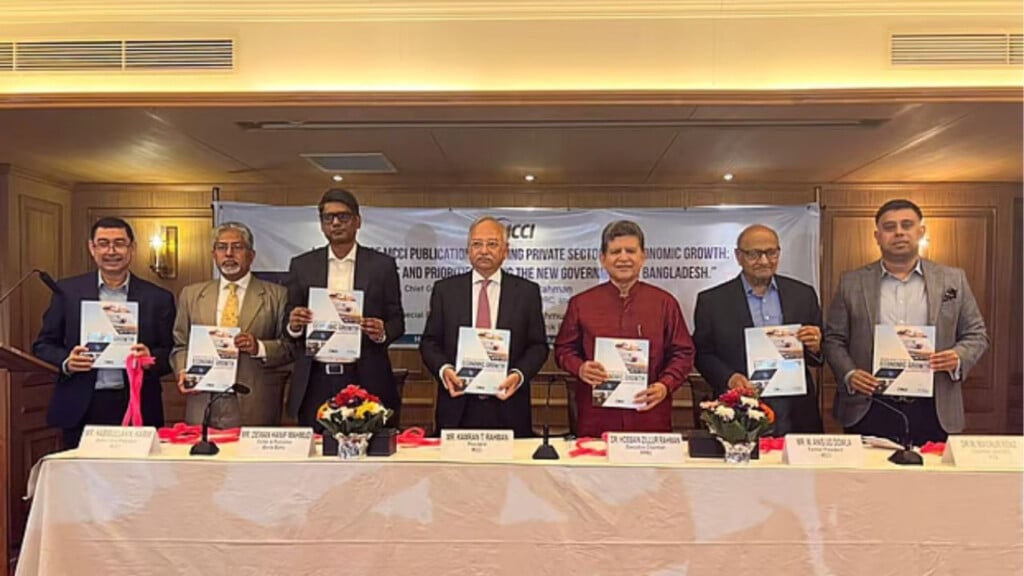
The nascent government is confronting a formidable economic landscape defined by seven systemic hurdles that threaten to derail national stability. This stark warning was issued on Monday during the unveiling of a joint report titled “Reviving Private Sector-Led Economic Growth: Key Challenges and Priorities for the New Government,” published by the Metropolitan Chamber of Commerce and Industry (MCCI) and the research firm Policy Exchange Bangladesh.
The report identifies a multifaceted crisis ranging from persistent double-digit inflation to deep-rooted governance deficits in the banking sector. Experts argue that the administration’s first 100 days will be the litmus test for restoring investor confidence and initiating the structural reforms necessary to transition from “short-termism” to sustainable growth.
The Seven Pillars of Economic Distress
The joint report categorises the primary obstacles into the following critical areas:
| Challenge | Primary Impact | Root Cause |
|---|---|---|
| Macroeconomic Pressure | Record-high inflation | Currency volatility & global price hikes |
| Fiscal & Debt Management | Shrinking revenue streams | Inefficient tax collection & rising external debt |
| Financial Sector Risks | Surging Non-Performing Loans (NPLs) | Poor governance in the banking sector |
| Export Vulnerability | Over-reliance on Ready-Made Garments (RMG) | Lack of sectoral diversification |
| Investment Stagnation | Low private sector participation | Bureaucratic “harassment” & policy inconsistency |
| Energy Insecurity | Production halts & rising costs | Over-reliance on imports & stagnant domestic gas exploration |
| Human Capital Deficit | Youth unemployment | Misalignment between education and industry needs |
Moving Beyond “Short-Termism”
Dr Hossain Zillur Rahman, Executive Chairman of the Power and Participation Research Centre (PPRC) and former advisor to the caretaker government, delivered a stinging critique of the state’s historical reliance on “band-aid” solutions. “Our institutions have become trapped in a cycle of short-term crisis management,” he remarked. “This mindset actively obstructs the long-term structural changes we desperately need.”
Dr Rahman highlighted the glaring disparity in maritime resource management, noting that while Bangladesh celebrated “sea conquests” in seminars, neighbouring Myanmar moved decisively to explore and extract offshore gas. “Without building our own capacity for exploration, we remain hostage to global market fluctuations,” he added.
The Toxicity of Bureaucratic Delay
In a poignant observation on the business environment, Dr Rahman argued that bureaucratic “harassment”—deliberate delays in issuing permits and licences—is often more damaging than outright corruption. “If a permit that should take twenty-four hours takes a month, the economic friction generated is catastrophic. This has become a structural feature of our state that must be dismantled.”
Dewan Hanif Mahmud, Editor of Bonik Barta, echoed these concerns, calling for an immediate forensic audit of major state-owned enterprises (SOEs) such as BPC and Petrobangla. He noted that the new government must have a transparent understanding of the liabilities held by these entities, which have long remained obscured.
A Call for Unified Reform
The consensus among the Gulshan-based briefing was clear: isolated initiatives will fail. M Masrur Reaz, Chairman of Policy Exchange Bangladesh, emphasised that a “synchronised economic management” strategy is the only path forward. By adopting realistic goals—drawing inspiration from success stories like Rwanda’s Kigali model rather than solely mirroring Western frameworks—Bangladesh may yet find the resilience to pivot towards a stable, private-sector-led future.