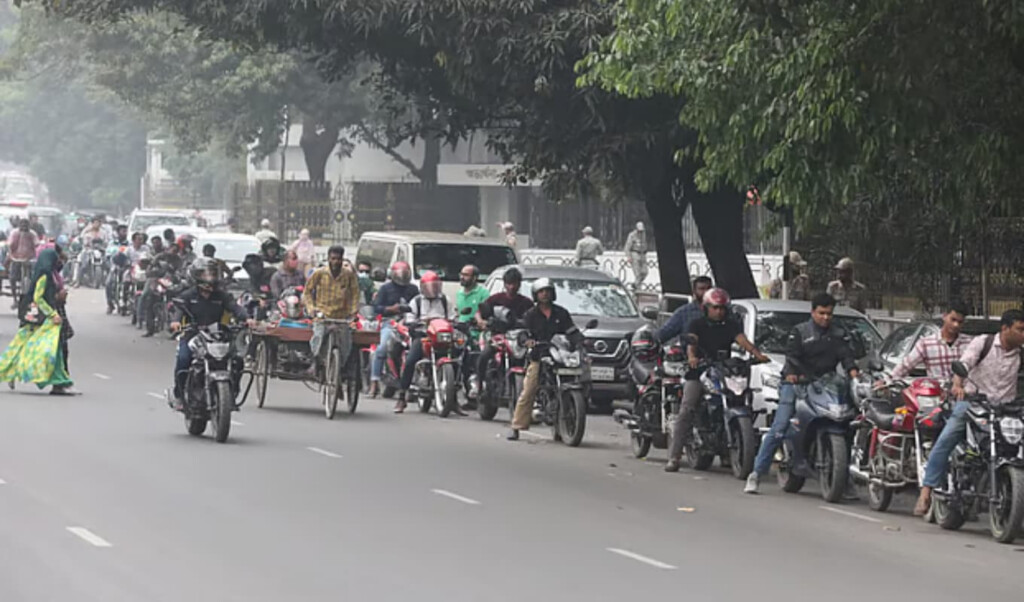
In response to ongoing disruptions in global energy markets, fuel supply across the country has been tightly regulated. To ensure a consistent distribution, the government has imposed daily limits on petrol and octane purchases. While ordinary motorcycle riders are currently allowed to purchase fuel worth 200 taka per day, authorities have increased the limit for ride-sharing motorcycles operating in metropolitan areas to a maximum of five litres per day.
This update was announced on Tuesday in a statement issued by the Bangladesh Petroleum Corporation (BPC). According to the statement, ride-sharing motorcycle operators may now obtain up to five litres of petrol or octane daily.
The BPC emphasised that fuel must be sold at government-regulated prices, and any attempt to raise prices under the pretext of supply shortages is considered a legal offence. The government has not authorised any price increase.
The directive further stipulates that ride-sharing drivers must collect a receipt for each fuel purchase, specifying the type and quantity of fuel. Previous receipts must be presented with every new purchase, and the supply must be reconciled with the driver’s registration number and the ride-sharing application records.
Last Friday, BPC had issued a separate instruction limiting individual motorcycles to two litres per day.
Fuel Allocation by Vehicle Type
The BPC also clarified fuel quotas for other vehicle categories to manage nationwide distribution efficiently:
| Vehicle Type | Daily Fuel Allowance |
|---|---|
| Private Car | 10 litres |
| SUV / Jeep | 20–25 litres |
| Microbus | 20–25 litres |
| Pickup / Local Bus | 70–80 litres |
| Long-Distance Bus / Truck / Covered Van / Container Truck | 200–220 litres |
To maintain steady fuel supply across the country, imports from abroad continue as scheduled, according to the BPC. Shipments are being regularly brought into the country, and fuel is being distributed nationwide from main depots via rail wagons and tankers.
BPC reaffirmed that these measures are aimed at ensuring uninterrupted fuel availability and fair distribution during a period of global uncertainty. Ride-sharing operators and other vehicle owners are urged to comply with the directives strictly to avoid legal consequences.