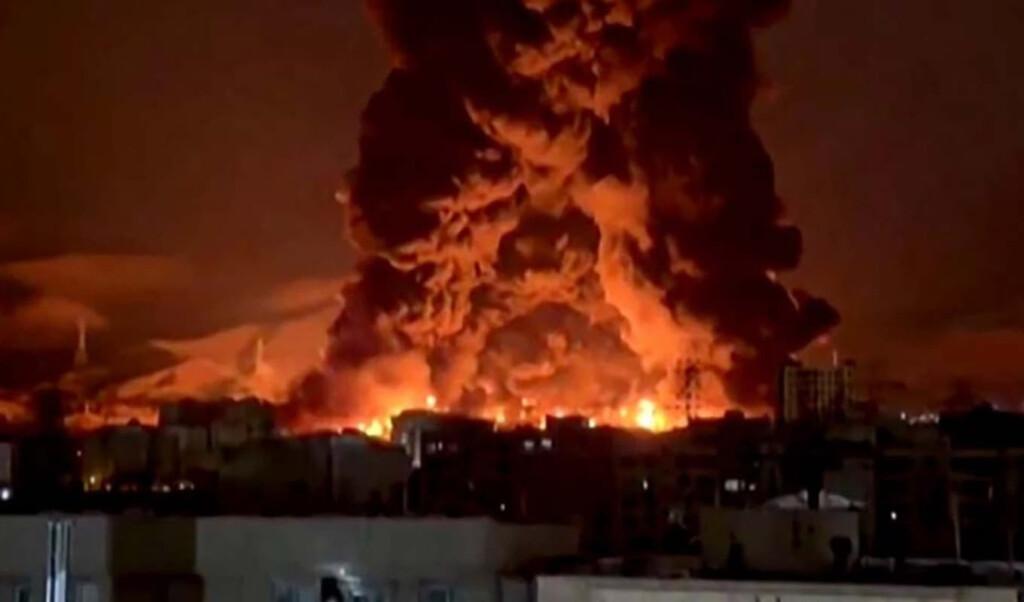
Tehran’s skyline was shrouded in black smoke last weekend as Israeli airstrikes targeted Iranian oil storage facilities, setting streets ablaze and filling the air with toxic fumes. Millions of residents are now at risk of long-term health consequences, including respiratory illnesses, cancer, and premature death—paralleling the delayed fatalities caused by dust exposure following the September 11 attacks in the United States.
The devastation evoked memories of the first Gulf War thirty-five years ago, when retreating Iraqi forces under Saddam Hussein set Kuwaiti oil wells on fire, darkening the skies. However, unlike then, the destruction now directly impacts a densely populated city at the heart of Iran.
The current escalation, dubbed “Operation Epic Fury” by the United States, began with targeted strikes intended to eliminate Iran’s Supreme Leader, Ayatollah Ali Khamenei, along with several senior officials, and included assaults on a girls’ school that killed 165 students. For the U.S., such acts are not unprecedented: in 1991, it bombed a shelter in the Gulf War, killing 400 children and their families.
The conflict has extended to Israel’s operations in southern Lebanon and Beirut, forcing approximately 700,000 civilians to flee their homes. In just one week, around 600 people, including 86 children, have been killed.
| Location | Civilian Casualties | Children Affected | Displaced Persons |
|---|---|---|---|
| Tehran, Iran | Thousands exposed to toxic smoke | Long-term health risks | — |
| Southern Lebanon | 600 | 86 | 700,000 |
| Gaza Strip | Ongoing | Ongoing | Ongoing |
U.S. Defence Secretary Pete Hegseth has openly described the campaign as disregarding traditional rules of warfare, detailing how Iranian leaders “see nothing but U.S. and Israeli aerial power” from above. Meanwhile, Israeli Prime Minister Benjamin Netanyahu has pursued the conflict for decades, now with the backing of a U.S. administration willing to fulfil his military ambitions.
Republican Senator Lindsey Graham has openly linked the conflict to global energy strategy, noting that Venezuela and Iran collectively hold 31% of the world’s known oil reserves. “We are partnering to secure that share,” he stated, framing the campaign as both a strategic and economic endeavour.
Observers, including Columbia University economist Jeffrey Sachs, warn that the escalation in the Gulf region may represent the early stages of a broader global conflict. While Tehran asserts it is prepared for a prolonged war, historical precedent suggests that regime change operations—such as in Iraq in 2003 or Libya in 2011—often result in extended instability and widespread human cost.
The question now facing the international community is how far these military and political ambitions will extend, and at what price to global stability and civilian life.