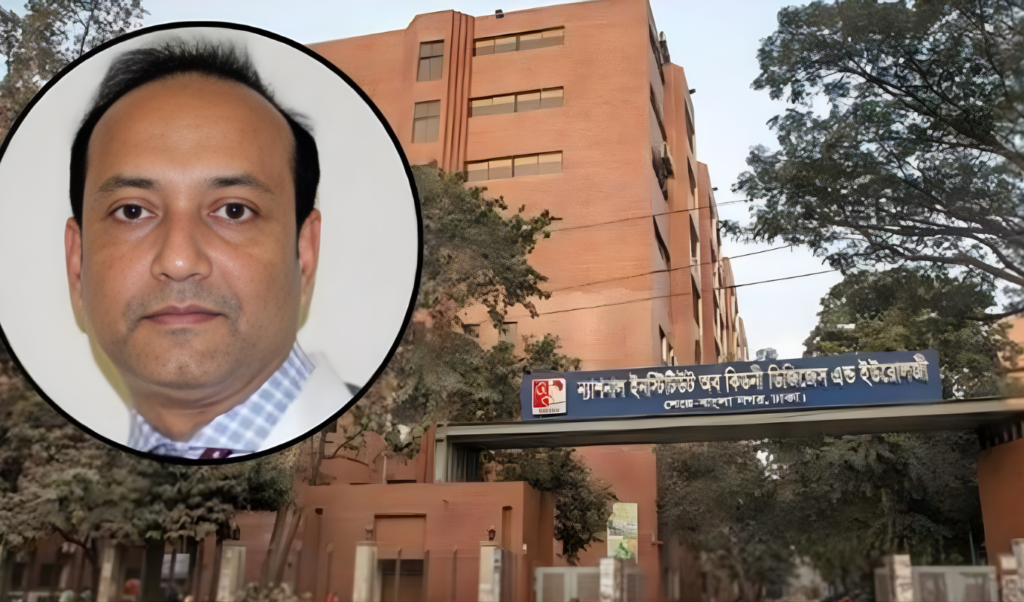
Distinguished nephrologist Dr Mohammad Rashed Anwar has been appointed as the new Director of the National Institute of Kidney Diseases and Urology (NIKDU), marking a significant leadership transition at one of Bangladesh’s premier specialised healthcare institutions.
The appointment was confirmed through an official notification issued by the Ministry of Health and Family Welfare. According to the order released by the Health Services Division, Dr Anwar has been simultaneously designated as Director and Professor of Nephrology, reflecting both administrative responsibility and academic distinction.
Career progression and professional recognition
Prior to his new role, Dr Anwar served as an Associate Professor of Nephrology at the same institute, where he built a strong reputation for clinical excellence and academic commitment. He was later promoted to the rank of Professor on an in-situ basis—a recognition widely regarded as a testament to his professional competence, dedication, and long-standing service in the field of kidney care.
His elevation to Director is expected to further strengthen institutional leadership at NIKDU, particularly at a time when the burden of kidney-related diseases is steadily increasing across the country.
Educational background and training
Born on 1 January 1968, Dr Anwar completed his Bachelor of Medicine and Bachelor of Surgery (MBBS) degree from Chittagong Medical College, one of the country’s leading medical institutions. He later pursued advanced specialisation in nephrology, earning his Doctor of Medicine (MD) degree from Bangabandhu Sheikh Mujib Medical University, the nation’s premier postgraduate medical university.
His academic training laid the foundation for a career that blends clinical practice, research, and teaching—three pillars that have defined his contributions to Bangladesh’s healthcare system.
Contributions to kidney care and research
Since joining government health services in 2001, Dr Anwar has held a range of important positions, contributing significantly to the advancement of nephrology in Bangladesh. His work spans multiple critical areas, including:
- Management of chronic kidney disease (CKD)
- Expansion of dialysis services
- Development of kidney transplantation programmes
- Clinical training and mentoring of medical students and junior doctors
He is also actively engaged in medical research and has co-authored numerous scientific papers focusing on kidney diseases, dialysis methodologies, and transplant outcomes. His research contributions have helped inform clinical practices and improve patient care standards.
Colleagues describe him as a dedicated educator who has played a vital role in shaping the next generation of nephrologists in the country.
Institutional expectations and future outlook
Healthcare professionals and administrators have expressed optimism regarding Dr Anwar’s appointment, noting that his leadership is likely to bring renewed dynamism to NIKDU’s clinical and academic activities.
Appointment overview
| Category | Details |
|---|---|
| Name | Dr Mohammad Rashed Anwar |
| New position | Director & Professor (Nephrology) |
| Institution | National Institute of Kidney Diseases and Urology (NIKDU) |
| Previous role | Associate Professor (Nephrology) |
| Government service entry | 2001 |
| Education (MBBS) | Chittagong Medical College |
| Education (MD) | Bangabandhu Sheikh Mujib Medical University |
| Key expertise | Kidney disease, dialysis, transplantation |
| Research involvement | Co-author of multiple scientific publications |
Strategic priorities under new leadership
With rising incidences of kidney-related illnesses in Bangladesh—often linked to diabetes, hypertension, and lifestyle factors—institutions such as NIKDU play a critical role in providing specialised care. Experts believe that under Dr Anwar’s stewardship, the institute may see:
- Enhanced access to advanced dialysis services
- Strengthened kidney transplant programmes
- Increased emphasis on research and innovation
- Greater integration of modern medical technologies
There is also an expectation that he will focus on improving patient management systems and expanding training opportunities for healthcare professionals.
Strengthening specialised healthcare in Bangladesh
The appointment comes at a time when Bangladesh’s healthcare sector is undergoing gradual modernisation, with increasing emphasis on specialised treatment facilities and evidence-based medical practice. As a leading public institution dedicated to nephrology and urology, NIKDU is central to these efforts.
Dr Anwar’s blend of clinical expertise, academic leadership, and administrative experience positions him well to guide the institute through its next phase of development. His tenure is expected to contribute not only to improved patient outcomes but also to the broader advancement of kidney care services nationwide.
As he assumes office, stakeholders across the medical community will be closely watching how his leadership shapes the future direction of one of Bangladesh’s most vital specialised healthcare institutions.