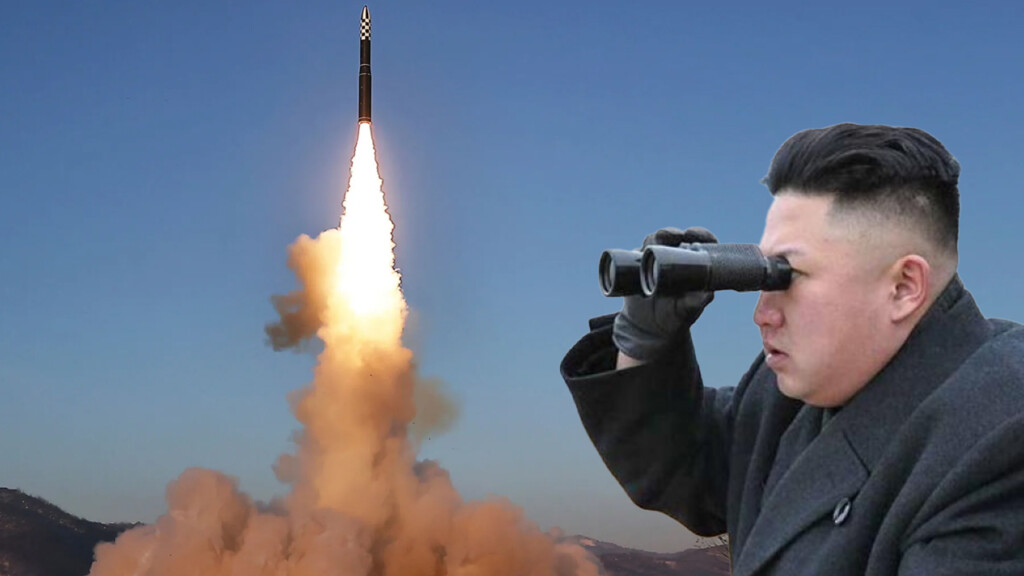
North Korea has conducted a new series of ballistic missile launches, further escalating regional security concerns in East Asia. According to official reports from the Japanese government and confirmed by international news agencies, the Democratic People’s Republic of Korea (DPRK) fired multiple projectiles toward the Sea of Japan on the morning of Sunday, 19 April 2026.
Details of the Launch
Japanese Defence Minister Shinjiro Koizumi confirmed the activity during a press briefing, stating that the missiles were detected at approximately 06:00 local time (21:00 GMT on Saturday). The projectiles travelled through the airspace over the waters between the Korean Peninsula and Japan before splashing down.
The Japanese Ministry of Defence clarified that the missiles fell outside of Japan’s Exclusive Economic Zone (EEZ). Initial telemetry and flight path data suggest these were short-range ballistic missiles, although technical analysis remains ongoing to determine the exact model and flight distance.
Casualties and Impact
As of the latest reports, there have been no confirmed casualties or damage to maritime vessels or aircraft. Japan’s Coast Guard issued immediate navigation warnings to vessels in the area, advising them to monitor for falling debris. The Russian news agency, TASS, corroborated these reports, citing regional monitoring sources.
Technical and Regional Context
The following table provides a summary of the technical data and situational facts regarding the 19 April launch:
| Category | Details |
| Date of Launch | 19 April 2026 |
| Launch Time | Approximately 06:00 JST |
| Weapon Type | Multiple suspected ballistic missiles |
| Landing Zone | Outside Japan’s EEZ (Sea of Japan) |
| Confirmed By | Japanese Ministry of Defence; TASS |
| Damage Reported | None recorded to date |
Strategic Implications
This latest military action follows a pattern of heightened testing by Pyongyang. Under current international law, specifically United Nations Security Council (UNSC) resolutions, North Korea is prohibited from conducting any launches using ballistic missile technology. Despite these sanctions, the DPRK has continued to refine its arsenal, citing the need for “self-defence” against joint military exercises conducted by the United States, South Korea, and Japan.
Military analysts observe that the frequency of these tests has increased significantly in recent years. These manoeuvres serve a dual purpose: verifying technical advancements in solid-fuel engines and mobile launch platforms, while simultaneously exerting diplomatic pressure on regional adversaries.
International Response
In response to the 19 April event, the Japanese government lodged a formal protest via its embassy in Beijing, condemning the launch as a threat to peace and stability. South Korea’s Joint Chiefs of Staff (JCS) also monitored the event, stating that they are maintaining a high state of readiness in cooperation with U.S. forces.
The international community remains focused on the potential for these tests to evolve into more provocative actions, such as long-range ICBM tests or a seventh nuclear test. For now, the focus remains on gathering debris data and monitoring the Korean Peninsula for further signs of military escalation.