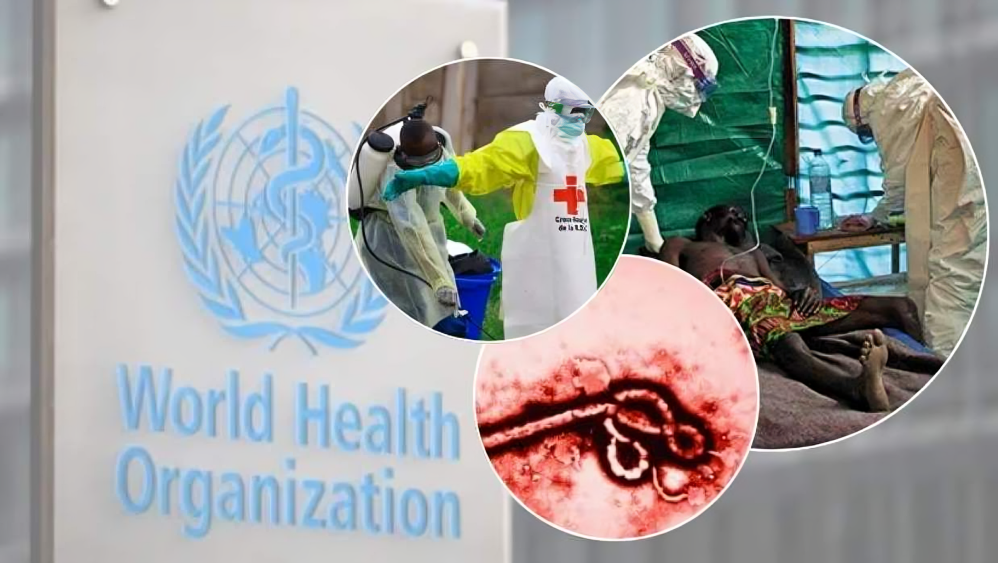
The World Health Organisation (WHO) has formally declared the resurgence of the Ebola virus in the Democratic Republic of Congo (DRC) and neighbouring Uganda as a “Public Health Emergency of International Concern”. The declaration follows a rapid escalation in infections across the region, with the international news agency Al Jazeera reporting that the current outbreak has already resulted in the deaths of approximately 90 people. The designation reflects the acute cross-border threat posed by the disease, prompting international health authorities to rapidly mobilise resources to contain further transmission.
According to technical documentation released by the United Nations health agency, the viral outbreak originated in the Ituri province located in the eastern region of the Democratic Republic of Congo. Laboratory analyses have confirmed that the current infections are caused by the rare ‘Bundibugyo’ strain of the Ebola virus. This specific genetic variant presents a profound challenge to international medical teams, as there is currently no approved vaccine or definitive therapeutic treatment available to counteract the Bundibugyo strain, unlike the more common Zaire strain of the virus.
Regional Dissemination and Geographic Risk Analysis
Public health officials have issued urgent warnings regarding the geographical expansion of the disease. Epidemiological tracking confirms that the virus has successfully crossed international boundaries into neighbouring Uganda. Furthermore, the regional risk profile has escalated significantly following the verification of a linked Ebola case within the DRC capital city of Kinshasa. The introduction of the pathogen into a major metropolitan hub raises the probability of urban transmission dynamics, which could drastically complicate containment protocols.
Despite the critical nature of the current transmission vectors, the World Health Organisation has explicitly desisted from classifying the situation as a full-scale global pandemic. The agency clarified that the statistical and epidemiological criteria required to transition the status of an outbreak into a formal pandemic have not yet been satisfied.
Surveillance Data and Regional Indicators
The table below outlines the core parameters of the ongoing outbreak and the current geographic distribution of identified risks:
| Monitoring Metric | Outbreak Status and Operational Details |
| Total Recorded Fatalities | Approximately 90 deaths |
| Identified Viral Strain | Bundibugyo strain (rare variant) |
| Index Region | Ituri Province, Eastern Democratic Republic of Congo |
| Cross-Border Vectors | Confirmed transmission into Uganda |
| Metropolitan Exposure | Confirmed case detected in Kinshasa (DRC Capital) |
| WHO Official Status | Public Health Emergency of International Concern |
Travel Recommendations and International Trade Protocols
In conjunction with the emergency declaration, the United Nations health agency has issued clear guidance to the international community regarding border management and global commerce. The World Health Organisation has explicitly advised sovereign states against enforcing blanket border closures or implementing arbitrary restrictions on international trade with the affected nations.
Experience from historical outbreaks indicates that shutting down commercial transport links can severely hinder the deployment of essential medical personnel, laboratory equipment, and humanitarian supplies, whilst simultaneously inflicting severe economic harm on the regions working to suppress the virus.
The global health body emphasised that containment strategies must rely strictly on rigorous epidemiological surveillance, contact tracing, isolation protocols at points of entry, and enhanced community engagement. International partners are currently coordinating with the ministries of health in both the DRC and Uganda to establish specialized isolation units, distribute personal protective equipment (PPE) to frontline healthcare workers, and accelerate research into potential therapeutic interventions capable of targeting the Bundibugyo strain.