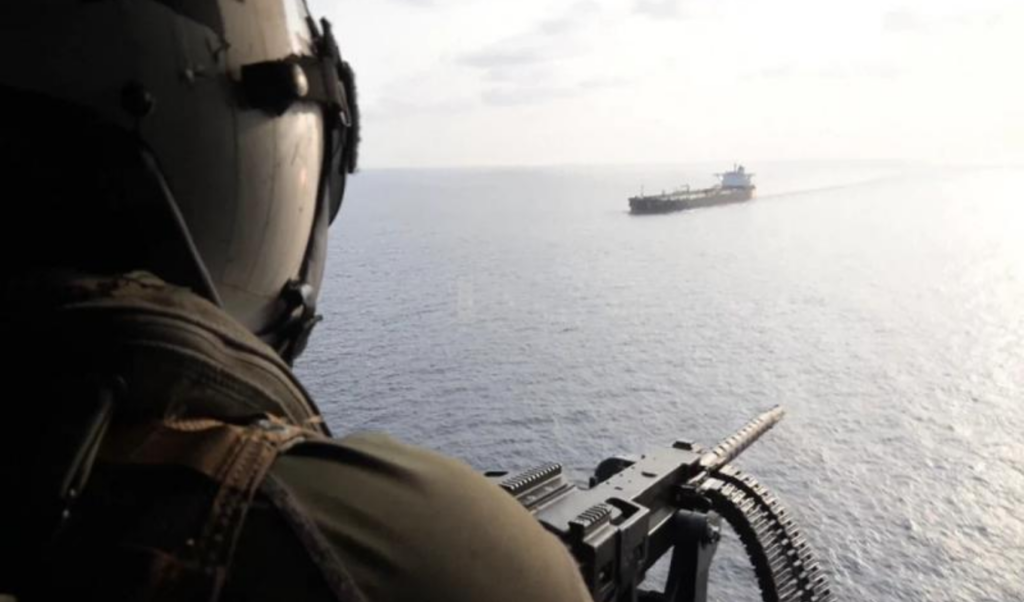
In an aggressive expansion of its maritime strategy, the United States Central Command (CENTCOM) has confirmed that it has successfully intercepted and diverted twenty-seven commercial vessels destined for Iranian waters. This development marks a significant escalation in the enforcement of the naval blockade surrounding the Strait of Hormuz, a move that has effectively strangled the Islamic Republic’s primary maritime trade arteries since its inception in mid-April.
Strict Enforcement of the Hormuz Blockade
According to an official statement released by CENTCOM via its social media channels on Monday evening, 20th April 2026, the blockade has been rigorously maintained without exception for Iranian-bound traffic. Since the enforcement protocol was activated on 13th April, US naval assets have ensured that no vessel intended for an Iranian port has been able to breach the perimeter.
The diverted ships were reportedly given two primary options: a complete course reversal to their original point of origin or redirection to neutral ports outside the restricted zone. This “zero-tolerance” policy follows the directive reported by the Anadolu Agency, which specified that all maritime traffic exiting or entering Iranian ports would be subject to total interdiction.
Strategic Impact: A Strangled Economy
The blockade is designed to exert maximum economic pressure on Tehran by targeting its most vital resource—sea trade. The Strait of Hormuz is the world’s most important oil transit chokepoint, and by specifically targeting Iranian-flagged or Iranian-bound cargo, the US is aiming to decouple the nation from global energy and commodity markets.
| Metric | Current Blockade Statistics (April 2026) |
| Enforcement Start Date | 13th April 2026 |
| Total Vessels Diverted | 27 Commercial Ships |
| Primary Enforcement Agency | US Central Command (CENTCOM) |
| Geographic Focus | Strait of Hormuz & Gulf of Oman |
| Permitted Traffic | Non-Iranian international transit |
| Prohibited Traffic | All vessels entering or exiting Iranian ports |
CENTCOM officials have asserted that the operation is functioning with “surgical precision,” effectively halting the flow of Iranian maritime commerce while theoretically allowing non-Iranian international shipping to traverse the strait. However, despite these claims, regional shipping insurers have noted that the general atmosphere of hostility has led to a 400% increase in maritime insurance premiums for any vessel entering the Persian Gulf.
The Fine Balance of International Transit
Crucially, the United States has clarified that the Strait of Hormuz remains “technically open” for vessels with non-Iranian destinations. This distinction is vital for avoiding a direct violation of the United Nations Convention on the Law of the Sea (UNCLOS), which protects the right of transit passage through international straits.
By allowing oil tankers bound for the United Arab Emirates, Kuwait, or Iraq to pass—while stopping those bound for Bandar Abbas or Bushehr—the US is attempting to paralyse Iran without triggering a global energy crisis. Nevertheless, the presence of the US Fifth Fleet in such close proximity to Iranian territorial waters has created what analysts describe as a “powder keg” scenario.
Regional and Diplomatic Repercussions
The revelation of these twenty-seven diversions comes at a sensitive time, as indirect diplomatic talks in Islamabad remain in a state of suspended animation. Tehran has condemned the blockade as “maritime piracy,” arguing that it violates the fundamental principles of free trade and international sovereignty.
As of Tuesday morning, 21st April, the maritime stand-off shows no signs of abating. With nearly thirty vessels already turned back and US naval patrols intensifying, the pressure on the Iranian government is reaching an unprecedented level. The international community continues to watch the Strait of Hormuz with bated breath, as the effectiveness of this naval squeeze could either force a diplomatic breakthrough or provide the spark for a wider regional conflagration.