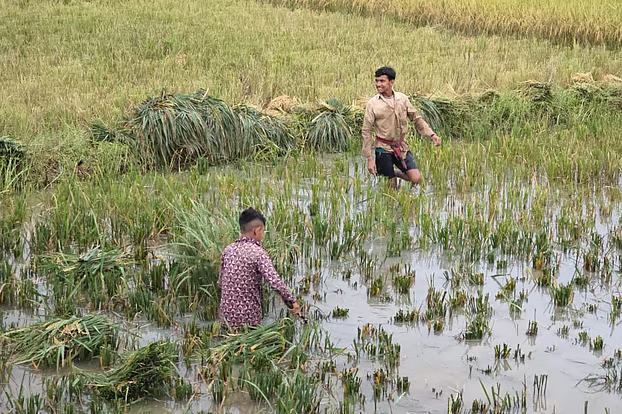
Farmers in the haor basin of Sunamganj are facing significant uncertainty as forecasts indicate the possibility of sudden flooding during the peak boro rice harvesting period. Continuous rainfall, combined with anticipated upstream downpours, has disrupted harvesting, drying, and transportation of paddy, leaving a substantial portion of crops still standing in the fields.
Rafiqul Islam (50), a farmer from Lakshmipur village on the edge of Pagna Haor, described the prevailing situation as precarious. He said that rainfall conditions have made agricultural planning extremely difficult. According to him, only one bigha of his ten bighas of paddy land has been harvested so far, while the remainder is still in the fields. He stated that harvesting machinery cannot operate due to standing water, while labour shortages have further slowed progress. He also noted that drying harvested paddy has become difficult due to lack of sunshine, increasing the risk of post-harvest losses.
Al Amin (31), a farmer from Astama village near Dekar Haor in Sunamganj Sadar, reported that he has harvested all four bighas of paddy early due to flood warnings, including some crops that were not fully ripe. He has not yet completed drying the harvested grain. He explained that early harvesting was necessary due to the risk of inundation, stating that partial loss of quality is preferable to total crop loss.
Intermittent rainfall continued in Sunamganj throughout Sunday, following heavy showers on Saturday night. Meteorological forecasts indicate light to moderate rain on Monday, with heavier rainfall expected from 28 April onwards. Authorities have also reported significant rainfall in upstream Indian hill regions such as Cherrapunji, which typically contributes to downstream water surges and potential flooding in Bangladesh’s haor areas.
The Bangladesh Water Development Board (BWDB) has warned that embankments protecting haor crops may face increased pressure due to saturated soil conditions. The organisation has implemented 710 projects covering approximately 602 kilometres of embankments in Sunamganj, with an estimated budget of 14.5 billion taka for crop protection infrastructure this season.
Agricultural Situation Overview
| Indicator | Figure |
|---|---|
| Total boro cultivated land | 223,511 hectares |
| Harvested area (up to Saturday) | 78,228 hectares |
| Remaining standing crops | 145,282 hectares |
| Damaged due to waterlogging | 5,050 hectares |
| Expected production | 1.4 million metric tonnes |
| Combines harvesters available | 602 units |
According to the Department of Agricultural Extension, more than half of the boro crop remains unharvested, and a significant portion is not yet fully matured. Officials have stated that early-season rainfall delays crop ripening, further complicating harvesting schedules. Limited availability of labour and difficulties in operating combined harvesters in waterlogged fields have also slowed progress.
Sunamganj produces more rice than its local consumption requirement. Annual demand for rice is estimated at around 550,000 metric tonnes, while production is approximately 1.15 million metric tonnes, leaving a surplus of about 600,000 metric tonnes. This surplus contributes significantly to national food supplies. The total value of boro production in the district is estimated at around 50 billion taka.
The region previously experienced severe crop losses in 2017 when flash floods and embankment failures inundated large areas of farmland. That event resulted in widespread food shortages and required government food assistance for approximately two hundred thousand farming households for about a year.
Meteorological agencies have forecast that from 28 April onwards, the north-eastern haor basin may experience heavy to very heavy rainfall, with the possibility of river levels in the Surma, Kushiyara, Dhanu, Baulai and Kangsha systems rising above danger levels. Officials have warned that sudden flooding could cause extensive damage to standing boro crops, particularly in low-lying haor basins where embankments are already under stress.
Agricultural authorities have advised farmers to complete harvesting as quickly as possible, while continuing monitoring of water levels and weather updates.