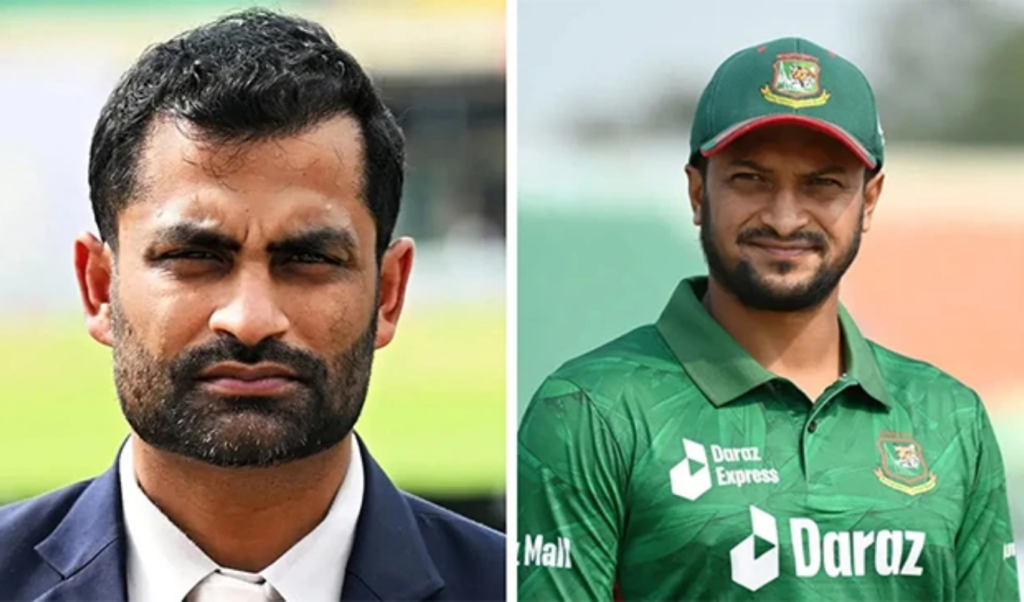
In a notable shift within the administrative landscape of Bangladesh cricket, former national captain Tamim Iqbal has been appointed to lead the newly formed ad-hoc committee of the Bangladesh Cricket Board (BCB). This development has drawn public comment from his long-term contemporary and former captain, Shakib Al Hasan, who addressed both the administrative changes and the current trajectory of the national team’s performance.
The transition follows the formal dissolution of the previous BCB Board of Directors, which had been led by Aminul Islam Bulbul, on 7 April 2026. In the wake of this dissolution, a temporary ad-hoc committee was established to oversee the board’s functions, with Tamim Iqbal designated as its president. The appointment comes at a time when the two iconic cricketers occupy vastly different professional spheres: Tamim is now deeply involved in domestic cricket governance, while Shakib Al Hasan continues his career as a global franchise professional, currently residing abroad due to ongoing legal and political complexities in Bangladesh.
Regulatory Mandate and Election Objectives
The ad-hoc committee headed by Tamim Iqbal has been granted a strictly defined tenure of three months. The primary constitutional objective of this body is to facilitate and organise a formal election to instate a permanent leadership structure for the BCB. While speculation has intensified within cricketing circles that Tamim might resign from his temporary post to contest the presidency in the upcoming elections, such reports remains unconfirmed.
Shakib Al Hasan, providing his perspective on the appointment, was careful to distinguish between the current temporary role and a permanent elected position. He emphasised that Tamim’s present authority is derived from an appointment rather than a democratic mandate.
“I would like to state that he [Tamim Iqbal] was not elected to the position. He has been given the responsibility to organise an election,” Shakib remarked. However, he expressed optimism regarding the prospect of Tamim taking a permanent role in the future, adding, “I believe if he becomes the president, he will have a long-term plan, and certainly, Bangladesh cricket will benefit from him.”
Analysis of National Team Performance
Beyond administrative shifts, Shakib Al Hasan offered an appraisal of the Bangladesh national team’s recent competitive form. He highlighted the team’s successful tour of New Zealand as a primary indicator of growth. Bangladesh recently secured a historic victory over the Black Caps on their home soil and followed it with a win in the opening fixture of the T20 International series.
Shakib noted a fundamental evolution in the team’s operational philosophy, suggesting a transition from an individual-centric model to a collective, squad-based approach.
“The current Bangladesh team is in good stead. Previously, the team relied heavily on individual performances, but now the focus is entirely team-centric. I believe this is the superior way to move forward,” Shakib observed.
Context of the Leadership Transition
The dissolution of the Aminul Islam Bulbul-led board and the subsequent installation of the ad-hoc committee represents a significant juncture for the BCB. The inclusion of a figure with Tamim Iqbal’s experience is viewed by many as a strategic move to ensure stability during the three-month interim period. Tamim’s deep understanding of the domestic structure and player requirements is expected to inform the preparations for the upcoming electoral process.
While the historical personal rapport between Shakib and Tamim has been a subject of significant media scrutiny and public debate due to reported professional distancing in recent years, Shakib’s recent comments suggest a pragmatic recognition of Tamim’s potential contribution to cricket governance. The three-month window established by the ad-hoc committee will be a critical period for Bangladesh cricket, as the board seeks to navigate internal restructuring while the national team continues its international calendar.
The focus now remains on the successful execution of the board elections by July 2026, which will determine the long-term administrative direction of the sport in the country.