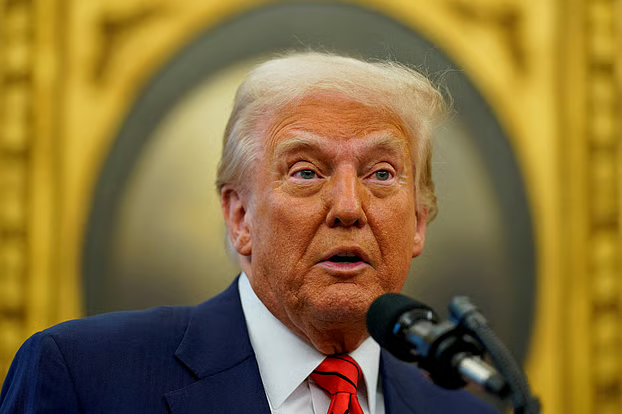
Former United States President Donald Trump has urged Israel and Iran to halt their escalating cycle of retaliatory strikes, calling for an immediate end to hostilities between the two regional adversaries. His appeal was made through a brief statement posted on the social media platform Truth Social, where he has frequently shared political commentary.
In his message, Trump stated that both Israel and Iran must “stop the attacks immediately”, emphasising the urgency of de-escalation amid rising tensions. The post did not provide further policy details or propose a formal diplomatic framework, but it reflected growing international concern over the potential for wider regional instability.
The remarks come against a backdrop of sustained hostilities between the two countries, which have exchanged strikes in recent periods amid broader geopolitical friction in the Middle East. While Trump is no longer in office, his statements continue to draw attention due to his political influence and his previous administration’s involvement in Middle Eastern affairs.
Although no official mediation effort has been announced in connection with his remarks, the appeal aligns with repeated international calls for restraint. Governments and global organisations have consistently warned that continued escalation between Israel and Iran risks drawing in additional actors and further destabilising the region.
Trump’s statement was notably concise and did not assign blame to either side, instead focusing exclusively on the need for an immediate cessation of hostilities. Analysts often interpret such brief interventions as political signals rather than structured diplomatic initiatives, particularly when issued via social media platforms rather than formal statements.
Summary of Key Details
| Category | Details |
|---|---|
| Speaker | Donald Trump |
| Platform | Truth Social |
| Countries involved | Israel, Iran |
| Core message | Immediate halt to mutual attacks |
| Tone | Urgent, brief, non-specific |
| Context | Ongoing regional tensions in the Middle East |
The lack of detailed policy prescriptions in the post leaves open questions about how such a ceasefire might be achieved or enforced. Nonetheless, the message reflects ongoing concern within international political circles about the trajectory of Israel–Iran relations.
Diplomatic observers note that public calls of this nature, even when informal, can contribute to shaping broader discourse around conflict resolution. However, without accompanying state-level negotiations or multilateral engagement, such appeals alone are unlikely to produce immediate operational changes on the ground.
As tensions persist, attention remains focused on whether diplomatic channels—formal or informal—can be mobilised to prevent further escalation between the two long-standing regional rivals.