Bangladesh’s public debt expanded by Tk 5.40 lakh crore in the span of just two years, pushing total government liabilities from Tk 13.44 lakh crore on 30 June 2022 to Tk 18.89 lakh crore by 30 June 2024. Alongside this steep domestic and external accumulation, the country faces mounting foreign debt servicing obligations that are projected to climb steadily over the remainder of the decade.
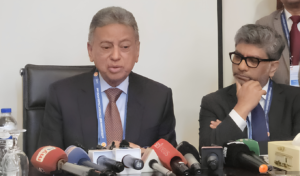
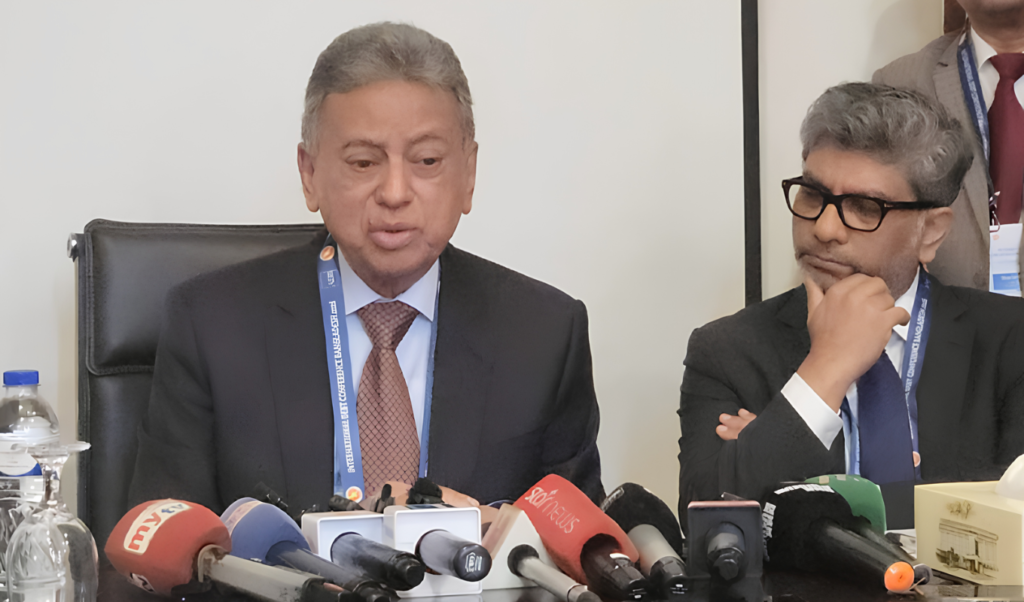
These figures were disclosed in an official press briefing note issued on Sunday, 15 November, on the occasion of the first International Debt Management Conference in Cox’s Bazar. Prepared for the keynote address of Finance and Planning Minister Amir Khasru Mahmud Chowdhury, the document lays out an assessment of the nation’s debt trajectory, the macroeconomic strains inherited in mid-2024, recent stabilisation gains, and an upcoming programme of structural reforms.
According to the briefing note, the Tk 18.89 lakh crore public debt stock recorded at the end of June 2024 accounted for 36 per cent of Bangladesh’s gross domestic product (GDP). Over the same period, combined public and private external debt reached approximately $104 billion, marking a dramatic rise from roughly $23.5 billion in 2009. This rapid build-up has placed heavy pressure on the national exchequer. In the 2023–24 fiscal year alone, total government interest payments surpassed Tk 1 lakh crore. Interest expenditure on foreign loans jumped threefold and a half compared with FY 2021–22, bringing combined external principal and interest repayments to $3.4 billion in FY 2023–24. Debt servicing costs are set to rise further, with annual external repayments estimated at $4.50 billion in FY 2025–26 and projected to reach nearly $5.50 billion by FY 2029–30.
The document also revisited the acute fiscal and monetary pressures prevailing when the current administration assumed office in August 2024. To plug widening budget deficits prior to that transition, government borrowing from Bangladesh Bank had escalated sharply—rising from Tk 730 crore in June 2022 to Tk 56,750 crore in June 2024. During the same window, foreign exchange reserves eroded steadily, slipping to $20.5 billion by the end of July 2024.
Subsequent policy adjustments have helped reverse several of those trends, the briefing note maintained. Government financing from the central bank was pared back from Tk 56,750 crore in June 2024 to Tk 482 crore by June 2026, curbing inflationary money creation. Foreign exchange reserves have rebounded past the $30 billion mark, while domestic borrowing costs have eased. Yields on 91-day Treasury bills, which stood near 12 per cent in June 2025, fell below 10 per cent by June 2026 and currently hover between 8 and 9 per cent.
Key fiscal, debt, and monetary indicators highlighted in the Finance Ministry’s briefing note are detailed below:
| Economic Indicator | Reference Period | Figure / Rate |
| Total public debt stock | 30 June 2022 | Tk 13.44 lakh crore |
| Total public debt stock | 30 June 2024 | Tk 18.89 lakh crore (36% of GDP) |
| Net public debt increase | June 2022 – June 2024 | Tk 5.40 lakh crore |
| Total external debt (public and private) | 2009 | Approx. $23.5 billion |
| Total external debt (public and private) | June 2024 | Approx. $104 billion |
| Total government interest expenditure | FY 2023–24 | Over Tk 1 lakh crore |
| External debt repayment (principal and interest) | FY 2023–24 | $3.4 billion |
| Projected external debt repayment | FY 2025–26 | $4.50 billion |
| Projected external debt repayment | FY 2029–30 | Approx. $5.50 billion |
| Government borrowing from Bangladesh Bank | June 2022 | Tk 730 crore |
| Government borrowing from Bangladesh Bank | June 2024 | Tk 56,750 crore |
| Government borrowing from Bangladesh Bank | June 2026 | Tk 482 crore |
| Foreign exchange reserves | End of July 2024 | $20.5 billion |
| Foreign exchange reserves | Current | Over $30 billion |
| 91-day Treasury bill yield | June 2025 | Approx. 12% |
| 91-day Treasury bill yield | June 2026 | Below 10% |
| 91-day Treasury bill yield | Current | 8% to 9% |
Looking ahead, the government has identified domestic revenue mobilisation as the central pillar of sustainable debt management. Planned measures include widening the tax net, phasing out unjustified tax exemptions, and completing the digitalisation of value-added tax (VAT) and income tax administration. Alongside fiscal reforms, authorities aim to restructure the banking sector, recapitalise state-owned commercial banks, and restore stricter discipline across financial institutions.
Borrowing strategies are also slated for an overhaul. Rather than relying on expensive short-term debt, the government intends to prioritise concessional, low-interest long-term loans and restrict borrowed funds strictly to rigorously vetted projects capable of generating tangible economic growth. To diversify financing sources and draw foreign portfolio investment into the domestic capital market, policymakers also plan to introduce instruments such as Eurobonds, Sukuk, green bonds, and blue bonds, tapping international capital markets when global conditions prove favourable.