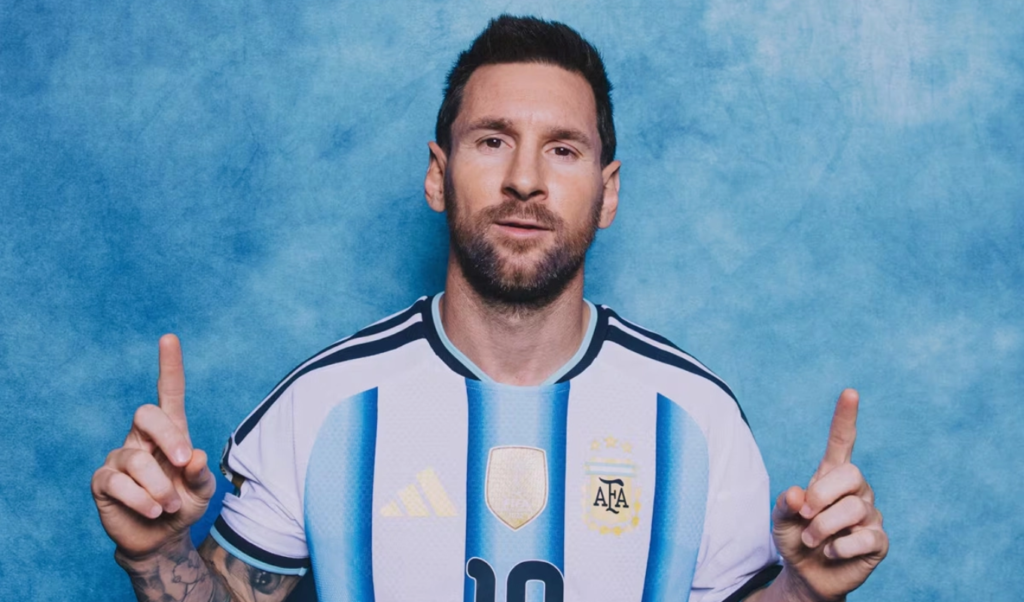
The Federation Internationale de Football Association (FIFA) has officially published its initial power rankings following the completion of the opening round of matches at the FIFA World Cup. Argentina national football team captain, Lionel Messi, has secured the absolute top position in the global player rankings. This official recognition follows a dominant on-field performance by the World Cup-winning forward, who guided Argentina to a definitive 3-0 victory over Algeria in their opening group-stage fixture.
The Analytical Framework of FIFA’s Player Metrics
FIFA utilizes a data-driven performance index to evaluate individual player contributions during the tournament. This sophisticated statistical framework categorizes all on-field actions into three primary operational disciplines to determine an objective final rating:
-
Attacking Efficiency: Measuring direct goal-scoring threats, shots on target, and positional advancements.
-
Creative Playmaking: Evaluating key passes, assist metrics, cross completion, and chance creation.
-
Defensive Contributions: Tracking successful tackles, interceptions, aerial duels, and structural recoveries.
Within this comprehensive performance metric, Messi achieved a tournament-leading statistical rating of 8.13 out of a maximum 10 inside the attacking department. This elite rating firmly established him ahead of all other active participants in the tournament, verifying his continued operational excellence on the international sporting stage.
Global Standings in the Power Rankings Index
The subsequent positions in the official FIFA power rankings feature notable players from emerging and established footballing nations. The top three positions in the global performance tracking index are structured as follows:
| Current Rank | Player Name | National Representation | Attacking Department Rating |
| 1st | Lionel Messi | Argentina | 8.13 |
| 2nd | Elijah Just | New Zealand | 7.74 |
| 3rd | Amad Diallo | Ivory Coast | 7.47 |
New Zealand forward Elijah Just claimed the second position globally after registering a confirmed performance rating of 7.74. He is closely followed by Ivory Coast international Amad Diallo, who occupied the third spot on the international index with a verified statistical score of 7.47.
Record-Breaking International Statistics Against Algeria
Messi’s top ranking was earned primarily due to his clinical finishing during Argentina’s 3-0 group-stage win against Algeria. The captain was solely responsible for every goal scored during the match, finding the back of the net in the 17th, 60th, and 76th minutes of play.
This specific goal-scoring sequence allowed Messi to complete his 11th career international hat-trick for Argentina. Furthermore, this clinical display marks the very first time in his professional career that he has scored a hat-trick within a FIFA World Cup match.
This performance has altered the historical record books of international association football, cementing Messi’s statistical standing alongside the greatest goalscorers in the history of the tournament.
By accumulating three additional goals against the Algerian defense, Messi’s total career goal tally in the FIFA World Cup has risen to exactly 16 goals. This specific statistical milestone has placed him on equal terms with legendary German striker Miroslav Klose. Consequently, Lionel Messi and Miroslav Klose now jointly share the historic record as the highest goalscorers in the entire history of the FIFA World Cup tournament.