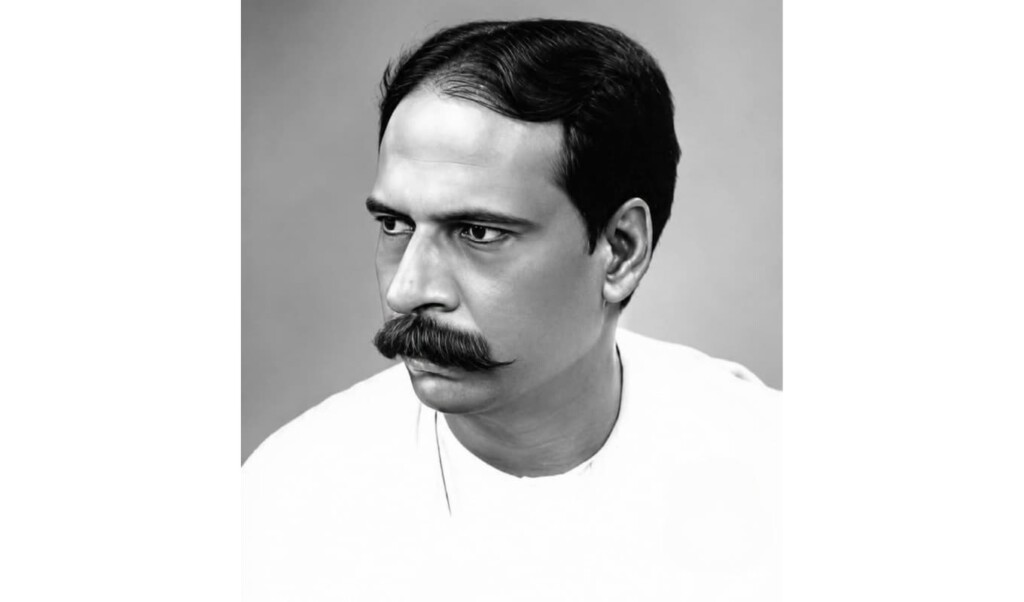
The history of Bengali literature is profoundly shaped by a galaxy of intellectuals who laid the foundation of its modern prose. Amongst these luminaries, Pramatha Chaudhuri stands out as a singular titan. A poet, essayist, short story writer, editor, and academic, Chaudhuri fundamentally transformed the Bengali language by championing the adoption of the colloquial prose style (Chalit Bhasha). Writing under the famous pseudonym ‘Birbal’, he introduced a masterclass of sharp wit, unsentimental analysis, and satire, establishing himself as the pioneer of modern satirical essays in Bengali letters.
Early Life and Academic Excellence
Born on 7 August 1868 in the Jesore district of Bengal, Chaudhuri hailed from an illustrious lineage; his ancestral roots belonged to the Haripur village of Pabna district. His father, Durgadas Chaudhuri, was an enlightened landlord who fostered an environment conducive to intellectual pursuits. From early childhood, Pramatha Chaudhuri demonstrated exceptional academic promise, sophisticated literary taste, and refined intellect.
He completed his early education at the historic Hare School in Calcutta before pursuing higher studies at the prestigious Presidency College and the University of Calcutta. After qualifying in law, he briefly practised as a barrister at the Calcutta High Court. Later, he served as a lecturer at the University Law College in Calcutta and took on managerial responsibilities for the Tagore Estate.
Cultural Ties and the Sabuj Patra Revolution
Chaudhuri’s personal life was intimately intertwined with the renowned Tagore family through his marriage to Indira Devi Chaudhurani, the niece of Rabindranath Tagore. Together, the couple formed an iconic intellectual partnership that actively shaped the literary and cultural discourse of their era.
"Form without matter is a shadow, matter without form is a chaos."
— A reflection of the aesthetic discipline championed by Pramatha Chaudhuri.
In 1914, Chaudhuri launched and edited the landmark literary journal Sabuj Patra (The Green Leaf), a publication that marked a radical turning point in Bengali literature. Through its pages, he spearheaded a literary revolution by advocating for the use of dynamic, everyday spoken language (Chalit Bhasha) in formal writing, challenging the long-established, rigid, and ornate classical style (Sadhu Bhasha). His movement successfully democratised written Bengali, rendering it vibrant, accessible, and expressive. In his later years, he also edited the esteemed publication Visva-Bharati.
Literary Legacy and Major Works
Pramatha Chaudhuri’s writings are celebrated for their seamless blend of rationalism, humanism, subtle humour, and keen social critique. His mastery lay in expressing complex philosophical thoughts through clear, crisp, and elegant language.
His distinguished bibliography spans multiple genres:
-
Essays: Tel-Nun-Lakri, Birbaler Halkhata, Nana Katha, Amader Shiksha, Rayater Katha, and Nana Charcha.
-
Short Fiction: Char-Yari Katha, Ahuti, and Neellohit.
-
Poetry: Sonnet Panchashat and Padacharan.
Pramatha Chaudhuri passed away on 2 December 1946, leaving behind an indelible mark on Bengali culture. Today, on his birth anniversary, the literary world pays profound homage to ‘Birbal’—a visionary whose sharp intellect, unique philosophy, and prose revolution continue to illuminate Bengali literature.