Inspectors from the Directorate of National Consumer Rights Protection (DNCRP) sealed off the pathology department of a diagnostic centre in Sakhipur after discovering fresh fish stored inside a refrigerator reserved strictly for medical test samples.
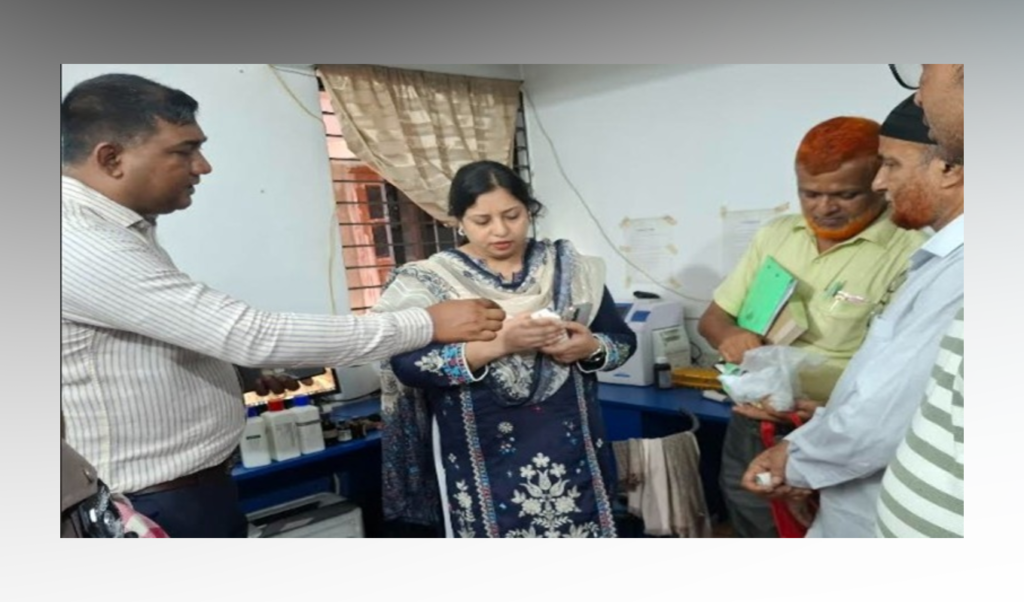
The discovery occurred on Monday morning, 10 August, during a series of routine regulatory drives targeting healthcare establishments in Sakhipur, Tangail. Officials inspecting the Nidhi Diagno Complex opened the facility’s laboratory refrigeration unit—intended solely for preserving biological specimens, reagents, and diagnostic samples—only to find raw fish stored alongside healthcare materials.
Given the severe risk of cross-contamination and the blunt violation of medical hygiene protocols, the drive’s lead officer immediately ordered the pathology division to be sealed indefinitely. The authorities also imposed an administrative fine of 25,000 BDT on the facility.
Broader Drive Reveals Expired Medical Supplies
The enforcement team extended its surprise inspection to neighbouring medical facilities in the vicinity, uncovering further compliance failures.
At the adjacent Green Life Hospital, inspectors discovered several expired intravenous cannulas stored among active medical inventory. Using expired invasive equipment poses grave risks to patient safety, including severe bloodstream infections, tissue irritation, and potential device failure during administration. Consequently, the oversight team penalised Green Life Hospital with a fine of 15,000 BDT for compromising patient care standards.
The mobile court operation collected 40,000 BDT in combined financial penalties from both institutions. Officials also issued formal warnings to several other nearby clinics, laboratories, and pharmacies, urging them to rectify minor irregularities and maintain strict compliance with public health mandates.
Regulatory Oversight and Public Safety Measures
Asaduzzaman Romel, Assistant Director of the Directorate of National Consumer Rights Protection, led the drive and emphasised the necessity of strict vigilance within the private healthcare sector. He reaffirmed that regulatory drives of this nature will continue across the region to safeguard the public interest.
“Public health and consumer rights remain our highest priorities. Healthcare providers are legally and morally bound to uphold rigid hygiene standards and operational integrity. Any facility found engaging in practices that jeopardise patient safety or violate consumer rights will face swift and decisive legal action under existing law.”
— Asaduzzaman Romel, Assistant Director, DNCRP
The improper storage of biological specimens alongside food products represents a major breach of laboratory safety guidelines. Diagnostic refrigerators must maintain precise temperature controls and sterile conditions to ensure the accuracy of pathological tests. Storing perishable food items within such units risks spoiling sensitive testing materials, yielding false laboratory results, and spreading pathogenic bacteria, thereby directly endangering patient outcomes.