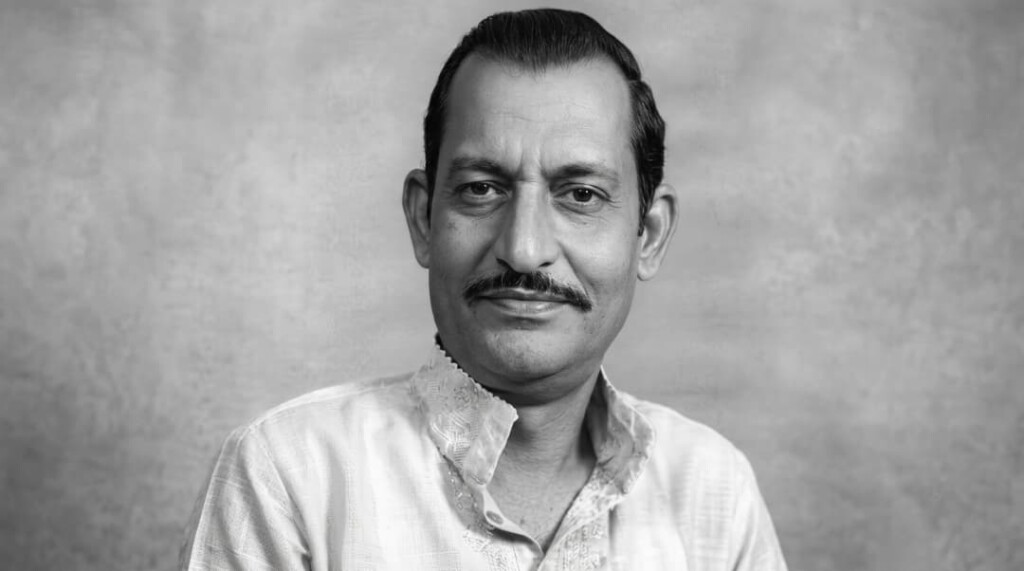
Some songs transcend entertainment and become historical records, carrying the aspirations, struggles and collective memories of an entire generation. Some voices do more than carry a melody; they give expression to a people’s hopes, pain and longing for freedom. For Bangladesh, Anshuman Roy’s rendition of ‘Shono Ekti Mujibor Theke Lokkho Mujiborer Konthoshorer Dhwani-Pratidhwani’ became one such song.
During the turbulent days of 1971, the song resonated with the political and cultural awakening surrounding Bangladesh’s Liberation War. Inspired by the historic 7 March speech of Bangabandhu Sheikh Mujibur Rahman, it helped connect the voice of the Bengali leader with the aspirations of millions seeking an independent homeland. Decades later, the song remains closely associated with the cultural history of Bangladesh’s struggle for independence.
Birth and Musical Journey
Anshuman Roy was born on 19 August 1936 in Bachurdoba, in Jhargram town of West Midnapore district, West Bengal. He developed a deep interest in folk music and, through years of disciplined musical practice, established a distinctive place in Bengali music.
Roy initially worked in government service. His attachment to music, however, eventually led him to leave the security of his job and pursue a career as a full-time musician. From then onwards, music became the central pursuit of his professional and creative life.
Over a career spanning nearly three decades, he performed folk songs, modern Bengali songs and film music. Several of his popular recordings, including ‘Bhadra Ashwin Mase Bhramar Lage Kacha Bashe’ and ‘Dada Paye Pori Re, Mela Theke Bou Ene De’, remained familiar to listeners on both sides of the Bengal border.
Yet it was one particular song that would define Roy’s enduring connection with Bangladesh.
The Song That Became History
The lyrics of ‘Shono Ekti Mujibor Theke Lokkho Mujiborer Konthoshorer Dhwani-Pratidhwani’ were written by celebrated lyricist Gauriprasanna Majumdar, while Anshuman Roy composed the music and provided the vocals.
The song was created in Kolkata in April 1971, against the backdrop of Bangabandhu Sheikh Mujibur Rahman’s historic 7 March address. At the time, plans were being made to broadcast the speech, and the idea emerged of accompanying it with a song.
Majumdar wrote the lyrics, while Roy composed the tune and recorded the song. It was subsequently broadcast alongside Bangabandhu’s speech on All India Radio Kolkata’s ‘Sangbad-Bichitra’ programme. The combination proved powerful, and the song quickly spread among Bengali-speaking audiences.
Its central message captured the transformation of one leader’s voice into the collective voice of a nation. The words presented Bangabandhu’s call for freedom not simply as the declaration of an individual leader, but as an expression of the aspirations of countless Bengalis.
The song soon moved beyond the realm of ordinary popular music. In the context of the Liberation War, it became part of the cultural resistance surrounding the struggle for an independent Bangladesh.
A Song of Inspiration During the Liberation War
As the war unfolded in 1971, the song travelled across the Bengal border and reached audiences in both West Bengal and Bangladesh. Its association with Bangabandhu’s 7 March speech gave it particular resonance during a period when music, radio and poetry played an important role in sustaining morale and spreading messages of solidarity.
The song was also performed through the Swadhin Bangla Betar Kendra, the radio station that became an important cultural and communication platform during the Liberation War. Noted singer Mohammad Abdul Jabbar also recorded the song, helping it gain an even stronger place in the musical memory of the independence struggle.
For listeners at the time, its significance went beyond its melody. The song reflected the desire for freedom, the hope of returning to a liberated homeland and the determination associated with the struggle for an independent Bangladesh.
In this sense, Roy’s performance became part of a wider cultural movement in which artists used music to articulate the political aspirations and emotional realities of the Liberation War.
A Deep Affinity With Bangladesh
Roy’s relationship with Bangladesh was also rooted in a personal and cultural connection. His ancestors had roots in Rajshahi, according to recollections about the artist, giving his attachment to the land an additional familial dimension.
His contribution to the Liberation War was recognised at the highest level in Bangladesh. In 1975, Bangabandhu Sheikh Mujibur Rahman decided to honour Anshuman Roy and Gauriprasanna Majumdar with the Bangabandhu Gold Medal for the song. The planned recognition, however, could not be presented because of the political upheaval following the assassination of Bangabandhu on 15 August that year.
Decades later, the Bangladesh Government formally recognised Roy’s contribution to the Liberation War. On 27 March 2012, he was awarded the Muktijuddho Maitri Sammanona posthumously for his outstanding contribution during the Liberation War.
At a ceremony in Dhaka, the honour was received on his behalf by his son, noted musician Bhaskar Roy.
A Cultural Bridge Between Two Bengals
Anshuman Roy’s legacy extends beyond a single recording. His career reflected the close cultural relationship between the two Bengals, where music and literature have often crossed political and geographical boundaries.
Although Roy was an Indian artist, his voice became closely associated with the struggle that gave birth to Bangladesh. His performance of the song demonstrated how music could transcend borders and become a vehicle for solidarity at a decisive moment in history.
He died on 22 April 1990, bringing an end to a musical career that had spanned several decades. His voice, however, continued to live through recordings and through the historical significance attached to the songs he performed.
Among them, ‘Shono Ekti Mujibor Theke Lokkho Mujiborer Konthoshorer Dhwani-Pratidhwani’ occupies a special place. Its connection with Bangabandhu’s historic speech, its circulation during the Liberation War and the recognition later accorded to Roy have made it an enduring part of Bangladesh’s cultural memory.
Remembering Anshuman Roy
On 19 August, the anniversary of his birth, Anshuman Roy is remembered not only as a distinguished folk singer but also as an artist whose voice became intertwined with one of the defining chapters of Bangladesh’s history.
His story demonstrates the lasting power of music during periods of political upheaval. A song created in Kolkata in the early months of the Liberation War travelled across borders and generations, carrying with it the language of freedom and the memory of a nation’s struggle.
Anshuman Roy may have passed away more than three decades ago, but the historical echo of his voice has not disappeared. His rendition remains a reminder of the period when music became an instrument of solidarity and when the voice of one leader was portrayed as the voice of millions.
For Bangladesh, Anshuman Roy remains a cherished friend of its Liberation War, a dedicated musician and a significant figure in the cultural history surrounding the country’s independence.
His voice fell silent in 1990. The song did not.
And the echo of those voices — one Mujibur becoming the voice of countless Mujiburs — continues to occupy a distinctive place in the musical memory of Bangladesh.