The seismic shift in modern cricket, driven by the immense financial allure of Twenty20 leagues, continues to cast a long shadow over the future of the red-ball format. For legendary Australian captain Steve Waugh, these economic realities pose an existential threat to traditional five-day cricket.
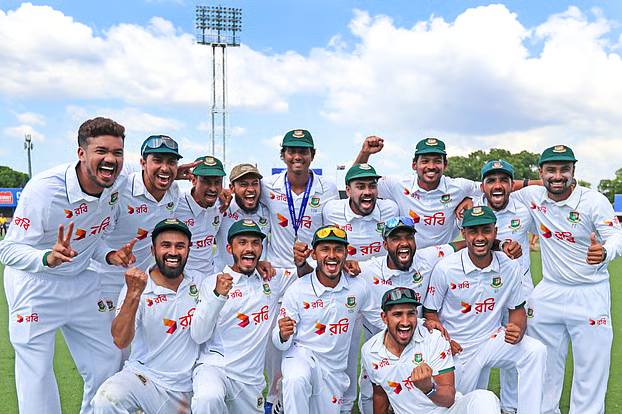
Reflecting on Bangladesh’s historic nine-wicket triumph over Australia in Darwin, Waugh expressed genuine delight at seeing the visiting side dominate across eleven consecutive sessions. He views the result not merely as a shock upset, but as a crucial wake-up call for the global cricketing establishment. Witnessing developing nations excel on foreign soil highlights the expanding competitive landscape, which Waugh believes is vital for keeping the purest form of the game vibrant.
However, beneath his praise lies deep-seated anxiety regarding the long-term survival of Test cricket. Modern players face a difficult economic choice between securing quick financial stability in short-format franchise leagues or enduring the physical and mental rigours of Test cricket for comparatively lesser rewards. Waugh refuses to place blame on the athletes themselves, noting that supporting one’s family takes precedence and that choosing T20 security is entirely understandable.
Instead, Waugh directs his criticism squarely at cricket administrators, whom he accuses of failing to take decisive action. Safeguarding the red-ball format requires carving out dedicated, protected windows in the international calendar, a task he acknowledges is complicated by a crowded global schedule.
Reflecting on his illustrious career—where he captained Australia in 57 Tests with an extraordinary 41 victories—Waugh noted that his concerns are far from new. Nearly three decades ago, long before T20 cricket reshaped the sport, he proposed a universal flat-rate match fee for all Test cricketers. He maintained that a player representing Bangladesh or Sri Lanka should earn remuneration comparable to someone playing for Australia or India, ensuring financial parity encourages athletes to pursue the long format.
Beyond economics, Waugh pointed out the eroding art of Test match batting. The grit required to survive tough conditions, grind out ugly runs, and block out consecutive maiden overs has largely vanished from modern coaching and player mentality. He stressed that rediscovering this resilience and learning how to simply occupy the crease when the situation demands it is essential for the survival of five-day cricket.
What strategic measures do you think international boards should adopt to protect Test match calendars from being completely overshadowed by franchise leagues?