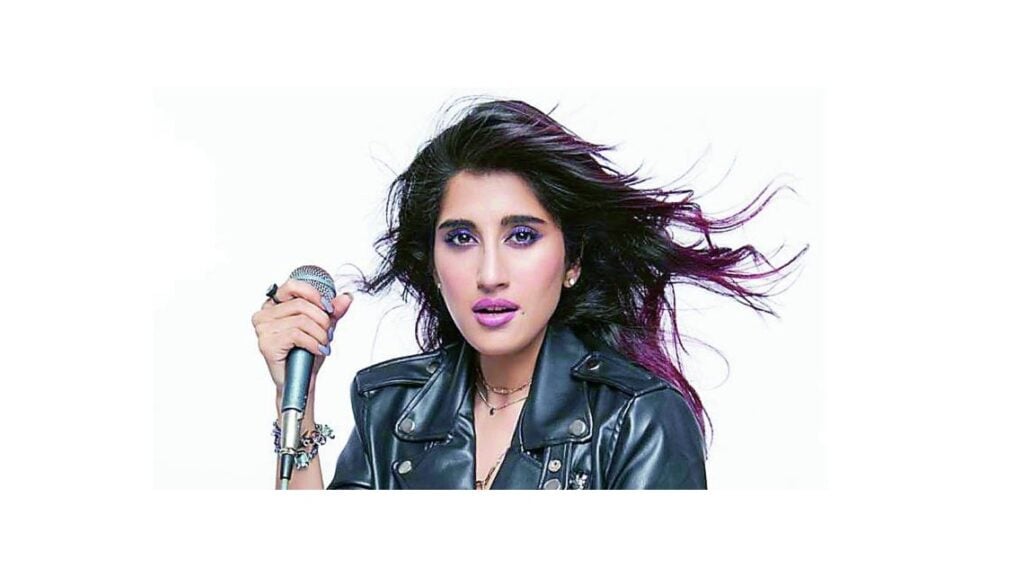
Indian singer Akasa Singh has made it clear that she does not want artificial intelligence to take over the creative side of music. Confident in her own voice and artistic abilities, she believes there is little reason for musicians to hand over their creative work to technology when they can continue to create and perform themselves.
During a recent visit to Bengaluru, Akasa discussed several changes taking place in the music industry, including rising expectations for live performances, the growing pressure of social media and the increasing use of artificial intelligence in music production. She is currently enjoying a positive phase in her career following the success of recent songs such as ‘Jab Tak’ and ‘Pani Wali’.
According to Akasa, being a successful singer today requires more than simply releasing a popular song. Artists are increasingly expected to deliver engaging performances on stage while maintaining an active presence online. Social media has become an important way for musicians to reach listeners, promote their work and build an audience independently.
The singer believes expectations surrounding live performances have changed considerably. Audiences now often look for a more energetic and visually engaging experience rather than simply watching an artist stand on stage and sing. However, Akasa does not believe that every singer needs to dance or adopt the same performance style.
She cited Sunidhi Chauhan as an inspiration when discussing stage presence and pointed to Shreya Ghoshal as an example of an artist who can command a stage through her voice and performance without depending on dance. For Akasa, there are several ways for a singer to establish a distinctive identity in front of an audience.
She also sees the growing quality of live shows as a positive development. In her view, Indian musicians have the ability to deliver performances on an international scale and showcase their music to large audiences. Producing such shows, however, can require considerable financial resources, and artists may sometimes have to invest their own money to achieve the standard they want.
Social media has created both opportunities and difficulties for musicians. Akasa believes artists can now reach listeners directly instead of relying solely on music directors, record labels or reality television programmes. This has made it easier for performers to develop their own audience and maintain a direct connection with fans.
At the same time, she finds it disappointing that an artist’s social media following can sometimes receive as much attention as their musical ability. Singers are increasingly expected to create regular online content, meaning they may have to balance the demands of being a musician with those of a content creator.
Akasa also pointed to changing tastes among younger listeners. Global music is now readily accessible, with genres such as K-pop reaching audiences far beyond their countries of origin. As listeners are exposed to a wider variety of performers, they are also paying greater attention to an artist’s clothing, choreography, stage design and overall presentation.
That has raised the pressure on performers. A singer is no longer judged solely on the quality of their voice or songs; the complete live experience can also shape how audiences perceive them.
Akasa’s strongest reservations, however, concern artificial intelligence. She is worried that excessive use of AI in music could affect not only singers but also instrumentalists, guitarists and other live musicians whose skills contribute to a performance.
Her preference is for human ability and individuality to remain at the centre of music. Akasa has said that she was not particularly comfortable with the widespread use of auto-tune either, which helps explain her cautious attitude towards increasingly advanced forms of technology in music.
She does not argue that technology has no place in the creative industry. Rather, she believes it can be useful for simplifying routine or repetitive tasks without replacing the human creative process. For her, a singer’s voice, interpretation, emotion and individual artistic choices are what give a piece of music its identity.
Akasa also spoke about her long-standing connection with Bengaluru. She has been visiting the city regularly since 2011 and has developed a particular fondness for its weather and food. Although she has complaints about the city’s traffic, she still considers Bengaluru one of her favourite cities.
Her comments come as musicians around the world continue to navigate the growing presence of AI in creative industries. For Akasa, the technology may have a supporting role, but the heart of music should remain with the people who write, perform and bring it to life.