The financial shortfall is equivalent to approximately Tk 1.12 billion in Bangladeshi currency, placing considerable pressure on the federation’s finances. The scale of the losses has also triggered disagreements within the organisation over how the deficit should be covered.
AIFF president Kalyan Chaubey reportedly proposed withdrawing money from the federation’s fixed deposits (FDs) to meet the financial obligations arising from the matches. However, several federation members opposed the proposal, and it failed to secure approval at a Special General Body Meeting (SGBM).
The proposal has raised concerns about the use of the federation’s financial reserves, particularly because fixed deposits are generally maintained to provide financial security and stability. Some members believe that such funds should only be accessed in exceptional circumstances rather than being used to cover losses from sporting events.
A senior official of a state football association, speaking to the Press Trust of India (PTI) on condition of anonymity, confirmed that Chaubey had raised the issue during the meeting.
According to the official, the AIFF president proposed breaking the federation’s fixed deposits to obtain the money required to address the financial deficit. He also reportedly assured members that he would arrange funds from external sources and subsequently return the withdrawn amount to the fixed deposits.
The suggestion, however, did not convince several members, who questioned whether the federation should use its accumulated reserves to deal with the financial consequences of organising international friendlies.
The exact amount of the financial deficit was not disclosed to members attending the meeting. The state association official explained that confidentiality clauses in the agreements governing the financial arrangements for the matches prevented the federation from revealing detailed information about the expenditure and related transactions.
This lack of financial transparency appears to have added to the concerns surrounding the proposed withdrawal. Without access to a detailed breakdown of the costs and revenue generated by the matches, members have been unable to assess the full extent of the financial implications.
AIFF vice-president N.A. Haris also opposed the proposal during the online meeting. He reportedly reminded members that the federation’s executive committee had already decided against breaking the fixed deposits.
His objection highlighted an apparent difference of opinion within the federation over how its financial resources should be managed and whether the president’s latest proposal was consistent with the executive committee’s earlier decision.
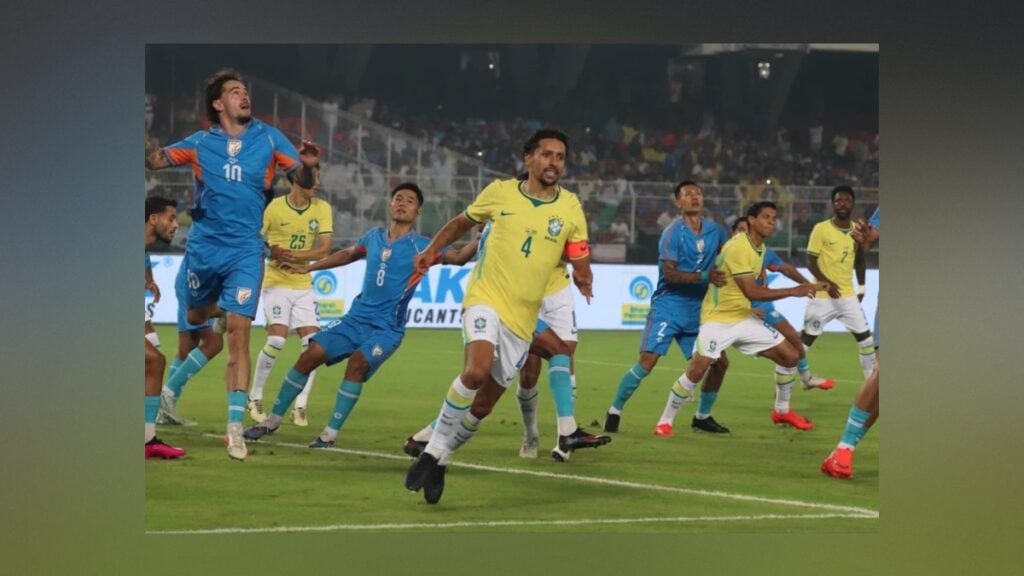
Hosting internationally recognised teams such as Brazil and Uruguay can generate considerable public interest and provide valuable exposure for Indian football. Such fixtures also offer domestic supporters an opportunity to watch some of the world’s most prominent football nations compete on Indian soil.
However, arranging international friendlies involving major national teams can involve substantial logistical and financial commitments. The costs associated with hosting visiting teams, organising matches and meeting contractual obligations can place significant pressure on organisers, particularly when the expected commercial returns do not match the expenditure.
For the AIFF, the immediate challenge is to find a way to address the reported deficit without undermining its existing financial reserves or disregarding decisions previously taken by its executive committee.
With the proposal to withdraw money from fixed deposits facing resistance, the federation may have to explore alternative sources of funding. The controversy has also brought renewed attention to the financial planning and accountability required when organising high-profile international football events.