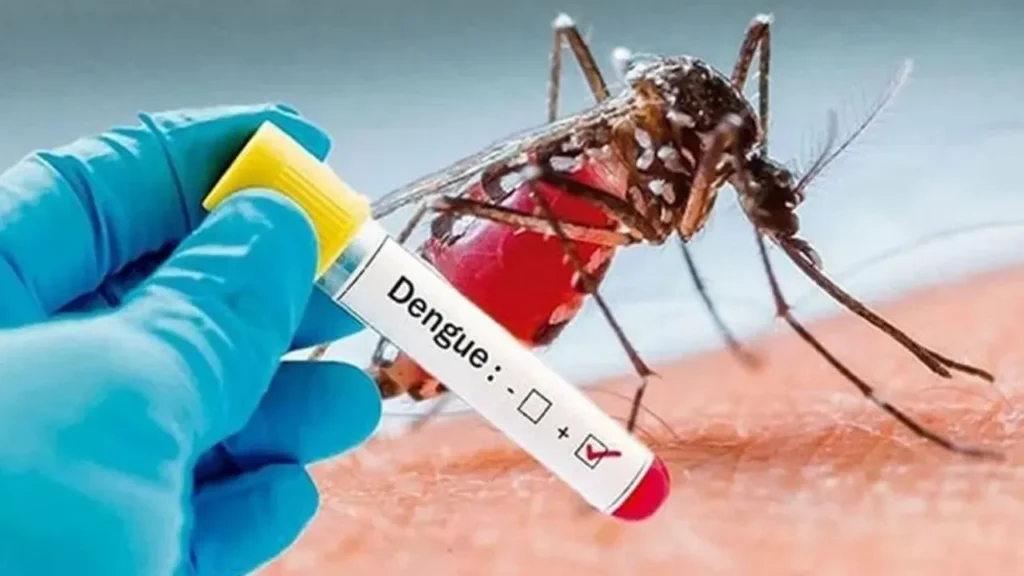
Health authorities in Bangladesh have confirmed six further deaths from dengue fever over the past 24 hours, taking the nation’s total fatality count for the current year to 164. The latest report from the Health Emergency Operation Centre and Control Room under the Directorate General of Health Services (DGHS) highlights a worrying surge in vector-borne infections across multiple administrative divisions.
Alongside the newly reported deaths, 1,593 patients were admitted to various medical institutions nationwide within the same timeframe. Regional breakdown data indicates that the Khulna division recorded the highest number of fatalities, with two deaths registered. One death each was reported across the divisions of Dhaka, Barishal, Mymensingh, Rajshahi, and Rangpur.
Pressure on medical infrastructure continues to escalate as the total number of hospitalised dengue cases across the country reached 55,163. Dhaka Division (excluding the metropolitan city corporations) accounted for the largest share of new admissions, recording 383 cases. Within the capital, Dhaka North City Corporation reported 171 fresh admissions, whilst Dhaka South City Corporation registered 132. Regions outside the capital also witnessed substantial caseloads, with Khulna receiving 290 patients, Chittagong reporting 165, Barishal recording 159, and Rajshahi admitting 137. Elsewhere, Mymensingh, Rangpur, and Sylhet registered 82, 65, and 9 patients respectively.
Dengue fever, an endemic viral disease transmitted principally by Aedes aegypti mosquitoes, exhibits distinct seasonal spikes coinciding with the monsoon and post-monsoon months. Intermittent rainfall, coupled with high humidity, fosters ideal breeding conditions for mosquitoes in stagnant water collected in urban containers, construction sites, and discarded rubbish.
Public health experts emphasise that timely hospital admission, effective vector control programmes, and widespread public awareness are critical to curtailing transmission rates. Municipal authorities face growing calls to intensify larvicidal spraying, clear clogged drainage networks, and launch community-led clean-up drives to eliminate mosquito habitats. Meanwhile, medical personnel remain on high alert to manage severe dengue manifestations, such as plasma leakage, organ dysfunction, and severe bleeding.