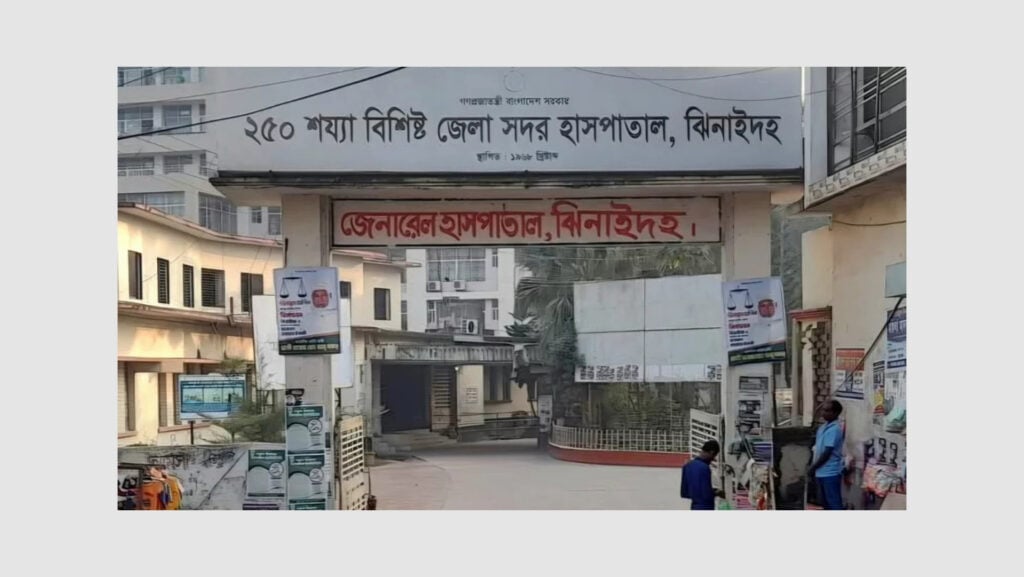
Jhenaidah 250-Bed General Hospital, the main healthcare facility for more than two million people, is struggling to cope with a persistent shortage of doctors, nurses and support staff. Although the hospital is officially designed to accommodate 250 inpatients, more than 400 patients are regularly admitted, placing considerable pressure on its limited workforce and facilities.
The staffing shortage is compounded by frequent power cuts, malfunctioning lifts and the absence of several critical medical services, including dialysis, a coronary care unit (CCU) and an intensive care unit (ICU). As a result, patients requiring specialised or critical care often have to be referred to other hospitals, creating additional difficulties for patients and their families.
According to hospital sources, only 37 doctors are currently working at the facility, while 23 doctor posts remain vacant. The hospital has sought approval for 268 posts covering doctors, nurses and other staff, but only 191 positions are currently filled. This leaves a total of 77 vacant posts.
The shortage also extends to support staff. Twenty-nine posts for third-class employees remain vacant, making it difficult for the hospital to maintain services across its outpatient department, emergency department and inpatient wards. With fewer staff having to deal with a patient load far beyond the hospital’s designated capacity, healthcare workers are under sustained pressure.
The hospital serves people from all six upazilas of Jhenaidah as well as patients from neighbouring areas. Its outpatient department alone provides treatment to around 50,000 people every month. The recent increase in children suffering from measles and diarrhoeal diseases has added further pressure to an already stretched system.
A visit to the hospital found several wards operating beyond their intended capacity. Some patients were forced to stay on the floors after failing to secure beds. Relatives of patients also complained that although doctors prescribe medicines, not all of them are available from the hospital.
Billal Hossain, from Baraikhali village in Pohati Union of Sadar upazila, said patients often have to remain on the floor because beds are unavailable. He said power cuts make the situation even more difficult for patients and their attendants.
Dr Monirul Islam, an orthopaedic surgeon at the hospital, said there were more than 90 posts for doctors, but only 37 doctors were currently working. There was also a shortage of nurses, he said, making it difficult to manage the large number of patients.
He pointed out that the absence of a dialysis centre meant kidney patients could not receive the necessary treatment at the hospital. Similarly, patients with serious cardiac conditions often have to be referred elsewhere because the hospital does not have CCU or ICU facilities.
The opening of a new eight-storey building has not resolved all of the hospital’s infrastructure problems. The building’s two lifts frequently become unusable, according to hospital sources. Frequent power cuts have also reportedly resulted in patients and their relatives becoming trapped inside lifts. There has previously been an incident involving a lift falling at the hospital.
Hospital Superintendent Dr Mostafizur Rahman said cleaning and beautification work had been completed and that previous irregularities or conventional practices in the procurement and distribution of medicines had been reduced considerably. Despite limited numbers of doctors and nurses, he said, the hospital was making every effort to provide treatment to patients.
He said increasing the workforce would allow the hospital to expand its services and respond more effectively to the growing demand.
Addressing the power shortage, Dr Rahman said the hospital’s existing electricity supply was inadequate for its needs, resulting in frequent load-shedding. At times, power problems make surgical procedures risky, he said. The hospital currently has a single electrical phase, and adding a second phase could substantially improve the situation.
The superintendent also said steps were being taken to reduce patients’ difficulties and curb the activities of brokers around the hospital. According to him, such activities have now been reduced to almost zero.
He also stressed that a 250-bed facility was not sufficient for a population of more than two million people. Given the continuing pressure on the hospital, increasing its bed capacity is necessary, he said.
Jhenaidah Civil Surgeon Dr Md Kamruzzaman said the shortage of doctors at the 250-bed hospital was a major obstacle to improving healthcare services. The matter had been brought to the attention of the Ministry of Health, he said.
Following the health minister’s intervention, two doctors have recently been deputed to the hospital, according to the civil surgeon. Work to improve the hospital’s overall services is continuing, he added.
The additional doctors may provide some immediate relief, but the figures indicate that the hospital continues to face a wider staffing gap. With hundreds of patients being treated beyond its designated capacity, sustained shortages of doctors, nurses and support workers remain a central challenge for Jhenaidah General Hospital. Addressing those gaps, alongside improvements in electricity supply, lifts and specialised treatment facilities, would be necessary to reduce pressure on both patients and healthcare workers.