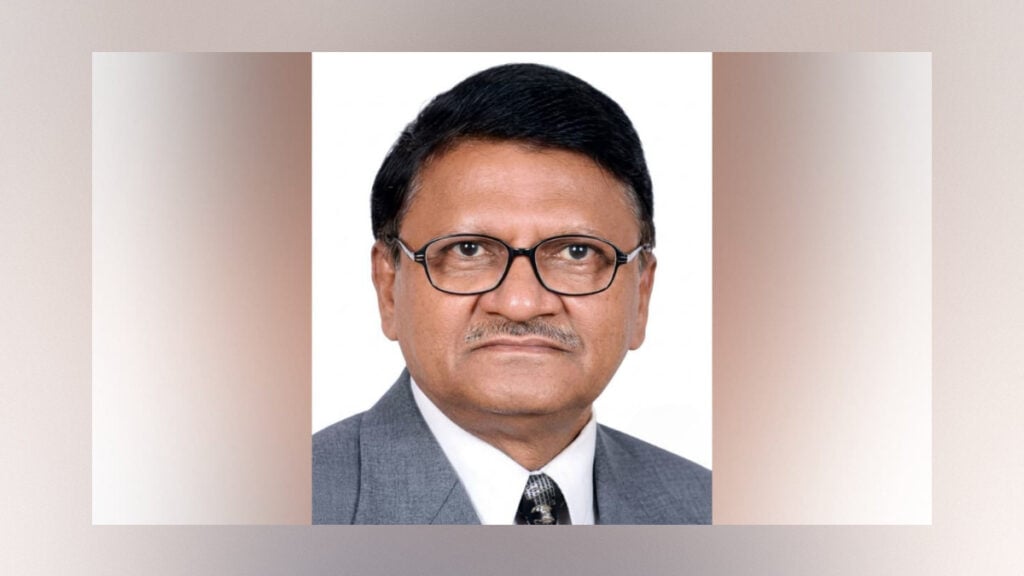
Some figures in literature and intellectual life do more than write books. They help a generation understand its time, question its society and reflect on the relationship between people and the state. Professor Abul Quasem Fazlul Huq was one such figure. An essayist, researcher, literary critic, social analyst, translator, teacher and political thinker, he remained deeply engaged with questions of society, culture, morality, politics and Bangladesh throughout his long intellectual career.
Born on 30 September 1940 in Pakundia, Kishoreganj, Huq was the son of Muhammad Abdul Hakim and Jahanara Khatun. He passed his matriculation examination from Mymensingh Zilla School in 1959 and completed his higher secondary education at Ananda Mohan College in 1961. He subsequently joined the Department of Bengali at the University of Dhaka, where he earned his honours degree in 1965 and a master’s degree in 1966.
His years at the University of Dhaka brought him into contact with prominent teachers and intellectuals, whose scholarship and ideas influenced his own intellectual development. After completing his studies, he joined the university’s Department of Bengali as a teacher. He spent nearly four decades there and eventually served as chairman of the department. Many of his students later established themselves in literature, journalism, education and other professional fields.
For Huq, teaching was more than an occupation. It was a sustained intellectual practice. He encouraged students to look beyond textbooks and examine society, history, politics, culture and human life critically. His essays were marked by argument, analysis and a strong concern for human values.
Questions of morality, social responsibility and the future of Bangladesh repeatedly appeared in his writings. He argued that genuine progress could not be measured solely through economic development; intellectual, cultural and ethical advancement also mattered to the well-being of a society.
A lifelong advocate for Bangla
The status and use of the Bangla language remained another important concern in his public and intellectual work. As convener of the State Language Bangla Protection Committee, he worked for the wider use and dignity of Bangla. For him, the language represented far more than a means of communication. It was closely connected with cultural identity and the broader national life of Bengalis.
His contribution to literary and intellectual discourse also found expression through Lokayat, a periodical he edited from 1982. The publication provided a platform for discussions on society, philosophy, politics, literature and culture. He also wrote regularly for newspapers and periodicals, examining social problems, people’s struggles and questions surrounding politics and the state.
From 2000 to 2013, he served as president of Swadesh Chinta Sangha, an organisation through which his engagement with questions about Bangladesh’s society and future continued.
Thinking about Bangladesh
Understanding Bangladesh was at the heart of much of Huq’s political and social thought. He examined the country’s history, culture, political development and social structure while considering the aspirations of ordinary people.
Among his notable books are Rashtrachintay Bangladesh (Bangladesh in Political Thought), Rajneeti O Sanskriti: Sambhabanar Nabodiganta (Politics and Culture: A New Horizon of Possibilities), Noitikota: Shreyoniti O Durniti (Morality: Ethics and Corruption), Manusher Swarup (The Nature of Humanity), Muktisangram, Kaler Jatrar Dhwani, Unish Shataker Madhyashreni O Bangla Sahitya, Rajneeti O Darshan, Sahityachinta, Bangladesher Rajnitite Buddhijibider Bhumika, Abakshoy O Uttaran, Sahitya O Sanskriti Prasange, Adhunikatabad O Jibananander Jibanonktha and Prachurye Riktota.
The range of these works reflects the breadth of his intellectual interests. Literature, philosophy, politics, morality, culture and social transformation were not separate subjects in his thinking; they were interconnected aspects of understanding human life and the society in which people live.
Leadership at Bangla Academy
Even in the later years of his life, Huq remained involved in intellectual and cultural affairs. On 27 October 2024, he was appointed president of Bangla Academy, taking on a significant institutional role in the country’s literary and cultural sphere.
His personal life also carried profound grief. His son, Faisal Arefin Dipan, the owner and publisher of Jagriti Prokashani, was killed in Dhaka on 31 October 2015. Despite the devastating loss, Huq continued his intellectual work and remained active in writing and public discourse.
His daughter, Suchita Sharmin, is a teacher at the University of Dhaka.
Recognition and legacy
Huq received the Bangla Academy Literary Award in 1981 in recognition of his contribution to literature and intellectual life. He was also honoured with the Bangladesh Lekhak Shibir Award, Alaol Literary Award and Alokto Literary Award.
Yet his most enduring identity was arguably that of a teacher and thinker whose influence extended beyond formal recognition. His books offered sustained examinations of society and the state while raising broader questions about morality, culture and human dignity.
Professor Abul Quasem Fazlul Huq died on the afternoon of 5 July 2026 at the age of 85. He was taken to hospital after falling suddenly ill and was pronounced dead by doctors.
The following day, people from different sections of society paid their final respects to him at Bangla Academy, the Central Shaheed Minar and the University of Dhaka. He was later buried at the Mirpur Martyred Intellectuals Cemetery.
His death brought an end to the life of a teacher who had influenced generations of students, a writer whose works remain part of Bangladesh’s intellectual heritage, and a thinker who devoted much of his life to examining society, politics, culture and the human condition.
On his birth anniversary, 30 September 2026, remembering Abul Quasem Fazlul Huq means returning to the questions that shaped much of his intellectual journey: what kind of state should people seek, what kind of society should they build, and what values should guide human life?
His physical presence is gone, but his books, arguments and questions remain. For readers and students, those works offer an enduring invitation to think critically about Bangladesh and its people.
Professor Abul Quasem Fazlul Huq will be remembered as a devoted teacher of Bangla language and literature, a prolific writer and an independent-minded thinker whose intellectual life was closely connected with the social and cultural questions of his country.
On the anniversary of his birth, his legacy lives on through the works he left behind and the generations of readers and students who continue to engage with his ideas.
Deep respect and remembrance for Professor Abul Quasem Fazlul Huq.