In one lifetime, I have seen many countries. I have crossed seas, stood beneath unfamiliar skies and watched, from the lights of distant cities, how people build their dreams. One by one, many of those close to me have left for foreign lands.
Some went to cities covered in snow, some to shores beside blue seas, and others to countries where the word ‘future’ still carries the promise of hope.
The road abroad called to me too, many times. There were opportunities, promises of a secure life and the temptation of living peacefully beneath a clear sky. Yet I did not go. How could I?
It was on this soil that I heard my own first cry. It was in the dust of this land that the afternoons of my childhood unfolded. This is where I knew my mother’s embrace, my father’s voice, my grandparents’ stories and the affection of my maternal grandparents.
None of them is alive today.
Yet somehow, they are still here—in the soil beneath this country, in some quiet corner where they lie in the darkness of their graves, almost as though waiting for me to return. That is why, no matter how bright the lights of foreign lands appeared, I always carried the colour of my own soil in my eyes.
I used to believe that a country was more than a map. A country meant roots. It meant memories. It meant standing silently beside the grave of someone dear, holding a handful of earth in your palm.
But now, in the evening of my life, I sometimes find myself strangely unfamiliar even to myself.
For years, I have watched dreams being wounded, principles being silenced and the doors of honesty being locked. How many faces change for the sake of power? How many consciences are sold to personal interest? How many lies walk down the streets dressed as truth?
Around us, there seems to be a strange celebration—a celebration of hypocrisy, arrogance, hatred, greed and deception.
Good people gradually fall silent. The voice of decency is drowned beneath the noise. And those who can leave often do so: to secure a better future for their children, to preserve what remains of their conscience, or simply to breathe a little more freely.
But I did not leave.
I believed that one day this country would change. I believed that the next generation would see a more beautiful morning. I believed that the soil soaked with so much blood, sorrow and love would one day allow people to live with dignity.
That belief consumed a lifetime.
Now, when I look back, I realise that even the age of dreaming seems to have passed. So many springs have gone by. So many monsoons have arrived and departed. So many autumns have quietly appeared at my window before disappearing again.
And I kept waiting.
Waiting for a beautiful day. Waiting for an ordinary morning. Waiting for a country where being honest would not be regarded as foolishness, and where decent people would not feel ashamed of their decency.
Today, I find myself asking a difficult question: have we truly progressed?
Or has only time moved forward?
The cities have grown. The skyline is filled with taller buildings. The lights have multiplied. Yet where has the light within people gone?
Are we really moving forward, or are we simply standing before a glittering mirror and mistakenly calling our own reflection progress?
At times, I wonder whether I mortgaged my entire life to a misplaced belief. I have seen a considerable part of the world, yet I never settled anywhere. I kept asking myself: how can one live after leaving one’s own country behind?
Today, I am still here. Yet sometimes it feels as though the country itself has somehow disappeared from me.
What a strange irony.
I spent my life holding on to this soil, and now, standing upon that very soil, I find myself asking: was I wrong?
Even after everything, there is no answer.
Sometimes, it feels as though the wind stirs beside my parents’ graves somewhere in the distance. I imagine my mother saying, “You did not want to leave, my son. You loved this soil.”
I have nothing to say.
I simply lower my head and pick up a handful of earth.
Because my childhood is in this soil. My parents are here. My lost dreams are here. All my love is here.
That is why I cannot hate my country.
I am simply tired now.
Very tired.
So tired that I no longer dream as I once did.
Yet somewhere deep within me, a faint lamp, covered in dust, has not gone out.
Perhaps that lamp is the country.
Perhaps it is humanity.
Perhaps it is my final remaining belief.
I still believe that one day there will be room for honesty in this soil. People will once again recognise one another simply as human beings. And no child will have to leave their birthplace and build a home beneath an unfamiliar sky merely in search of a secure future.
Perhaps I will not be here when that day comes.
Even so, if one day the laughter of a child drifts across my grave, I may feel that I was not entirely wrong.
People die. Dreams sometimes die too.
But can the love we leave behind in the soil ever truly die?
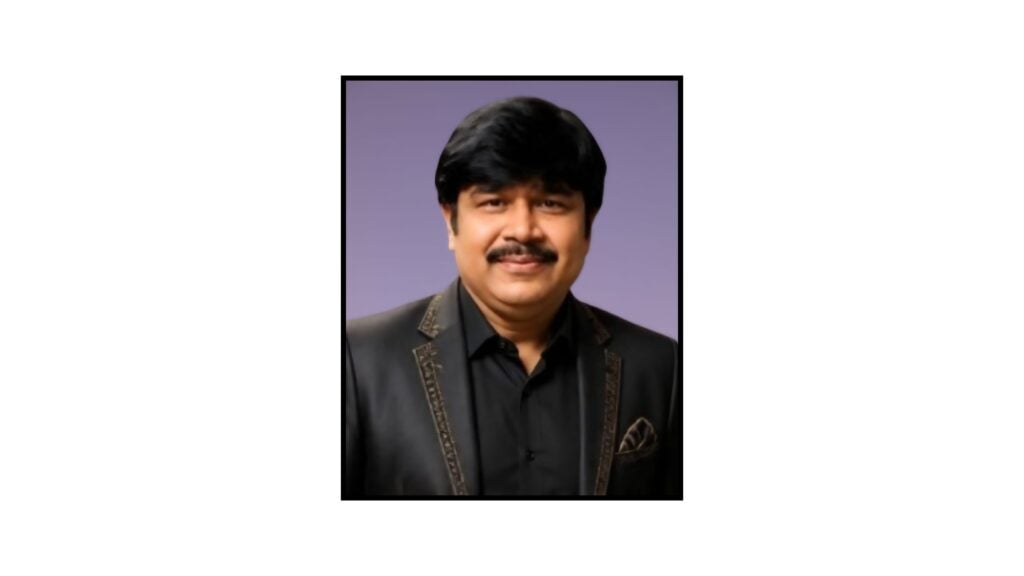
Manzur Rashid Bidyut
Writer, Policy Researcher and Communications Specialist