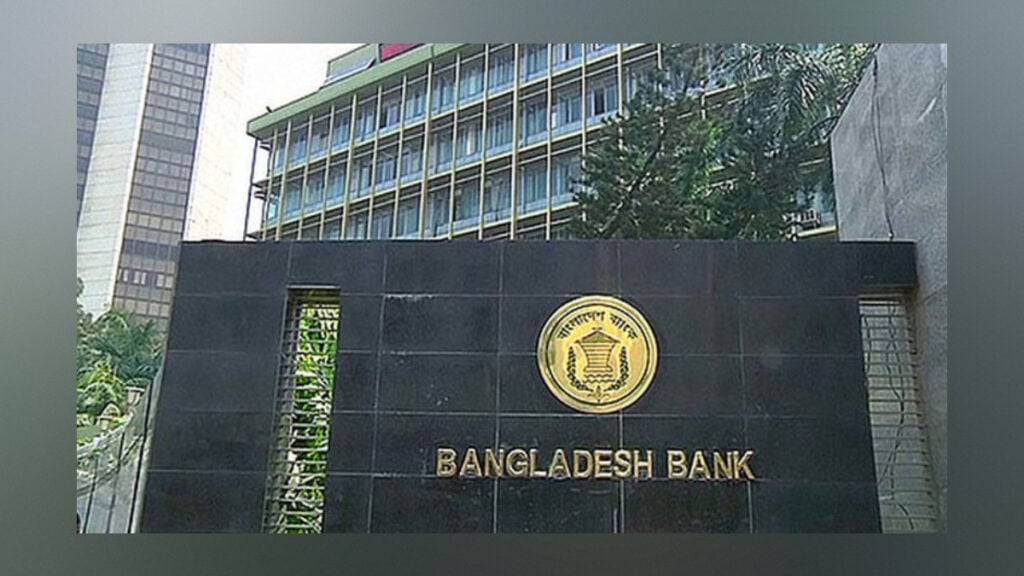
Bangladesh Bank is preparing to repurchase two-year government treasury bonds worth nearly Tk 6,667 crore as part of efforts to manage public debt and reduce pressure from a large repayment due next month.
A reverse auction for the securities is scheduled to take place on 7 October. The central bank said bonds with a total outstanding value of Tk 6,666.58 crore will be offered for repurchase through the auction.
The bonds were issued on 6 November 2024 and carry a coupon rate of 12.30 per cent. Their scheduled maturity date is 6 November 2026, meaning the securities are approaching the end of their two-year term.
Bangladesh Bank announced the planned auction in a notice issued on 5 October. The repurchase will be conducted through a multiple-price reverse auction, with settlement scheduled for 12 October.
Primary dealers to submit bids directly
Primary dealer (PD) banks will be able to submit bids directly in the auction. Non-PD banks and financial institutions maintaining current accounts with Bangladesh Bank will be able to participate through the relevant PD banks.
Participating institutions can submit competitive bids for securities held in their own accounts. They can also submit competitive and non-competitive bids on behalf of their clients.
Each bid must specify the price at which the participant is willing to sell the bonds against a face value of Tk 100, along with the quantity of securities being offered.
Bids are to be submitted electronically through Bangladesh Bank’s Financial Market Infrastructure (FMI) system between 10am and noon. In exceptional circumstances, participants may submit bids manually in sealed envelopes, provided they obtain prior approval from the central bank.
Managing a sizeable maturity obligation
The planned buyback is part of the government’s Liability Management Operation (LMO), which aims to make public debt servicing more orderly and manageable.
The timing of the operation is significant because the bonds are due to mature on 6 November. If the full outstanding amount were to fall due at the same time, it could create a substantial short-term repayment requirement. Repurchasing the securities before maturity allows the authorities to address part of that obligation in advance.
Government treasury bonds form an important part of the domestic borrowing framework. The government uses such securities to raise funds, while banks, financial institutions and other eligible investors hold them as investment and liquidity-management instruments. Managing their maturity profile can therefore help reduce the concentration of repayment obligations at particular points in time.
The current operation also gives bondholders an opportunity to adjust their portfolios before the scheduled maturity date. Investors seeking liquidity or wishing to change the composition of their holdings can offer eligible securities through the auction process, subject to the applicable terms.
Auction process and settlement
The reverse auction will determine the prices at which participating institutions are prepared to sell the securities back. Unlike a conventional auction in which investors compete to buy government securities, a reverse auction allows holders to compete to sell securities to the issuer or designated authority.
The bonds in question have a face value outstanding of Tk 6,666.58 crore. They were issued on 6 November 2024 with a 12.30 per cent coupon rate and are scheduled to mature on 6 November 2026.
Once the bids are evaluated and accepted under the auction mechanism, settlement will take place on 12 October. The process is expected to reduce the amount of the particular government securities that remains outstanding ahead of their scheduled maturity.
The operation is therefore aimed at easing the concentration of government repayments around the November maturity date while giving eligible investors a formal route to realise their holdings before maturity. It also forms part of broader efforts to maintain greater flexibility in the management of government securities and related liquidity in the financial market.