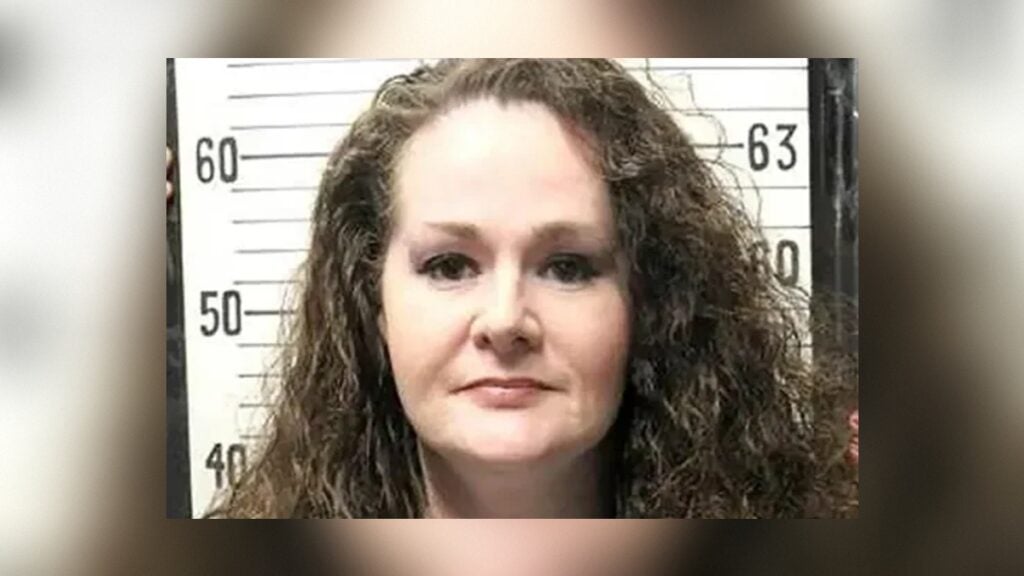
US death-row prisoner Christa Pike has regained consciousness and is now able to speak after two attempts to execute her by lethal injection failed in Tennessee last week, her lawyers have said.
Pike, 50, remains in hospital receiving treatment and is still being kept in handcuffs, according to a statement issued by her legal team on Tuesday. She had been unconscious for several days after the failed execution, while medical staff attempted to treat the effects of the chemicals administered during the procedure.
Pike was sentenced to death for the 1995 murder of 19-year-old Colleen Slemmer. She was 18 at the time of the killing and was involved in the crime with her then-boyfriend, Tadaryl Ship. The pair met Slemmer at a vocational training camp for troubled teenagers.
According to the case against Pike, Slemmer was beaten, tortured and killed. Pike was subsequently convicted and sentenced to death, placing her among the small number of women on death row in the United States.
Her execution was scheduled to take place in Tennessee last Wednesday through lethal injection. Officials attempted to carry out the procedure twice, but neither attempt succeeded. Pike was later taken to hospital, where she remained unconscious for several days.
Her recovery has been described by her lawyers as unprecedented from a medical perspective. They said there was still considerable uncertainty over the extent of any lasting damage caused by the failed procedure, but expressed hope that she would continue to recover over an extended period.
The case has drawn particular attention because of the circumstances surrounding the failed execution. Deborah Denno, a criminologist and professor at Fordham Law School who has studied capital punishment, said she was surprised to learn that Pike had regained consciousness and was speaking.
Denno said there had been seven other cases in which prisoners survived beyond the scheduled time of execution. Those cases, however, were different because execution officials had failed to introduce any of the intended drugs into the prisoners’ veins.
Pike’s case is considered different because a lethal chemical was administered to her. Denno said the officials had apparently carried out the steps required as part of the execution process, yet the procedure did not achieve its intended outcome. She described the circumstances as unprecedented.
The authorities have not explained why the pentobarbital administered to Pike failed to result in her death. They have also not said whether they will make another attempt to carry out the sentence.
The uncertainty comes as Tennessee Governor Bill Lee has suspended all executions in the state for the remainder of the year. That decision means there is no immediate indication that another execution attempt against Pike will take place, although officials have not provided a longer-term plan for the case.
Pike’s legal team is due to appear before a court in Nashville on Wednesday. Her lawyers are also planning to hold a news conference outside the courthouse, where they are expected to discuss her condition and the circumstances surrounding the failed execution.
Dr Joel Zivot, an anaesthesiologist advising Pike’s defence team, said on Tuesday that surviving a lethal injection is extremely rare. Pike’s return to consciousness after the chemicals were administered has therefore added an extraordinary development to a case that has already attracted significant attention over the years.
For now, her lawyers say the priority is her recovery. Her longer-term physical condition remains uncertain, while questions about why the execution failed and what authorities may do next remain unanswered.