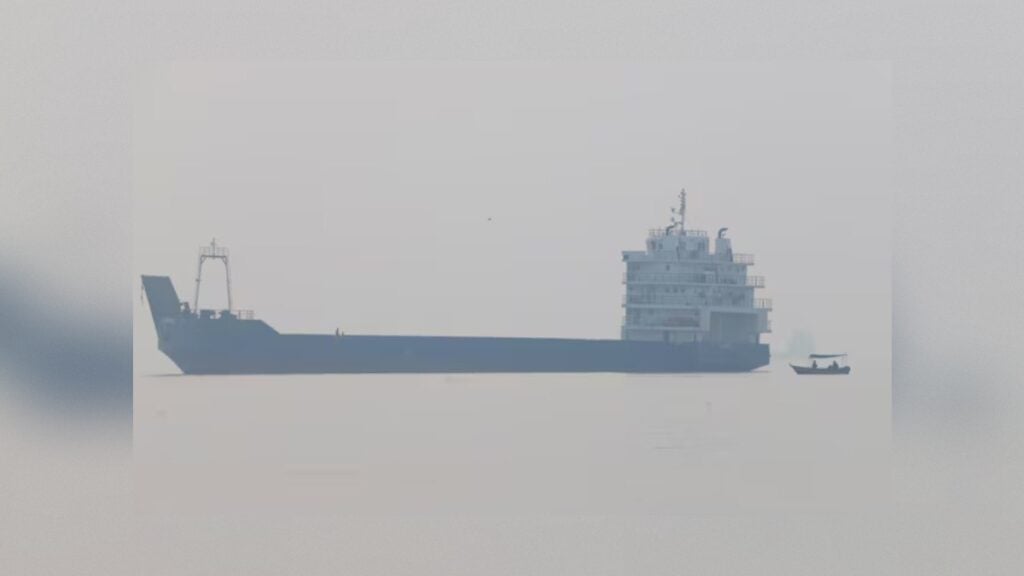
Commercial shipping through the Strait of Hormuz has fallen to its lowest level in more than two months, following a sharp rise in attacks on oil tankers along the strategically vital waterway.
The decline comes after tanker attacks reached their highest weekly level since the start of the Iran-Israel war, raising fresh concerns over the safety of one of the world’s most important energy routes. Shipping data shows that vessels are continuing to use the strait, but traffic has become significantly lighter amid heightened security risks.
According to data from commodities and shipping analytics firm Kpler, only seven cargo vessels passed through the Strait of Hormuz on Tuesday. Reuters reported that this was the lowest daily figure recorded since 23 July.
In a report published on 6 October, Kpler analysts Emmanuel Balestrino and Yui Torikata said crude oil shipments through the strait had fallen by 27 per cent from the wartime peak recorded during the previous week. Despite the decline, at least 11 million barrels of crude were still being transported through the waterway each day.
The analysts said the volume had returned to around September’s average level, but remained at only 74 per cent of the level seen before the war began. Much of the decline was linked to a reduction in ship-to-ship transfers in the Gulf of Oman, a practice in which cargo is transferred from one tanker to another.
At the same time, oil exports through routes along the Gulf of Oman and the Red Sea have increased. Those exports reached about 6.7 million barrels per day, more than double the level recorded before the conflict began. Kpler’s analysts said the increase had helped compensate for lower flows through the Strait of Hormuz, allowing total crude exports from the Middle East to remain close to their pre-war level.
Shipping activity showed some recovery on Wednesday, when 10 vessels were recorded passing through the strait. That remained well below the levels seen on Sunday and Monday, when more than 20 vessels crossed the waterway on each day. Over the two most recent days, more vessels entered the strait than left it.
The figures do not include vessels that switched off their automatic identification systems, or AIS, to avoid being tracked while passing through the strait. Separate data from LSEG, which tracks vessel movements, showed that eight vessels crossed Hormuz on Tuesday, with four entering and four leaving. The previous day’s figure was 14.
Five of the vessels recorded by LSEG on Tuesday were oil tankers. An LNG carrier named Al Mafyar was also among the vessels operating in the area. The ship was scheduled to carry liquefied natural gas from Qatar’s Ras Laffan to Pakistan’s Port Qasim.
The fall in shipping follows a particularly dangerous week for tanker operators. Maritime security sources said attacks on tankers travelling through the Strait of Hormuz were at their highest weekly level since the Iran-Israel war began. Gulf countries have simultaneously stepped up efforts to maintain and increase oil exports through alternative routes.
In the latest reported incident, a tanker was struck by a missile or another airborne object about 51 nautical miles north of Qatar’s Madinat ash Shamal. Casualties were reported in the incident, according to the United Kingdom’s maritime trade operations authority on Wednesday.
The Strait of Hormuz is critical to global energy markets because of the enormous volume of oil and gas that passes through it. Before the war began on 28 February, around 125 large commercial vessels travelled through the strait each day. They included crude oil tankers, LNG carriers, bulk cargo vessels and container ships.
The cargo carried by those vessels represented roughly one-fifth of global supplies of crude oil and liquefied natural gas. Any prolonged disruption to the waterway could therefore place additional pressure on energy transportation and supply chains far beyond the Gulf region.
For now, the increase in exports through alternative routes has helped offset part of the decline in Hormuz traffic. But the sharp fall in vessel movements, combined with the recent rise in tanker attacks, underlines the growing security risks facing commercial shipping in one of the world’s most strategically important maritime corridors.