Contractors in Bangladesh will now bae held legally and financially accountable for any severe structural defects or damage that occur within three years of completing public infrastructure projects. The directive, issued during an Executive Committee of the National Economic Council (ECNEC) meeting chaired by Prime Minister Tarique Rahman at the Bangladesh Secretariat on Wednesday, mandates the inclusion of a strict guarantee clause in all future public procurement contracts.
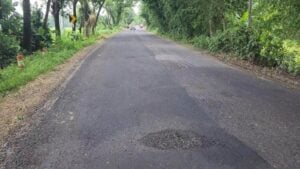
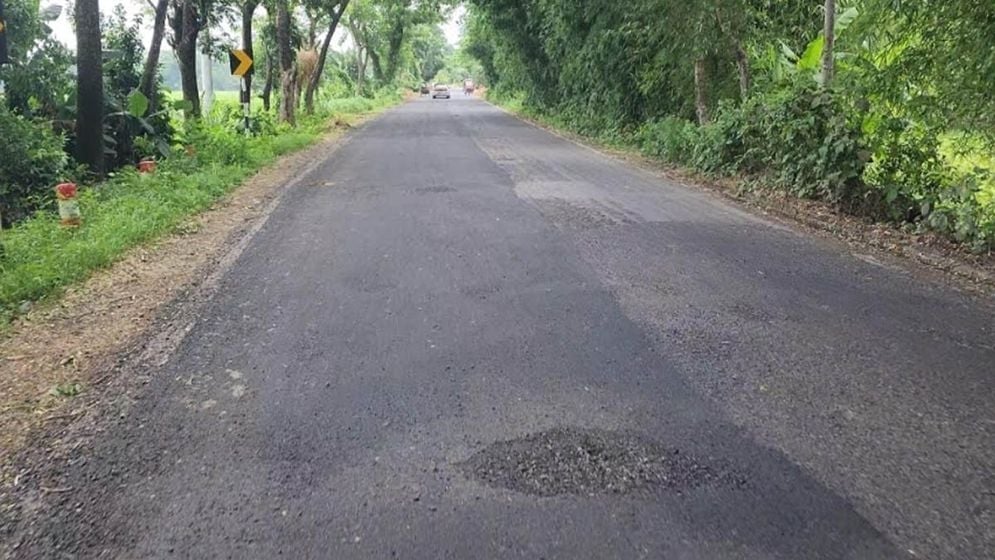
Detailing the decisions at a press conference held at the NEC Conference Room in Agargaon, Minister of State for Planning Jonayed Abdur Rahim Saki stated that the government is placing unprecedented emphasis on durability and construction standards across all physical development works. Under the new terms, if a road, building, or associated infrastructure suffers major structural impairment within three years of completion, the responsible contractor must repair it at their own expense. Officials clarified that this clause applies specifically to defects stemming from poor construction quality rather than routine wear and tear.
Inadequate drainage systems have long been identified as a primary catalyst for early road degradation across the country, particularly in rural and residential belts where trapped rainwater rapidly erodes bitumen surfaces. To address this structural vulnerability, the Prime Minister ordered that proper drainage networks become a mandatory prerequisite for all upcoming road construction plans in residential areas. Planning authorities must ensure that drainage lines do not simply store stagnant water; they must connect to viable discharge outlets, complete with sewage treatment plants (STPs) to treat wastewater before it reaches natural river systems.
Beyond quality assurance, the executive committee took direct action to curb project inflation and eliminate unnecessary expenditure. In a rural infrastructure initiative spanning Sirajganj, Bogura, and Naogaon districts, ECNEC ordered the immediate removal of vehicle procurement provisions and instructed officials to scale back consultancy fees. The ministry highlighted that state agencies with adequate internal technical personnel must cease inflating budgets with redundant external consultants.
The meeting also addressed severe operational bottlenecks within the national rail network, where metre-gauge tracks still account for nearly 65 per cent of total railway infrastructure. Acute shortages of operational locomotives have previously forced Bangladesh Railway to suspend, cancel, or reduce service frequencies on multiple routes, hampering both passenger travel and freight transport. To alleviate the deficit of roughly 70 to 80 engines, the government approved an initial procurement drive for 30 new locomotives.
In total, ECNEC approved 13 major development projects featuring a combined outlay of BDT 16,207.55 crore (£1.04 billion). Government co-funding accounts for BDT 10,600.80 crore, project loans contribute BDT 4,081.85 crore, and implementing agencies will supply the remaining BDT 1,524.91 crore from self-generated funds. The approved portfolio comprises ten brand-new ventures, two revised proposals, and one term extension, anchored by a landmark 442-megawatt peak (MWp) solar power plant at Rampal aimed at advancing energy sector reform and green transition goals.