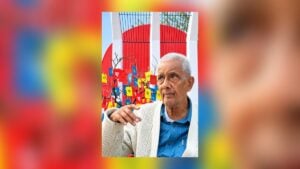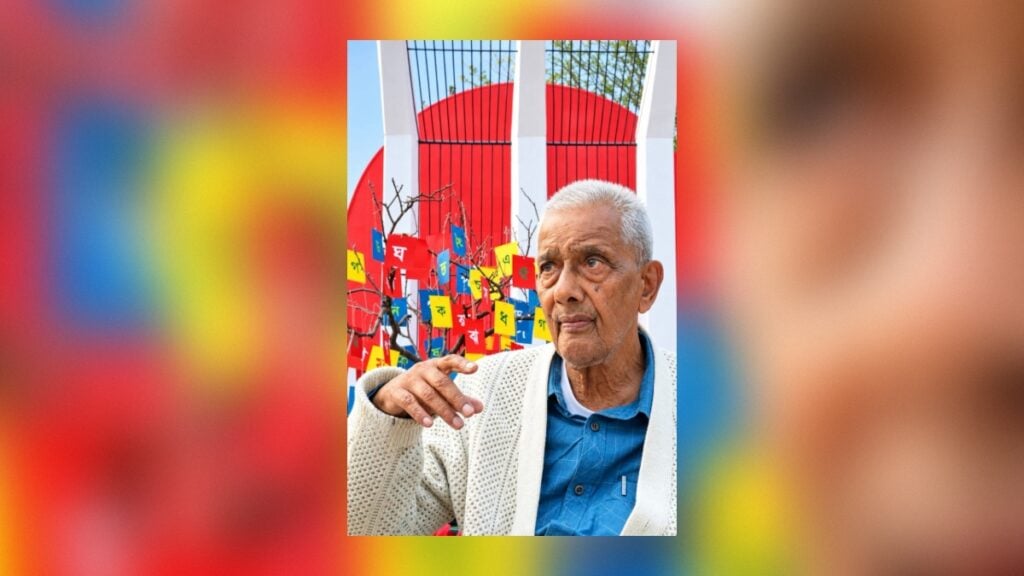
Abdul Matin, remembered with deep respect as ‘Bhasha Matin’, was one of the most prominent student leaders and organisers of Bangladesh’s historic Language Movement. His determined opposition to attempts to impose Urdu as the sole state language of Pakistan helped shape one of the defining struggles in the history of the Bengali people.
Born on 3 December 1926 in Dhubalia village of Chauhali upazila in Sirajganj, Matin came from a middle-class farming family. His parents were Abdul Jalil and Amena Khatun. From an early age, he was known for his intellectual ability, courage and strong opposition to injustice. His commitment to people’s rights would later lead him to the forefront of the movement for recognition of Bengali.
Following the creation of Pakistan in 1947, the question of the state language quickly became a source of growing political tension. When moves were made to establish Urdu as the sole state language, Matin became actively involved in protests. He took part in the early phase of the Language Movement in 1948 and openly protested when Pakistan’s founder Muhammad Ali Jinnah reiterated his support for Urdu as the country’s only state language at a convocation of the University of Dhaka.
Matin played a significant role in turning scattered opposition into an organised movement. On 11 March 1951, he was elected convener of the Dhaka University State Language Action Committee. He later became associated with the executive committee of the All-Party State Language Movement.
The movement reached a decisive stage in January 1952, when Pakistan’s Prime Minister Khawaja Nazimuddin again declared that Urdu would be the only state language. Anger spread rapidly among students and the wider population of East Bengal.
On 20 February, the government imposed Section 144 in Dhaka, prohibiting public gatherings and processions. While some political leaders argued that the restriction should not be violated to avoid confrontation, the student community decided to continue its protest.
On 21 February 1952, a historic student meeting was held at the Dhaka University Amtala. Abdul Matin and Gaziul Haq strongly argued in favour of defying Section 144. Students eventually broke through the restrictions and took to the streets in a procession.
Police opened fire on the protesters. Rafiq, Jabbar and Barkat were among those killed, while Salam and others later succumbed to their injuries. The bloodshed transformed the Language Movement into a defining moment in the political and cultural history of the Bengali people.
The significance of the movement extended far beyond the demand for linguistic recognition. The struggle strengthened Bengali national consciousness and became an important foundation for subsequent movements for political and cultural rights, including the mass uprising of 1969 and the Liberation War of 1971.
Matin remained active after the Language Movement. In April 1952, he played an important role in the formation of the Chhatra Union and was elected the second president of the East Pakistan Chhatra Union. He subsequently became involved in left-wing politics and various popular movements. His political career was marked by imprisonment, expulsion from the university and other hardships, but he remained committed to his political beliefs.
He was also a writer and thinker who devoted much of his intellectual work to the Language Movement, Bengali identity, history and society. Among his notable books are Bhasha O Ekusher Andolon, Bhasha Andolon Ki Ebong Tate Ki Chhilo, Bhasha Andolon: Itihas O Tatparya, written with Ahmad Rafiq, Bangali Jatir Utshe Sandhan O Bhasha Andolon, and Jibon Pother Banke Banke.
In recognition of his contribution to the Language Movement, Matin received the Ekushey Padak in 2001. The University of Dhaka awarded him an honorary Doctor of Laws degree in 2008.
His commitment to humanity also remained evident towards the end of his life. He had expressed his wish to donate his eyes and body after death, and that wish was fulfilled. His donated corneas enabled another person to regain the gift of sight, giving symbolic meaning to his lifelong commitment to serving people.
Abdul Matin died on 8 October 2014 at Bangabandhu Sheikh Mujib Medical University while undergoing treatment. He was 87.
His death marked the end of a remarkable life, but not the end of the ideals for which he fought. His role in the Language Movement remains an enduring part of Bangladesh’s history, particularly because the struggle for Bengali was closely tied to questions of identity, dignity and political rights.
For generations of Bangladeshis, Abdul Matin represents the courage to stand against injustice even when doing so carries enormous personal risk. The movement he helped lead demonstrated that language is more than a means of communication; it can be inseparable from a people’s cultural identity, dignity and sense of belonging.
On the anniversary of his death, the contribution of Abdul Matin remains worthy of remembrance. The fearless language activist who once defied official restrictions and took to the streets for the right to speak in his mother tongue continues to occupy a lasting place in the history of Bangladesh.