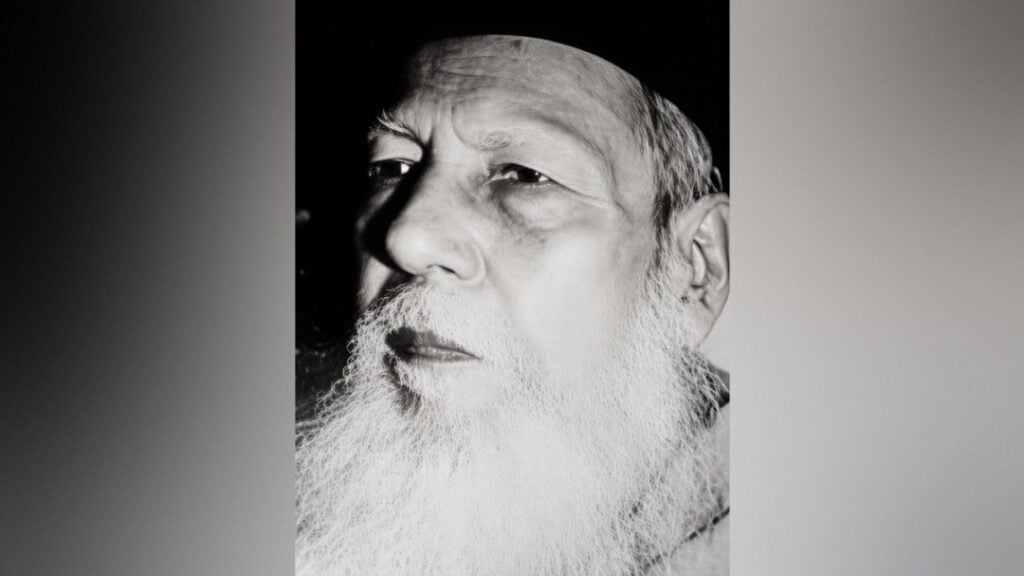
Some people leave behind more than memories when they die. Their ideas, achievements and principles continue to illuminate the lives of future generations. Kazi Motahar Hossain, one of Bangladesh’s distinguished intellectuals, was such a figure. A pioneering statistician, scientist, educationist, writer and advocate of rational thought, he made lasting contributions to scientific research, higher education, literature and cultural life. His life remains an enduring example of how knowledge can serve society and help people think beyond the limitations of their time.
Born on 30 July 1897 at his maternal uncle’s home in Lakshmipur village, in Kumarkhali upazila of Kushtia, Hossain came from a family whose ancestral home was in Bagmara village, Pangsা upazila, in present-day Rajbari district. Through academic distinction, intellectual curiosity and years of dedicated work, he rose to become one of the prominent figures in the development of scientific and intellectual traditions in Bengal.
His significance extended well beyond his academic qualifications. Hossain believed that education should do more than prepare people for employment. It should cultivate independent judgement, awaken the conscience and equip individuals to question assumptions through reason and evidence. This commitment shaped both his scientific career and his involvement in literary and cultural movements.
An exceptional academic journey
Hossain demonstrated considerable academic promise from an early age. After progressing through his education with the help of scholarships, he passed the matriculation examination from Kushtia Muslim High School in 1915. He subsequently studied at Presidency College in Calcutta, where his exposure to the intellectual environment and the influence of eminent scientist Acharya Prafulla Chandra Ray helped shape his scientific outlook.
In 1919, he completed his BA with honours in physics at Dhaka College, securing first place in the Bengal and Assam region, according to the biographical account. In 1921, he achieved first place in the second division in his MA examination in physics.
These achievements reflected his intellectual ability and determination. Yet his lasting importance cannot be measured solely by examination results or academic distinctions. His contribution lay in his sustained pursuit of knowledge and his determination to make scientific learning accessible through teaching, research and institutional development.
For Hossain, education was closely connected with intellectual freedom. He recognised that knowledge could help people challenge superstition, question inherited assumptions and develop a more reasoned understanding of the world. At a time when opportunities for specialised scientific education were more limited than they are today, this outlook was particularly significant.
A pioneer of statistics education in Bangladesh
Hossain occupies an important place in the history of statistics education and research in Bangladesh. His professional career began in 1921, when he joined the physics department of the University of Dhaka as a demonstrator. In 1923, he became an assistant lecturer in the same department, beginning a long career in teaching and academic research.
One of his most significant contributions was his work to establish statistics as an important field of higher education and research. Statistics provides essential tools for interpreting data, identifying patterns and supporting evidence-based decisions across scientific, economic and social disciplines. Hossain recognised the value of the subject at a time when its institutional development in the region was still limited.
In 1938, he obtained a diploma in statistics from the Indian Statistical Institute. He later earned a PhD in statistics from the University of Dhaka in 1951. The same year, he became a reader, before being appointed professor in 1954.
He played an important role in efforts to introduce postgraduate studies in statistics at the University of Dhaka in 1948. The initiative helped lay the foundations for more specialised teaching and research in the discipline.
In 1964, Hossain became the first director of the Institute of Statistical Research and Training, an institution established to advance statistical education and research. His leadership contributed to the development of a more structured academic environment for the subject. In 1969, the University of Dhaka appointed him emeritus professor, recognising his contribution to higher education and scholarship.
Although he retired from regular service in 1961, his intellectual pursuits continued. His career illustrated an important principle: a teacher’s influence is not confined to the classroom or the formal years of employment. It also lies in the questions students learn to ask, the research they undertake and the institutions they help strengthen.
Hossain’s legacy therefore extends beyond his individual achievements. His work helped create opportunities for future generations of students, researchers and teachers, ensuring that statistical knowledge could become an established part of the country’s academic landscape.
Where scientific reason met literary sensibility
Despite his reputation as a scientist, Hossain had a deep interest in literature, culture and the humanities. His intellectual life brought together the precision of scientific reasoning and an appreciation of creative expression. This combination distinguished him from those who regarded scientific and literary pursuits as separate or incompatible worlds.
His close friendship with poet Kazi Nazrul Islam was a notable aspect of his life. Nazrul affectionately called him ‘Motihar’, reflecting the warmth of their relationship. Their friendship also illustrated how people from different intellectual disciplines could find common ground through mutual respect, creativity and a shared interest in ideas.
For Hossain, literature was not merely a leisure pursuit. It offered a way to understand human emotions, social realities and the complexities of life. Scientific enquiry encouraged him to seek evidence and logical explanations, while literature broadened his understanding of human experience.
The combination made his intellectual outlook both analytical and humane. His life demonstrated that scientific discipline need not diminish emotional sensitivity and that a commitment to reason can coexist with an appreciation of art, culture and human relationships.
The Muslim Sahitya Samaj and the pursuit of free thought
In 1926, Hossain joined like-minded intellectuals, including Kazi Abdul Odud, Syed Abul Hossain and Abul Fazal, in establishing the Muslim Sahitya Samaj, a literary and intellectual organisation associated with the promotion of rationalism, progressive thought and intellectual freedom.
The organisation emerged at a time when challenging established assumptions and encouraging independent judgement could be difficult. Its intellectual programme sought to strengthen critical thinking and promote a culture in which ideas could be examined through reason rather than accepted simply because they were traditional.
Hossain was also associated with the editing of Shikha, a publication connected with this movement. Through such literary and intellectual initiatives, he helped support discussions about education, social progress and the importance of independent thought.
The significance of this work extended beyond the publication of essays or the activities of a single organisation. It represented a wider effort to encourage people to think critically about the world around them. The ability to question accepted beliefs, evaluate evidence and remain open to new knowledge was central to the intellectual outlook Hossain supported.
He regarded knowledge as a means of intellectual liberation. Science offered methods for investigating the natural world; literature opened windows into human experience; and free thought allowed individuals to examine beliefs and make independent judgements.
Hossain was also among the founders of Bangla Academy, an institution that has played a significant role in the promotion and development of the Bengali language and literature. Through his books, essays and writings on science, literature and culture, he contributed to a broader intellectual tradition in which scientific enquiry and cultural expression could enrich one another.
His career offers a compelling reminder that a person can be rigorous in scientific thinking while remaining sensitive to literature and the arts. Rather than being contradictory, these interests can strengthen one another and contribute to a more complete understanding of society.
A family shaped by education and culture
Hossain’s intellectual legacy is also reflected in the achievements of his children. Among them were Dr Sanjida Khatun, a distinguished Rabindra Sangeet exponent, as well as Fahmida Khatun, Mahmuda Khatun and the popular writer Kazi Anwar Hossain. His daughters Zobaida Mirza and Obaida Sad also held important responsibilities in education.
Their varied contributions to music, literature and education reflect the presence of intellectual and cultural interests across the family. Their achievements also illustrate how an environment that values learning, creativity and independent thinking can influence successive generations.
Nevertheless, Hossain’s legacy cannot be confined to his family. His influence belongs to a much wider community of scholars, educators, researchers, writers and cultural practitioners. His work in science education, his commitment to intellectual freedom and his engagement with literature all contributed to the development of Bangladesh’s intellectual life.
His example also highlights the importance of nurturing environments in which questioning, discussion and creativity are encouraged. Such values can help individuals develop their abilities while contributing to society beyond their immediate surroundings.
Why his ideas remain relevant
Kazi Motahar Hossain died on 9 October 1981, bringing an end to a life devoted to learning, teaching and intellectual engagement. Yet the principles associated with his work remain relevant decades after his death.
Today, the rapid expansion of information and digital technology has made knowledge more accessible than ever. At the same time, the spread of misinformation and unsupported claims has reinforced the need for critical thinking, evidence-based judgement and intellectual responsibility.
Hossain’s scientific approach offers a useful lesson in this context. Reliable conclusions require careful examination of evidence, a willingness to question assumptions and a readiness to revise one’s understanding when new information emerges. His involvement in literary and cultural life adds another dimension to that lesson: knowledge should be accompanied by empathy, imagination and an appreciation of human dignity.
His commitment to rational thought also remains important in societies where superstition and unexamined beliefs can influence public attitudes. Encouraging people to ask questions and assess ideas independently is essential to the development of a thoughtful and informed citizenry.
Remembering Hossain, therefore, means more than celebrating a distinguished figure from the past. It also means considering whether contemporary education encourages curiosity, whether public discussion respects evidence and whether society gives sufficient space to independent thought.
These questions are particularly important for teachers and researchers. Their responsibility is not limited to transmitting established knowledge; they must also encourage students to investigate, question and develop their own understanding. Hossain’s career illustrates how education can contribute to this broader intellectual purpose.
An enduring tribute to a life of learning
Reputation and professional status may fade with time, but contributions that expand knowledge and improve society can endure for generations. Kazi Motahar Hossain’s life embodies this principle.
His dedication to scientific research, pioneering work in statistics education, engagement with literature and culture, and support for rational thought established him as a distinctive figure in Bangladesh’s intellectual history.
The most meaningful tribute to his memory is not simply to recall his achievements, but to uphold the values they represented. That means respecting evidence, encouraging independent judgement, challenging superstition through reason and ensuring that education helps people become both knowledgeable and humane.
Hossain’s life reminds us that knowledge reaches its fullest value when it serves a purpose beyond individual advancement. It becomes truly significant when it strengthens institutions, broadens understanding and helps future generations build a more thoughtful society.
More than four decades after his death, his intellectual legacy continues to offer inspiration to those committed to science, education, literature and cultural development. His example encourages us to pursue truth with patience, approach ideas with an open mind and recognise the dignity of others.
Kazi Motahar Hossain was a devoted scholar, a champion of reason and an advocate of intellectual freedom. His passing ended his physical presence, but not the influence of his work.
May his life continue to inspire generations to value knowledge, uphold rational thought and use learning in the service of humanity.