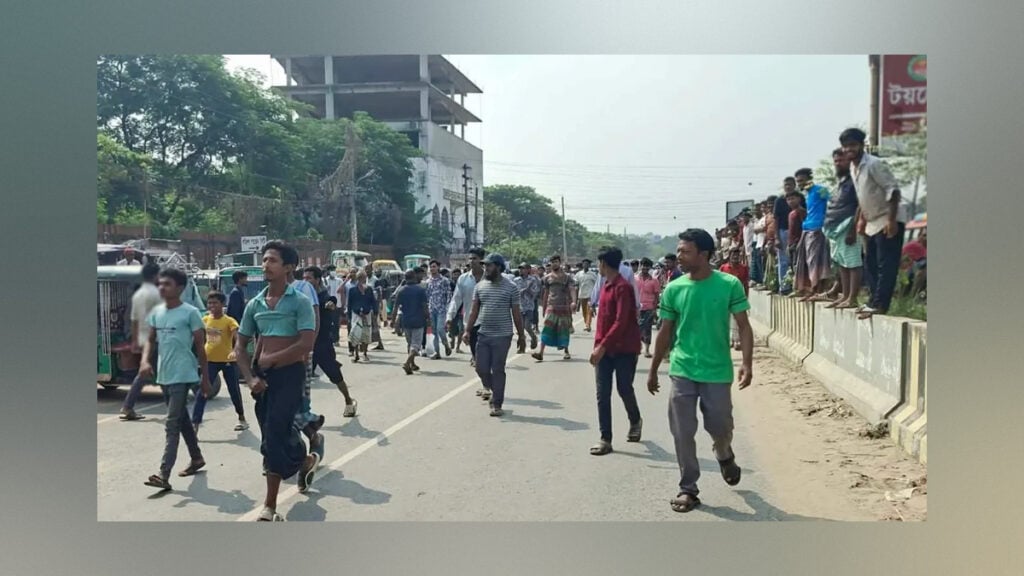
A protest by battery-powered auto-rickshaw drivers brought traffic to a virtual standstill on the Mohammadpur-Basila road in Bangladesh’s capital on Sunday, 11 October, leaving commuters stranded and disrupting movement across neighbouring streets. The blockade began at around 10 am, affecting office-goers, workers and passengers travelling to various destinations. Many found themselves unable to reach their destinations on time, even when travelling for urgent appointments or other essential tasks.
The protest reflects growing tensions over the regulation of battery-powered auto-rickshaws in Dhaka, where the authorities face the challenge of balancing drivers’ livelihoods with traffic management and the need to keep busy roads moving.
Blockade at Mohammadpur Four-Way Junction
The drivers gathered at Mohammadpur Four-Way Junction at around 10 am and blocked the road, bringing traffic in the area to a halt. As vehicles were unable to proceed through the junction, congestion spread to surrounding streets, disrupting normal movement and adding to commuters’ difficulties.
The situation was particularly challenging for passengers travelling during the busy morning period. Vehicles remained stuck in long queues, while people attempting to reach workplaces and other destinations faced delays.
One passenger, who was travelling to New Market, described the experience of being trapped in traffic. The passenger said they had been sitting in a CNG-powered auto-rickshaw for around half an hour without making any progress.
The disruption prompted frustration among commuters, who argued that road blockades caused by transport-related disputes imposed an unfair burden on ordinary people.
One passenger called on the government to reconsider its approach to battery-powered auto-rickshaw operations. The passenger said that when drivers blocked roads without warning, the public was left to bear the consequences. Such disruptions were particularly difficult during peak hours, when delays could affect workers and people with time-sensitive commitments.
Drivers Protest Proposed Restrictions
The protesting drivers said their action was prompted by a warning from the Roads and Bridges Minister that battery-powered auto-rickshaws would be stopped from operating across Dhaka within three days.
They argued that a blanket restriction would threaten their ability to earn a living and insisted that vehicles should be allowed to operate on roads where they are officially permitted.
One driver participating in the blockade said the protesters were not demanding unrestricted access to every road in the capital. Instead, they wanted the authorities to ensure that drivers could operate without unnecessary obstacles on designated routes.
The driver maintained that they did not use roads where the government had prohibited battery-powered auto-rickshaws. Their principal demand, they said, was for the authorities to uphold the arrangements allowing them to operate on approved roads.
The drivers’ position highlights the distinction between demanding permission to operate throughout the city and seeking the enforcement of existing rules on designated routes. Their protest was intended to draw attention to what they regard as uncertainty surrounding their access to the roads on which they are allowed to work.
Balancing Livelihoods and Traffic Management
The incident highlights a broader challenge for Dhaka’s transport authorities: how to regulate battery-powered auto-rickshaws while protecting livelihoods and ensuring that the city’s roads remain accessible to the public.
For many drivers, these vehicles provide a means of earning an income. At the same time, road-use restrictions and traffic regulations are intended to maintain order and reduce disruption on busy urban routes. Clear communication about where such vehicles may operate is therefore essential to avoiding confusion and disputes.
The latest blockade also demonstrates how quickly disagreements over transport policy can affect people who have no direct involvement in the dispute. When a major road is blocked, the resulting congestion can spread to surrounding streets, disrupting journeys well beyond the immediate protest site.
A lasting resolution would require clear guidelines on authorised routes, consistent enforcement and meaningful communication between the authorities and drivers. Any decisions on restrictions would also need to take account of the practical consequences for both transport workers and commuters.
For residents and daily travellers in the Mohammadpur-Basila area, the immediate concern remains the disruption to their journeys. The protest has renewed attention on the need to resolve disagreements over battery-powered auto-rickshaw operations without bringing essential road connections to a halt.