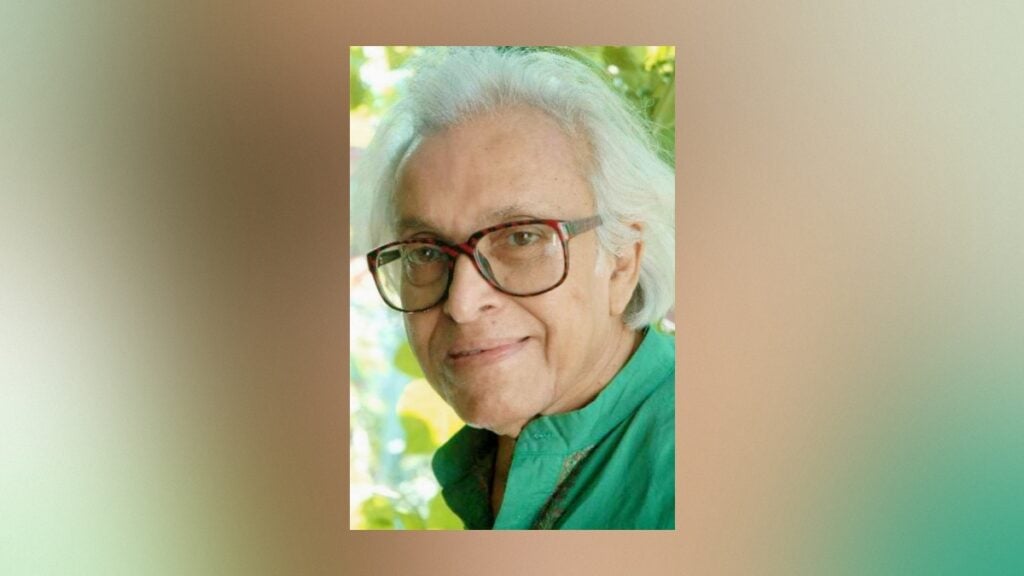
Born on 23 October 1929 in Mahut-Tuli, in Old Dhaka, Shamsur Rahman developed a deep interest in literature and culture from an early age. Over a literary career spanning several decades, he helped shape the language and character of modern Bengali poetry, bringing together contemporary sensibilities, urban experiences and a distinctive artistic vision.
Widely regarded as one of the leading poets of Bengali literature after Jibanananda Das, Rahman explored a remarkable range of subjects. The loneliness of city life, love, nature, the uncertainties of human existence, social injustice, political oppression and the desire for freedom all found a place in his work. His accessible yet evocative language, modern poetic style and ability to capture the mood of his time established him as a singular figure in the literary landscape of Bengal.
Rahman was not merely an observer of society. He was also a courageous literary voice for freedom, democracy and secularism. His poetry repeatedly challenged discrimination under Pakistani rule, authoritarian repression, communalism and the denial of people’s rights. For him, poetry was not simply an exercise in aesthetic expression. It was a means of resisting injustice, defending human dignity and sustaining the hope of a more equitable society.
His contribution became particularly significant during the turbulent period surrounding Bangladesh’s Liberation War in 1971. At a time when the people of the country were fighting for independence, his poems gave expression to their aspirations, sacrifices and determination. Two of his best-known works, Shadhinata Tumi (Freedom, You Are) and Tomake Pawar Jonno, He Swadhinata (To Attain You, O Freedom), remain closely associated with the spirit of the nation’s struggle for liberation.
In Rahman’s poetry, freedom represented far more than independence from foreign rule. It also embodied human dignity, fundamental rights, intellectual liberty and the opportunity for people to determine their own future. His words captured the emotional force of a defining moment in Bangladesh’s history and gave literary form to the hopes of generations who longed for a sovereign homeland.
Another defining feature of his work was the balance between his deep love for Bangladesh and his unsparing criticism of its political and social shortcomings. His collection Udbhot Ut-er Pitthay Cholese Swadesh (The Homeland Moves on the Back of an Absurd Camel) reflects his sharp awareness of national uncertainty and political disillusionment. The title itself evokes a country struggling through disorder and contradictions.
Rahman understood that patriotism did not require silence in the face of wrongdoing. Instead, his poetry often served as a mirror held up to society, exposing the gap between national ideals and political realities. When corruption, injustice and the erosion of public values threatened the country’s aspirations, his words challenged complacency and called for greater accountability. This critical perspective has helped preserve the relevance of his poetry beyond the circumstances in which it was written.
His literary achievements extended well beyond poetry. He also made significant contributions to prose, essays, newspaper columns and translation, enriching the development of modern Bengali literature. His writing reflected both a keen awareness of contemporary life and a deep engagement with the intellectual and cultural questions of his time.
Throughout his career, Rahman received numerous prestigious honours, including the Bangla Academy Literary Award, the Ekushey Padak and the Independence Award. These distinctions recognised his outstanding contribution to Bengali language and literature. Yet his most enduring achievement lies in the lasting connection he established with readers and his place in the literary history of Bangladesh.
Shamsur Rahman died in Dhaka on 17 August 2006, aged 76. His death marked the loss of a major literary figure, but his poetry continued to speak to readers across generations. His words invite reflection, encourage questioning and remind people of the importance of standing against injustice. They also offer a way of understanding the complicated relationship between love for one’s country and the responsibility to challenge its failures.
On the anniversary of his birth, Rahman deserves to be remembered not only as a celebrated poet but also as a literary conscience of Bangladesh. His work remains an important part of the country’s cultural inheritance, preserving the emotions and aspirations associated with its struggle for freedom while addressing concerns that continue to resonate in public life.
His poetry speaks to the enduring importance of democracy, humanism, secular values and freedom of expression. These themes give his writing a significance that extends beyond any single political period or historical event. As new generations encounter his work, they discover not only the language of an earlier era but also questions about justice, identity and the responsibilities of citizenship that remain relevant today.
The life and work of Shamsur Rahman demonstrate how literature can become part of a nation’s collective memory. Through his words, the experiences of ordinary people, the anxieties of urban life and the aspirations of a country seeking freedom were transformed into enduring works of art.
As Bangladesh celebrates his birth anniversary, the nation pays tribute to a poet whose voice helped articulate its dreams and contradictions. His literary legacy continues to inspire readers to cherish their homeland while remaining alert to injustice and committed to human dignity.
Shamsur Rahman remains a bright star in the firmament of Bengali poetry. Through his words, the spirit of Bangladesh lives on, and through his verse, the dream of human freedom continues to find expression.
A humble tribute to the poet whose words gave lasting expression to a nation’s soul.