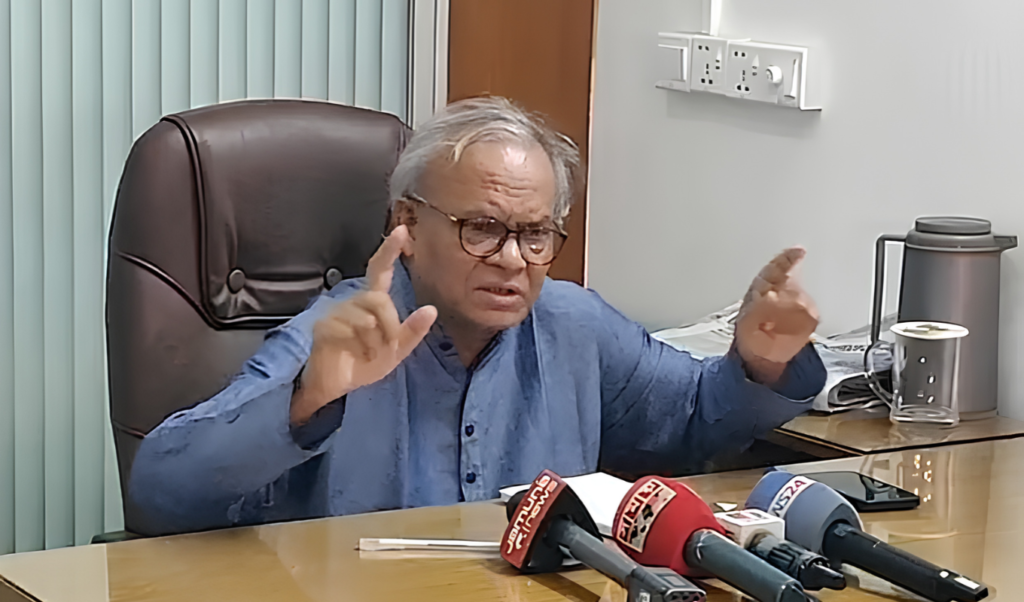
Ruhul Kabir Rizvi, Acting Secretary General of the Bangladesh Nationalist Party (BNP) and Political Adviser to the Prime Minister, has described recent comments by Inspector General of Police (IGP) Md Ali Hossain Fakir regarding extrajudicial killings as deeply embarrassing for the administration.
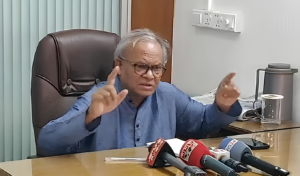
Speaking on Tuesday afternoon during the inauguration of a free medical camp in front of the BNP’s central office in Naya Paltan—organised to mark the 48th founding anniversary of Jatiyatabadi Juba Dal—Rizvi addressed the IGP’s statement that “crossfire will be conducted if the government grants permission.” He noted that such remarks from the head of law enforcement cause profound concern, particularly under a government formed by a party that spent nearly two decades campaigning against enforced disappearances and extrajudicial killings.
“The head of the police force is an integral part of the government,” Rizvi remarked, questioning how a senior official could publicly reference extrajudicial practices. He added that if the statement was made unintentionally, the context might differ, but the underlying sentiment remains troubling.
Rizvi highlighted that the BNP fought against authoritarian governance, enforced disappearances, and extrajudicial actions for 17 years, leading up to the transformative events of July and August. Following an open and fair election, the party assumed office, with Prime Minister Tarique Rahman committing to building a humane nation. Against that backdrop, public references to extrajudicial tactics by law enforcement leadership undermine public expectations.
Emphasising that existing legal frameworks are fully sufficient to combat crime, Rizvi stated that the sole responsibility of law enforcement agencies is to enforce established statutes. He expressed concern over rising juvenile delinquency and recent criminal activity in parts of Dhaka, asserting that existing laws—when applied properly and without external influence—are entirely capable of curbing lawlessness. Neither enforced disappearances nor extrajudicial killings can ever serve as acceptable methods of crime control.
Addressing internal administrative capacity, Rizvi pointed out that the police force contains many honest and skilled officers who should be deployed effectively. He urged officials in responsible positions across all state institutions to act with restraint, warning that remarks made to gain cheap acclaim could inflict lasting harm on the nation.
The controversy stems from comments made on Monday by IGP Md Ali Hossain Fakir during an address in Old Dhaka’s Chawkbazar. His statement drew immediate condemnation from a broad spectrum of political parties—including Jamaat-e-Islami, the NCP, Islami Andolan, and the AB Party—alongside numerous human rights organisations.
Following widespread backlash, Police Headquarters issued a clarification on Monday evening. The statement claimed that the IGP did not intend the term ‘crossfire’ to mean extrajudicial killings or punishment outside the judicial process, but had used it metaphorically to convey the police force’s strict stance against criminals.