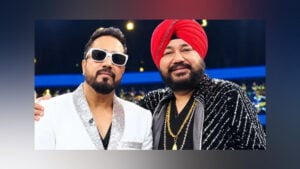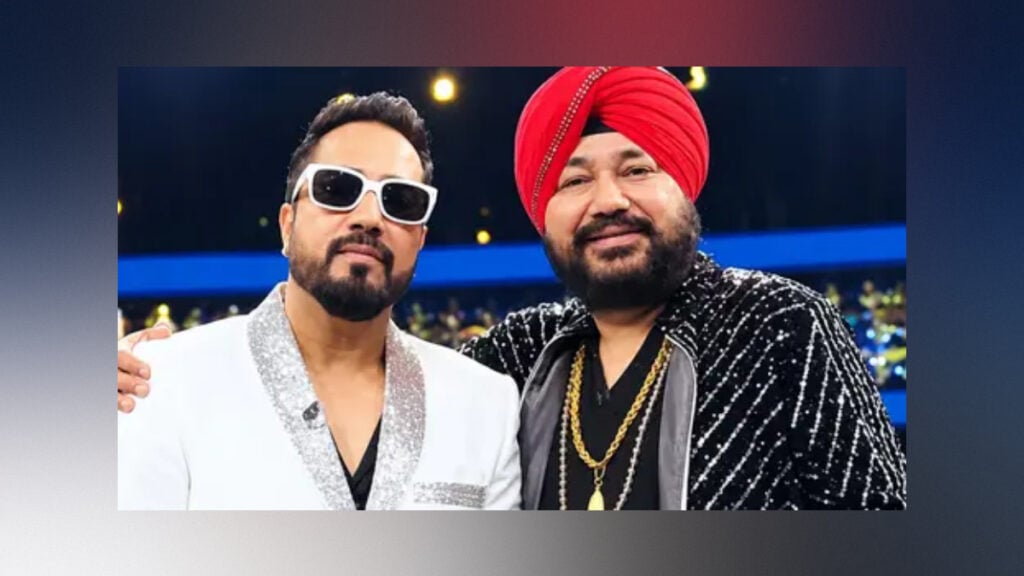
Singer Mika Singh has defended his elder brother, veteran Punjabi singer Daler Mehndi, following a controversy over the latter’s performance at a religious and cultural event in Uttarakhand. Questioning the reaction of state minister Subodh Uniyal, Mika argued that the audience appeared to be enjoying the concert and suggested that the minister’s strong criticism did not reflect the mood of the crowd.
The controversy arose during the Siddhpeeth Maa Kunjapuri Tourism and Development Fair in New Tehri, Uttarakhand, where Daler Mehndi was performing during Navratri. A video showing the minister interrupting the singer on stage circulated widely on social media, prompting criticism and drawing reactions from the entertainment industry.
Mika questions the minister’s response
Speaking about the incident, Mika said the audience appeared to be enjoying his brother’s performance, with concertgoers dancing and responding enthusiastically to the music. He questioned why the minister had reacted so strongly when, according to his assessment, the crowd seemed satisfied with the show.
In remarks reported by The Times of India, Mika referred to videos and comments circulating on social media as evidence of the audience’s response. He also drew comparisons with his own experiences as a performer, explaining that audiences are often quick to express dissatisfaction when they dislike a song or a particular performance.
Mika said even established singers with large fan bases sometimes face criticism from their audiences. Recalling his own concerts, he described occasions when people had asked him to change a song they found uninteresting or had walked away while he was performing a slower number.
His argument was that a live performance should be assessed in the context of the audience’s reaction rather than solely through an individual’s judgement. In his view, the apparent enthusiasm of the crowd at Daler Mehndi’s concert raised questions about the severity of the criticism directed at the veteran singer.
What happened at the Uttarakhand concert?
The dispute began when Subodh Uniyal, a cabinet minister in Uttarakhand, interrupted Daler Mehndi during his performance at the annual fair. The minister questioned the singer’s condition and criticised the quality of his singing, alleging that he was relying on lip-syncing instead of delivering a live performance.
Lip-syncing involves moving one’s lips in time with a pre-recorded vocal track rather than singing the vocals live. At concerts, audiences may expect performers to sing live, particularly when the event has been organised around their appearance. Allegations that an artist has failed to meet such expectations can therefore become a source of controversy.
The minister’s remarks were captured in a video that subsequently spread across social media platforms. The footage prompted debate over both the quality of the performance and the manner in which an established artist was addressed publicly in front of an audience.
Uniyal later defended his intervention, arguing that Daler Mehndi had not done justice to his performance commitments. He also questioned why the singer had attended the event if he was not physically fit enough to perform as expected.
The minister’s criticism centred on the standard of the show and the allegation that Mehndi had been lip-syncing. Claims concerning the singer’s alleged consumption of alcohol also became part of the controversy, although they have not been independently established. Such allegations should therefore be distinguished from verified facts about the incident.
Mika draws on his own experience as a performer
Mika used his experience in the music industry to explain that popularity does not guarantee an enthusiastic response to every song. Even singers with successful careers can encounter disinterest when their choice of music does not match the audience’s preferences.
He recalled occasions when concertgoers had expressed dissatisfaction with his own song selections. Such reactions, he suggested, are part of performing live, where audience engagement can vary according to musical taste, the pace of a song and the atmosphere of the event.
His comments also reflected the difference between an individual’s assessment of a performance and the response of the people watching it. A minister or organiser may have concerns about whether an artist has fulfilled professional obligations, while members of the audience may judge the event primarily by how much they enjoyed it.
By highlighting the crowd’s apparent enthusiasm, Mika questioned whether the level of criticism directed at his brother was justified. His position was not that performers should be exempt from scrutiny, but that audience reactions deserve consideration when the quality of a live concert is being debated.
Social media brings the dispute into wider focus
The incident has attracted considerable attention on social media, with supporters of Daler Mehndi questioning the decision to reprimand the singer in front of the audience. The episode has also prompted broader discussion about professional commitments, performers’ health and how disagreements should be handled at public events.
Cultural festivals often bring together artists, organisers, public officials and audiences with different expectations. Organisers may expect performers to deliver a particular standard of entertainment, while artists must also consider their physical condition and ability to perform. When disagreements arise, the way in which concerns are communicated can become as contentious as the original complaint.
In this case, Uniyal has defended his criticism by pointing to what he considered an inadequate performance. Mika, meanwhile, has emphasised the apparent enjoyment of the audience and questioned the minister’s reaction.
The episode also demonstrates how footage of a brief confrontation can transform a local cultural programme into a wider public controversy. Once a video circulates online, viewers can form opinions based on the available footage, even when the full circumstances surrounding the incident remain unclear.
For Daler Mehndi, the dispute has renewed attention on his performance and the confrontation with the minister. For Mika, defending his brother has become an opportunity to question how established artists are treated when disagreements occur on stage.
The disagreement remains unresolved, with contrasting views over the quality of the performance and the minister’s response continuing to fuel debate. The incident has ultimately raised questions about the balance between professional accountability, public criticism and respect for performers at cultural events.