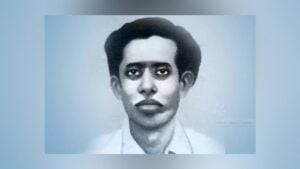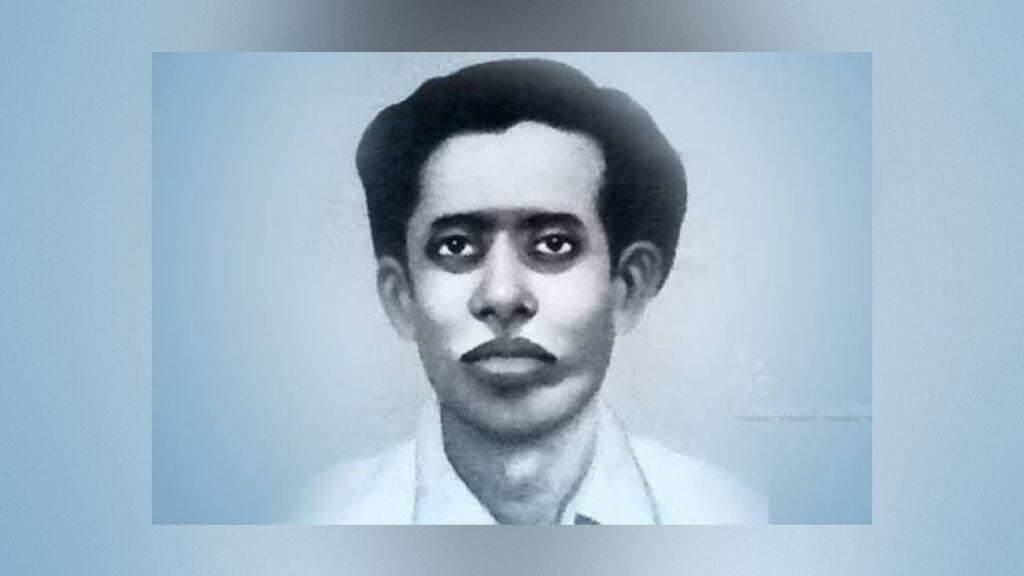
He is not merely a source of pride for Manikganj, his birthplace, but an enduring symbol of courage and sacrifice for the entire Bengali nation.
Rafique was born on 30 October 1926 in Paril Baldhara village, under Singair upazila of the then Manikganj subdivision in Dhaka district. The village is now also known as Rafiknagar. His father was Abdul Latif and his mother was Rafiza Khatun. He was the eldest among five brothers and two sisters.
From an early age, Rafique demonstrated academic ability, courage and an interest in cultural activities. He passed his matriculation examination from local Baira High School in 1949. He subsequently studied at Debendra College in Manikganj.
Later, he moved to Dhaka, where he became involved in his father’s business while also enrolling in the Accounting Department of Jagannath College, now Jagannath University. His student life coincided with a period of growing political and cultural resistance against the policies of Pakistan’s ruling authorities.
The historic Language Movement of 1952
The struggle to establish Bengali as a state language began gathering momentum in 1948, following attempts by Pakistan’s ruling authorities to impose Urdu as the country’s sole state language. The proposal was strongly opposed in East Bengal, where Bengali was the mother tongue of the overwhelming majority of the population.
Students, intellectuals, political activists and people from different sections of society gradually united around the demand for official recognition of Bengali. The movement was not simply about language; it also reflected the people’s growing determination to defend their cultural identity and political rights.
Then came 21 February 1952, a day that would forever change the course of Bengali history.
The Pakistani authorities imposed Section 144 in Dhaka, prohibiting public gatherings and processions in an attempt to prevent demonstrations. However, students at the University of Dhaka and other educational institutions refused to abandon their demand. Defying the restrictions, they took to the streets to protest against the government’s language policy.
The student procession, which began in the University of Dhaka area, moved towards the Dhaka Medical College Hospital. When demonstrators reached the area in front of the hospital, police opened fire on them.
Rafique Uddin Ahmed was among those struck by the bullets. He sustained a gunshot wound to the head and died at the scene.
His death became one of the most significant acts of sacrifice in the Language Movement. Some historical accounts also identify him as the first martyr to be shot on 21 February, although accounts of the sequence of events and casualties vary.
The killings that day intensified public anger and strengthened the movement. What began as a demand for linguistic recognition gradually developed into a broader struggle for political rights, cultural freedom and self-determination.
A sacrifice that shaped a nation’s history
The sacrifice of Rafique and other language martyrs left a lasting impact on the political consciousness of the Bengali people. The Language Movement became a foundation for subsequent political struggles in East Pakistan, including the mass uprising of 1969 and the independence movement that culminated in the Liberation War of 1971.
The eventual emergence of Bangladesh as an independent country was shaped by several decades of political resistance, with the Language Movement occupying a central place in that historical journey.
Rafique’s body was buried at the Old Azimpur Graveyard in Dhaka. In recognition of his contribution and supreme sacrifice, the Government of Bangladesh posthumously awarded him the Ekushey Padak in 2000, one of the country’s highest civilian honours.
His memory has also been preserved in his birthplace. The Shaheed Rafique Uddin Ahmed Library and Memorial Museum was established in Rafiknagar, Singair, Manikganj, to introduce younger generations to his life, the Language Movement and the significance of his sacrifice.
Remembering a hero on his birth anniversary
Today, 30 October, marks the birth anniversary of Rafique Uddin Ahmed. Born a century ago, he remains an enduring symbol of the courage and determination with which the Bengali people defended their mother tongue.
His story is a reminder that the freedom to speak one’s language and preserve one’s cultural identity was not achieved without immense sacrifice. The martyrs of 1952 gave their lives so that Bengali could receive the recognition and dignity its speakers had demanded.
Rafique’s legacy extends far beyond his birthplace or any particular geographical boundary. He belongs to the entire Bengali nation, whose history, identity and cultural heritage are inseparably connected with the Language Movement.
The blood shed on 21 February continues to carry profound significance, not only for Bangladesh but also for people around the world who value linguistic diversity and the right to speak their mother tongue.
As long as Bengali is spoken and the Bengali nation remembers its history, the name of Rafique Uddin Ahmed will remain alive in the hearts of generations.
His sacrifice will never be forgotten. The nation remembers him with profound respect, gratitude and love.
Heartfelt tribute to Language Martyr Rafique Uddin Ahmed.