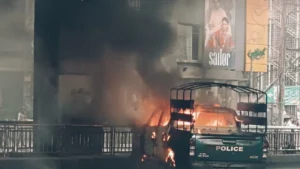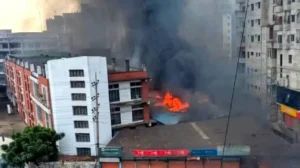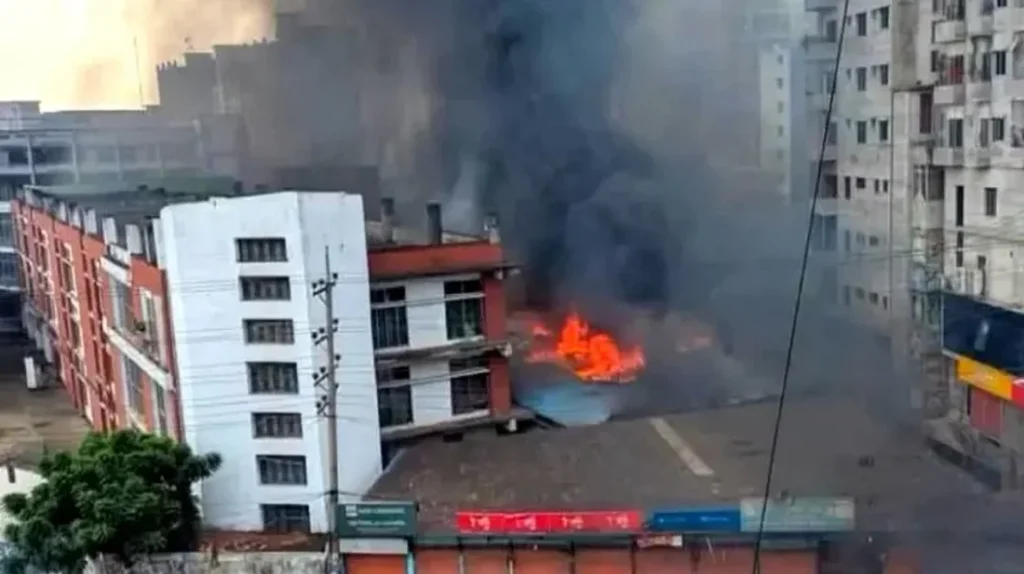
Fire broke out in a textile scrap warehouse belonging to Tropical Knitex Limited in the Chandra Palli Bidyut area of Kaliakair, Gazipur, on Sunday afternoon, amidst mounting local labour unrest. Emergency operations faced severe delays as fire crews encountered gridlocked traffic and blockaded highways, ultimately requiring Border Guard Bangladesh (BGB) escorts to reach the scene by driving counter-traffic down the highway.
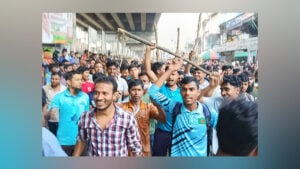
Tarequl Islam, station officer at the Kaliakair Fire Service, confirmed that two firefighting units were dispatched immediately upon receiving reports of the blaze. However, ongoing demonstrations by local garment workers had brought vehicular movement along the strategic highway to a complete standstill since Sunday morning. The resulting tailbacks prevented the initial response vehicles from navigating the congestion, forcing them to turn back before securing military assistance.
To bypass the blockade, the BGB escorted the emergency vehicles against the flow of traffic along the opposite carriageway, allowing responders to finally approach the burning installation. While the fire brigade managed to reach the proximity of the facility, officials could not immediately ascertain the exact cause of the ignition or whether it was directly connected to the ongoing unrest.
Gazipur, situated just north of Dhaka, serves as the primary hub for Bangladesh’s multi-billion-dollar ready-made garment (RMG) industry, housing hundreds of major textile mills and apparel processing units. Over recent months, the industrial belt has frequently experienced volatile demonstrations over wage disputes, unpaid allowances, and factory safety standards. Scrap fabric facilities—commonly known as jhut warehouses—store highly flammable textile offcuts generated during garment production, making them particularly vulnerable to rapid fire hazards during periods of civil unrest or accidental ignition.
Local law enforcement agencies and paramilitary forces have heightened security measures across the industrial corridor to maintain order and protect critical manufacturing infrastructure while emergency services work to fully subdue the flames and assess structural damage.