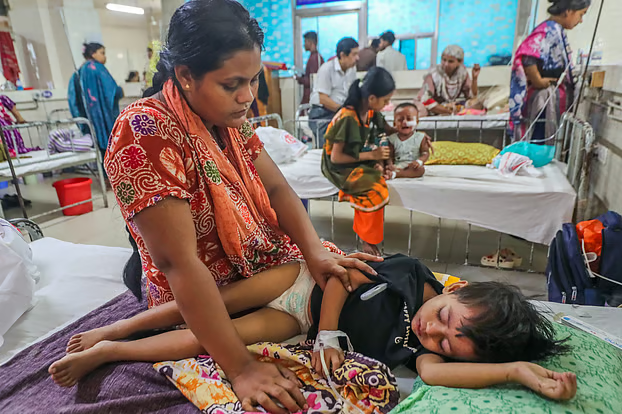
A devastating resurgence of measles continues to sweep across Bangladesh, claiming six more lives within a 24-hour window from Monday morning to Tuesday morning. Official figures released today by the Integrated Control Centre under the Directorate General of Health Services (DGHS) paint a grim picture, with 1,400 fresh cases recorded nationwide in a single day. Amongst these newly reported cases, 1,318 patients exhibited classic measles symptoms, whilst 82 individuals were confirmed positive through clinical testing.
The latest fatalities push the cumulative toll to distressing levels. Since 15 March, health authorities have recorded 1,158 deaths among symptomatic patients, alongside 105 laboratory-confirmed deaths, bringing total casualties attributed to the epidemic well past the twelve-hundred mark. Over the same period, 232,823 patients presented with suspected symptoms, and 24,073 cases were definitively confirmed. Hospitalisation rates reflect the severity of the crisis, with 207,428 individuals admitted for treatment across medical facilities nationwide, of whom 198,752 have been discharged following recovery.
Geographic data highlights a heavy concentration of infections within the central region. Dhaka Division reported the highest single-day surge, registering 546 new suspected cases. Chattogram Division followed with 236 cases, while Sylhet recorded 142, Barishal 132, Mymensingh 100, Khulna 94, Rangpur 35, and Rajshahi 33.
The scale of the current outbreak is unprecedented in modern Bangladeshi public health history. For nearly a decade, measles mortality in the country was virtually non-existent, and annual infection totals had dwindled to mere double or triple digits. Public health experts and international bodies, including the World Health Organisation (WHO) and UNICEF, attribute this catastrophic reversal to systemic failures in routine immunisation drives during 2025 under the then interim administration.
Although the outbreak gathered momentum early in the year, initial governmental intervention proved sluggish. By the time a nationwide vaccination campaign launched in April, serious logistical bottlenecks had already left an estimated four million children completely unvaccinated. Epidemiologists warn that until these structural immunisation gaps are bridged, transmission rates and casualties will prove exceptionally difficult to contain.