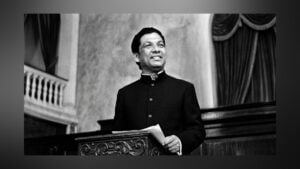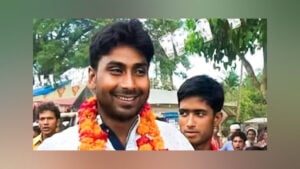
Sacrifice was the guiding principle of his life, while the love and trust of ordinary people remained the greatest source of his political strength. He devoted his life to serving the country and its people, never seeking personal gain or expecting anything in return.
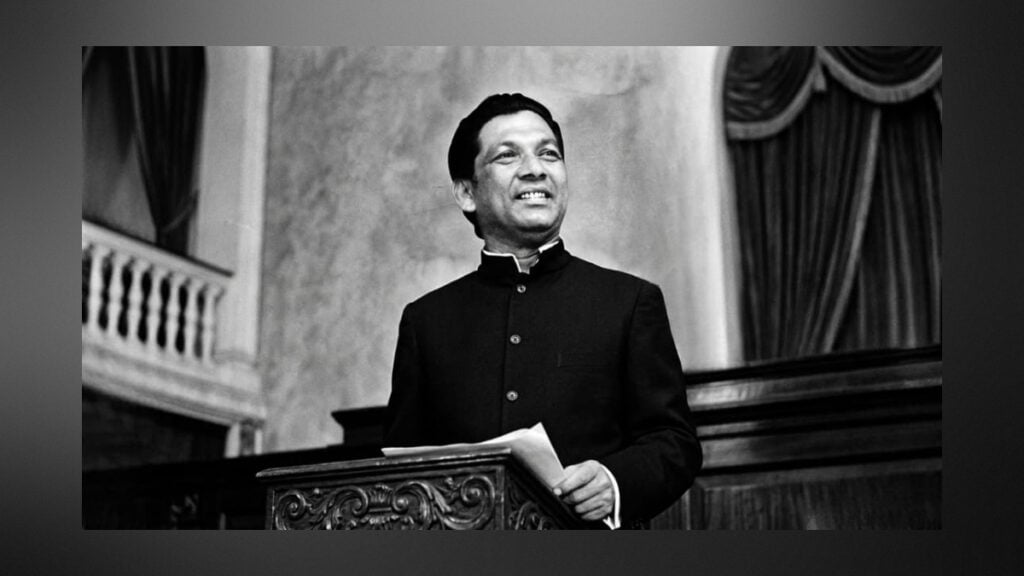
Shaheed Ahsanullah Master was an exceptional individual whose life brought together the qualities of an ideal teacher, a courageous freedom fighter, a pro-worker politician and, above all, a sincere friend of ordinary people. His life was defined by patriotism, courage, honesty, sacrifice and an enduring commitment to humanity.
A fearless freedom fighter on the front lines
During the Liberation War of 1971, Ahsanullah Master was not merely a participant; he was a courageous frontline fighter and organiser. He led his fellow freedom fighters from the front, demonstrating remarkable determination and refusing to surrender his courage even in the most dangerous circumstances.
One incident from the war illustrates his extraordinary bravery. On one occasion, Pakistani occupation forces surrounded him and his fellow fighters from all sides in a dead-end alley. Faced with an almost impossible situation, he remained calm. Removing his clothes to make movement easier, he took his Sten gun and jumped into a nearby canal. After crossing it and reaching a safer position, he launched a counterattack against the Pakistani forces. Under his leadership, the freedom fighters mounted such determined resistance that the enemy troops were eventually forced to retreat.
In another encounter, occupation forces knocked him to the ground and attacked his chest with a bayonet. Despite suffering injuries, he refused to give in. He courageously used his right hand to resist the bayonet attack. He also organised armed resistance alongside his fellow fighters when Pakistani forces launched an assault in the Dangarbazar area.
Master took part in armed engagements in the TSC area of Tongi. His role was particularly significant during a major battle against Pakistani forces in the Chhaydana area. He also fought alongside allied forces in operations that began in Kashimpur. These engagements involved coordinated resistance, including grenade attacks and other efforts to weaken enemy positions.
Throughout the Liberation War, he remained at the forefront of the struggle. He encouraged his fellow fighters, strengthened their morale and led them without hesitation, often putting his own life at risk. His courage and sacrifices on the battlefield became an enduring part of his identity.
An extraordinary combination of teaching and politics
Ahsanullah Master believed that education was indispensable to the liberation and progress of a nation. In his view, education develops people’s intellectual abilities, awakens their conscience and instils a sense of responsibility towards society and the country.
After graduating from the University of Dhaka in 1970, he chose teaching as his profession. As a dedicated educator, he sought to provide his students with much more than academic knowledge. He wanted to nurture patriotism, the spirit of the Liberation War, humanitarian values and a secular outlook among the younger generation.
He was widely regarded as a teacher of teachers, a mentor in politics and an educator even among politicians. To him, politics was never a ladder to power or personal advancement. Rather, it was a responsibility to serve people and work for their welfare.
His experience as a freedom fighter deeply influenced his approach to education. He wanted students to understand the significance of independence and carry the ideals of the Liberation War into their everyday lives. His teaching philosophy and political beliefs therefore complemented one another, reflecting his conviction that education and public service were essential to building a just society.
A political journey built on people’s trust
The foundation of Ahsanullah Master’s political philosophy was his deep affection for ordinary people. He remained committed to addressing their hardships, grievances and demands for dignity and rights. He never considered politics a means of securing personal benefits.
His electoral journey began at the local level. Between 1983 and 1988, he was involved in electoral politics in the Pubail Union Parishad area of Gazipur, where he earned considerable public support. In 1990, he went on to win the election to the Gazipur Sadar Upazila Parishad.
His political influence continued to grow. In 1996, he was elected to the National Parliament from the Gazipur-2 constituency. He retained the seat in the 2001 parliamentary election, demonstrating the strength of his connection with local voters.
His success was not simply the result of political affiliation. His accessibility, personal commitment and close relationship with ordinary people helped establish his position in the constituency, even amid political challenges and difficult circumstances.
He also held important positions in the National Workers League, serving as its general secretary and subsequently as its executive president. In addition, he served as chairman of the Bangladesh Institute of Labour Studies, reflecting his longstanding involvement in labour rights and workers’ welfare.
A lifelong campaigner for workers’ rights
The protection and advancement of workers’ rights remained one of the central commitments of Ahsanullah Master’s political life. He believed that the dignity of labour and the fair treatment of workers were essential to a just society.
He consistently advocated workers’ right to form trade unions, the implementation of agreements reached with the government, improved occupational and health safety in workplaces, and an end to harassment of migrant workers.
His involvement extended beyond public statements and political demands. When workers faced legal cases, he supported initiatives to establish funds to help them pursue their cases. He also remained engaged in various welfare activities intended to improve the lives of working people.
He firmly believed that the labour of workers kept the national economy moving. Yet those who contributed so much to the country’s development were often denied their rightful entitlements. For him, such inequality was incompatible with the principles of justice and social responsibility.
His commitment to workers was not confined to political speeches or organisational responsibilities. He sought to stand beside them in their struggles and ensure that their concerns received attention. This dedication distinguished him from many conventional politicians and earned him a special place among labour activists and ordinary working people.
Deep respect for Bangabandhu
An incident during his visit to Japan reflected Ahsanullah Master’s personal integrity, patriotism and profound respect for the Father of the Nation, Bangabandhu Sheikh Mujibur Rahman.
During the visit, Japanese labour leaders offered him gifts. He politely declined their personal offerings. Instead, he requested that they arrange for a photograph of Bangabandhu Sheikh Mujibur Rahman to be preserved in a museum in Japan.
The request demonstrated that he valued the recognition of national history and the preservation of the country’s political heritage more than personal gifts or material benefits. It also reflected his deep attachment to the ideals and legacy of the Liberation War.
For Ahsanullah Master, patriotism was not merely a political slogan. It was a principle that shaped his personal conduct, public responsibilities and relationships with people.
An assassination that silenced a people’s leader
A man who had faced death on the battlefields of the Liberation War and remained at the forefront of struggles for democracy and people’s rights eventually lost his life in a violent attack.
On 7 May 2004, Ahsanullah Master, a freedom fighter, Member of Parliament and labour leader, was assassinated in an attack by armed assailants.
His death was an irreparable loss not only for his family and political organisation but also for the country and its democratic political landscape. The killing deprived the nation of a courageous organiser, a committed advocate of workers’ rights and a political leader who had earned the affection of ordinary people.
The attack ended his life, but it could not erase the values he had spent decades defending. His dedication to public service, his courage during the Liberation War and his commitment to social justice remain significant aspects of his legacy.
Ahsanullah Master belonged to a rare group of public figures who remained closely connected to the people they represented. He valued public affection more than political power and placed collective welfare above personal interests. His politics was rooted in service rather than self-enrichment.
His life also demonstrated that leadership is not measured solely by electoral victories or official positions. It is reflected in the trust people place in a leader, the sacrifices made for their welfare and the principles upheld even in the face of danger.
His absence continues to be deeply felt. Yet his life, struggles, patriotism and sacrifices remain a source of inspiration for future generations, particularly those who aspire to serve society through education, politics and the protection of people’s rights.
Born: 9 November 1950
Assassinated: 7 May 2004
On the occasion of his birth anniversary, we pay our deepest respects to this courageous leader of the people.
With respect and remembrance — Shaheed Ahsanullah Master.