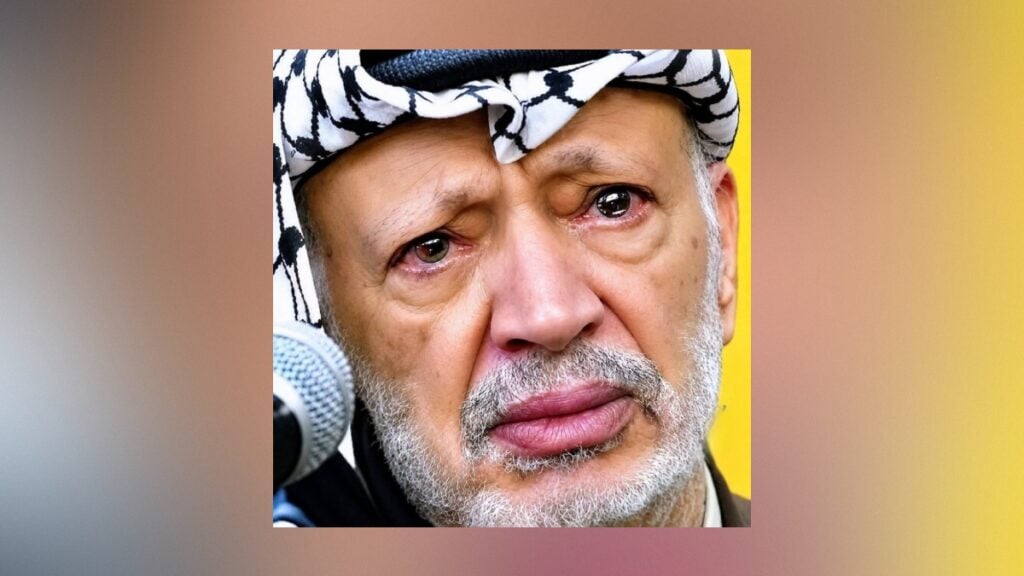
Known affectionately among Palestinians as ‘Abu Ammar’, Arafat became an internationally recognised symbol of Palestinian nationalism. His influence reached beyond the Middle East, earning him respect among many people and political leaders who supported the aspirations of oppressed and freedom-seeking communities. In Bangladesh, too, he was remembered as a trusted friend whose commitment to Palestinian independence resonated deeply with the country’s own history of liberation.
From an engineering graduate to a national leader
Yasser Arafat was born on 24 August 1929 in Cairo, Egypt. His full name was Mohammed Abdel Rahman Abdel Raouf Arafat al-Qudwa al-Husseini. Although he trained as an engineer, much of his adult life was devoted to the Palestinian national cause.
He spent parts of his childhood in Cairo and Jerusalem before pursuing higher education at Cairo University, where he studied civil engineering. During his student years, he became increasingly involved in political activities and developed a strong interest in Palestinian nationalism.
The establishment of Israel in 1948 and the displacement of hundreds of thousands of Palestinians profoundly shaped his political outlook. Palestinians refer to this mass displacement as the Nakba, meaning catastrophe. The experience strengthened Arafat’s conviction that Palestinians needed an organised national movement capable of defending their identity and securing their political rights.
During the 1950s, he played a leading role in establishing Fatah, a Palestinian nationalist organisation that subsequently became one of the principal forces in the independence movement.
In 1969, Arafat became chairman of the Executive Committee of the Palestine Liberation Organisation (PLO). He would remain one of the most prominent figures in Palestinian politics for decades.
His leadership developed through some of the most turbulent periods in modern Middle Eastern history. War, political upheaval, exile and diplomatic isolation repeatedly challenged the Palestinian movement. Yet Arafat succeeded in bringing the Palestinian question to the forefront of international politics.
Taking Palestine’s cause to the world stage
One of the defining moments of Arafat’s political career came in 1974, when he addressed the United Nations General Assembly.
In his historic speech, he presented the Palestinian people’s demand for national rights, independence and self-determination before the international community. His appearance was particularly significant because it gave the Palestinian national movement a prominent platform within the world’s leading multilateral institution.
The same year, the PLO received observer status at the United Nations, strengthening its international diplomatic standing and recognition as a representative of the Palestinian people.
Arafat’s political approach evolved over time. Although his movement had long been associated with armed resistance, he eventually recognised the importance of negotiations and diplomatic engagement in pursuing Palestinian aspirations.
This shift became particularly evident during the peace process of the early 1990s. In 1993, he played a central role in the negotiations that led to the Oslo Accords between Israel and the PLO. The agreement established a framework for limited Palestinian self-government and mutual recognition between the two sides.
In recognition of their efforts towards peace, Arafat jointly received the 1994 Nobel Peace Prize with Israeli Prime Minister Yitzhak Rabin and Foreign Minister Shimon Peres.
That same year, he became the first President of the Palestinian National Authority, marking a significant development in the Palestinian political administration.
However, the peace process failed to deliver the independent and sovereign Palestinian state that generations had hoped for. Major disputes over Jerusalem, borders, Israeli settlements, Palestinian refugees and security remained unresolved. The limitations of the agreements continued to fuel frustration and political disagreement among Palestinians.
Bangladesh’s longstanding friendship with Arafat
Yasser Arafat’s relationship with Bangladesh was one of the most memorable aspects of his international political life.
The friendship between Bangladesh and Palestine has never been confined to formal diplomatic relations. It is rooted in shared aspirations for independence, national dignity, freedom and the rights of people living under oppression.
Arafat maintained a warm relationship with Bangabandhu Sheikh Mujibur Rahman, the founding leader of Bangladesh. Their meeting during the second Organisation of Islamic Cooperation (OIC) summit in Lahore in 1974 was an important moment in the development of relations between the two sides.
Bangladesh had emerged as an independent country only a few years earlier after a devastating Liberation War in 1971. Its own experience of fighting for sovereignty gave the Palestinian struggle particular significance among the country’s political leadership and ordinary citizens.
Since independence, Bangladesh has consistently supported the Palestinian people’s legitimate rights, including their right to self-determination and the establishment of an independent state.
The country’s position has been reflected in diplomatic statements and its engagement with international organisations. Bangladesh has repeatedly advocated a just and lasting solution to the Palestinian question.
In 1980, a commemorative Bangladeshi postage stamp also featured symbolic imagery associated with the Palestinian liberation struggle. The establishment of a PLO office in Dhaka and continued political and diplomatic engagement further strengthened the relationship.
These gestures reflected something deeper than diplomatic courtesy: a longstanding sense of solidarity between two peoples whose histories are closely associated with struggles for national freedom.
A historic visit to Dhaka in 1997
One of the most memorable chapters in Arafat’s relationship with Bangladesh was his visit to Dhaka on 26 March 1997.
He travelled to Bangladesh at the invitation of then Prime Minister Sheikh Hasina to attend celebrations marking the 25th anniversary of the country’s independence.
The occasion brought together three internationally respected leaders: Yasser Arafat, South African anti-apartheid icon and then President Nelson Mandela, and then Turkish President Suleyman Demirel.
Their presence at Bangladesh’s silver jubilee celebrations made the occasion particularly significant in the country’s diplomatic and national history.
During the visit, the three leaders paid tribute to the martyrs of Bangladesh’s Liberation War at the National Martyrs’ Memorial in Savar. Their presence at the memorial was a powerful expression of international respect for the sacrifices made by the Bangladeshi people during their struggle for independence.
For Bangladesh, the visit was more than a ceremonial diplomatic event. It brought together leaders whose political journeys had been shaped, in different ways, by struggles for freedom, dignity and national rights.
Arafat’s participation also reinforced the friendship between Bangladesh and Palestine. His warmth towards Bangladesh and the country’s consistent support for Palestinian independence helped establish a lasting place for him in the public imagination.
For many Bangladeshis, he was not simply a foreign political leader. He was a close friend who understood the significance of national liberation and the importance of standing beside people fighting for their rights.
A mysterious departure and an enduring legacy
The final years of Arafat’s life were marked by political isolation and deteriorating circumstances.
During the Second Intifada, the Palestinian uprising that began in 2000, tensions between Israel and the Palestinians escalated sharply. From 2002, Arafat was effectively confined to his headquarters in Ramallah amid Israeli military operations.
His movements became severely restricted, leaving him increasingly isolated from the outside world.
In October 2004, he fell seriously ill and was transferred to France for medical treatment. He died on 11 November 2004, aged 75, at a military hospital in Clamart, near Paris.
Questions surrounding the cause of his death emerged almost immediately. The absence of a universally accepted explanation prompted speculation and subsequent investigations.
Particular attention was drawn to allegations of polonium-210 poisoning after traces of the radioactive substance were reportedly identified in some of his personal belongings. The findings prompted further examinations and international debate.
However, investigations produced differing interpretations, and no universally accepted conclusion has been established regarding the precise cause of his death. His final days therefore remain one of the most controversial chapters in modern Palestinian political history.
Twenty-two years on, Palestine’s dream remains unfulfilled
More than two decades have passed since Arafat’s death, yet the Palestinian aspiration for an independent and sovereign state remains unfulfilled.
Instead of the lasting peace many had hoped would emerge from the diplomatic initiatives of the 1990s, Palestinians continue to face conflict, occupation, displacement and humanitarian hardship.
The situation in Gaza has been particularly devastating. Prolonged restrictions, military operations, extensive destruction of infrastructure and widespread displacement have placed enormous pressure on the civilian population.
Thousands of families have experienced the loss of loved ones, while children have grown up amid insecurity and the destruction of their homes, schools and communities. Damage to hospitals and essential services has further complicated humanitarian assistance.
The situation in the occupied West Bank also remains deeply troubled, with continuing tensions surrounding Israeli settlements, land, movement restrictions and security.
Political divisions among Palestinian factions have added another layer of difficulty. The absence of a unified political direction has complicated efforts to present a coordinated national position and advance the objective of statehood.
Against this backdrop, Arafat’s leadership and diplomatic experience continue to attract attention. His political decisions were not without controversy, and his legacy remains subject to differing assessments. Nevertheless, his contribution to bringing Palestinian national aspirations onto the international agenda remains significant.
Today’s Palestine needs leadership capable of bringing divided political forces together, protecting civilian rights and building effective international partnerships. Such leadership must also be committed to a credible political process that can move the Palestinian people closer to independence, security and dignity.
Arafat’s political journey demonstrated the importance of national unity, international engagement and sustained efforts to secure political recognition. His legacy also serves as a reminder that diplomatic agreements alone cannot guarantee lasting peace unless the fundamental rights and aspirations of the people concerned are addressed.
A friend Bangladesh will always remember
Yasser Arafat may no longer be alive, but his name remains firmly embedded in the history of the Palestinian liberation movement.
His decades of political struggle, international diplomatic engagement and commitment to Palestinian national aspirations made him one of the most recognisable figures in modern Middle Eastern politics.
For Bangladesh, however, his legacy carries an additional meaning. His friendship with Bangabandhu Sheikh Mujibur Rahman, his historic visit to Dhaka in 1997 and his association with Bangladesh’s independence celebrations secured him a special place in the country’s collective memory.
The relationship between Bangladesh and Palestine continues to reflect a longstanding commitment to the principles of freedom, self-determination and human dignity. Bangladesh’s support for Palestinian statehood has remained an important feature of its foreign policy across successive governments.
Remembering Arafat, therefore, is not simply about honouring a former Palestinian leader. It is also an opportunity to reaffirm solidarity with a people whose struggle for independence remains unfinished.
On the 22nd anniversary of his death, heartfelt respect and tribute are paid to the great Palestinian leader and a cherished friend of Bangladesh.
May the Palestinian people finally achieve their legitimate rights. May an independent and sovereign Palestinian state become a reality, and may peace, justice and human dignity prevail over conflict, suffering and oppression.
The dream of freedom must never be allowed to fade.