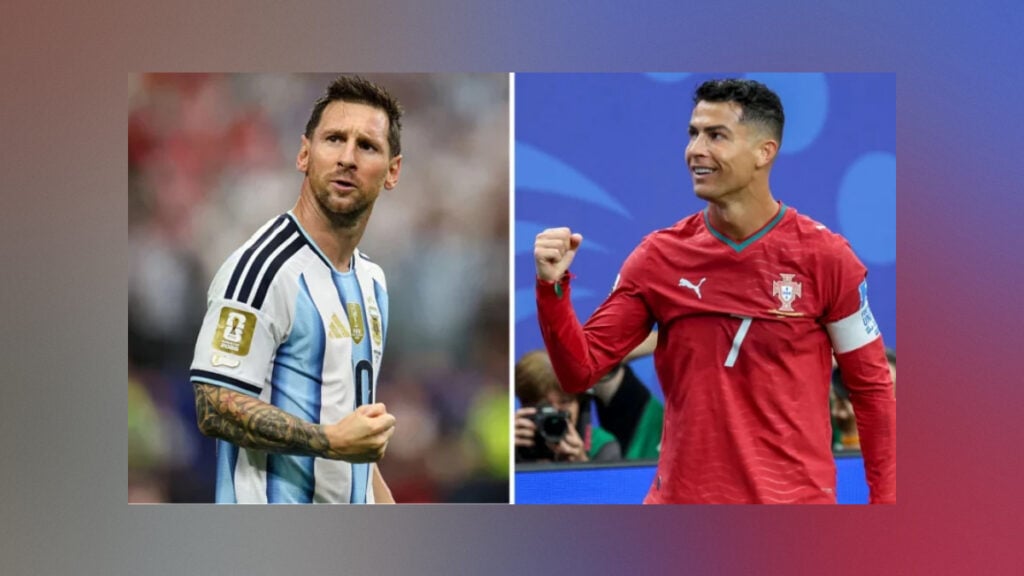
For nearly two decades, Lionel Messi and Cristiano Ronaldo stood at the centre of world football, captivating millions with their extraordinary talent, remarkable achievements and enduring rivalry. Their individual brilliance and constant competition helped define an era, turning matches and tournaments into occasions shaped by the question of who would come out on top. Now, that chapter is drawing to a close. For the first time in years, the latest FIFA international window will unfold without either of the two legendary forwards representing their countries.
Their departures, announced within a relatively short period of each other, mark a significant moment for international football. Both players have left an enormous legacy, but their absence raises questions about how the sport will maintain its global appeal and who will emerge as its next leading figures.
The current international break began on 9 November, although most major national teams are scheduled to begin their matches from 12 November. Lasting approximately a week, the window is shorter than the previous one. With the exception of the South Asian Football Federation (SAFF) competition, most national sides are expected to play two matches during the period.
Several prominent players, however, are also facing fitness concerns. Lamine Yamal, Ousmane Dembele, Granit Xhaka and Virgil van Dijk are among the high-profile names whose availability has been affected by injuries. Their absence could influence the balance and competitiveness of several international fixtures.
Messi’s international journey began in 2005. Over the years, he became Argentina’s most influential footballer, leading the national side through both difficult periods and historic triumphs. His crowning achievement came at the 2022 FIFA World Cup in Qatar, where he captained Argentina to their first world title since 1986. He had previously helped the country win the Copa America in 2021.
The 39-year-old announced his retirement from international football on 31 August. He played his farewell match on 6 October during the previous international window, with Argentina organising an elaborate tribute in Buenos Aires to honour their World Cup-winning captain. The occasion marked the end of an extraordinary chapter in the country’s football history. Messi is now expected to concentrate exclusively on his club career.
Ronaldo’s departure has followed a rather different path. The Portuguese forward made his international debut in 2003 and went on to become one of the most influential figures in the country’s sporting history. He played a central role in Portugal’s triumph at the 2016 European Championship and their victory in the inaugural UEFA Nations League in 2019. He also established himself as one of the most prolific goalscorers in international football.
However, the final stage of his international career was overshadowed by tensions involving the national team’s coaching staff. During the previous international window, Ronaldo left the national team camp following a disagreement with the coach. The Portuguese Football Federation subsequently imposed a suspension on him.
On 5 November, the 41-year-old announced his retirement from international football in a video message posted on social media. The federation offered him the opportunity to play a farewell match, but Ronaldo declined. Like Messi, he will now focus on club football, bringing an end to an international career spanning more than two decades.
Argentina will face Uruguay in Buenos Aires on 14 November before taking on Costa Rica on 17 November. Both matches are friendlies and will provide an early indication of how the team intends to move forward without Messi. His absence will leave a significant gap, particularly given his influence over Argentina’s attacking play and leadership on the pitch.
Portugal, meanwhile, have two UEFA Nations League fixtures scheduled. They will meet Denmark on 15 November before facing Wales three days later. Without Ronaldo, the responsibility of leading the attack will increasingly fall on the team’s other forwards. The matches will offer an opportunity to assess how Portugal adapt to life without their long-serving captain.
Attention is also turning towards the next generation of international stars, with Spain’s Lamine Yamal among the most prominent young talents. Despite his age, the Barcelona forward has already established himself as an important player for both club and country. His technical ability, creativity and confidence have made him one of the most closely watched prospects in European football.
Spain, however, will be without Yamal for their UEFA Nations League encounter against the Czech Republic on Thursday night, 13 November. The teenager suffered a knee injury during Barcelona’s 2-1 victory over Atletico Madrid in La Liga.
The Spanish side will also be without forward Mikel Oyarzabal, who has been affected by flu. The reigning world champions are hopeful that both players will recover in time for Sunday’s match against England. Their availability could prove important as Spain seek to maintain their impressive form in the competition.
Spain have won all four of their Nations League matches so far and currently lead their group. Maintaining that record will be a priority, although the coaching staff will have to consider alternative attacking options for the upcoming fixtures.
Brazil, meanwhile, are preparing for another visit to Asia. Having played three friendly matches in Australia and India during the September-October international window, the five-time world champions will return to the region for two more matches.
Brazil are scheduled to face Japan on 14 November and hosts Singapore on 17 November. The fixtures will give the coaching staff another opportunity to assess the squad and prepare players for future international challenges.
Barcelona forward Raphinha’s participation had initially become a source of disagreement between the Spanish club and Brazil’s national team management. There had been considerable tension over his release for international duty. However, the situation was eventually resolved, and the Brazilian has joined the national squad. He is expected to feature in both matches.
The simultaneous departures of Messi and Ronaldo represent a turning point for international football. Their rivalry was not simply a contest between two exceptional players. It became one of the defining stories of modern sport, attracting audiences across generations and geographical boundaries.
Their contrasting styles made the competition particularly compelling. Messi’s exceptional close control, vision and creativity were matched by Ronaldo’s athleticism, physical strength and remarkable goalscoring ability. Their long-running rivalry, particularly during their respective spells at Barcelona and Real Madrid, brought unprecedented attention to club football and fuelled endless debates among supporters.
Yet football has always moved forward through successive generations. The absence of two legendary figures creates space for emerging players to establish their own identities and shape the future of the game. Yamal and several other young talents now have an opportunity to become the leading faces of international football.
Replacing the influence of Messi and Ronaldo will not be straightforward. Their achievements, longevity and impact on the sport are unlikely to be matched easily. Nevertheless, the next generation will have the chance to create new rivalries, deliver memorable performances and write its own chapters in football history.
The latest international window, therefore, is more than another round of national-team fixtures. It marks the beginning of a new period in world football, one in which the spotlight finally moves away from Messi and Ronaldo and towards the stars who will define the years ahead.