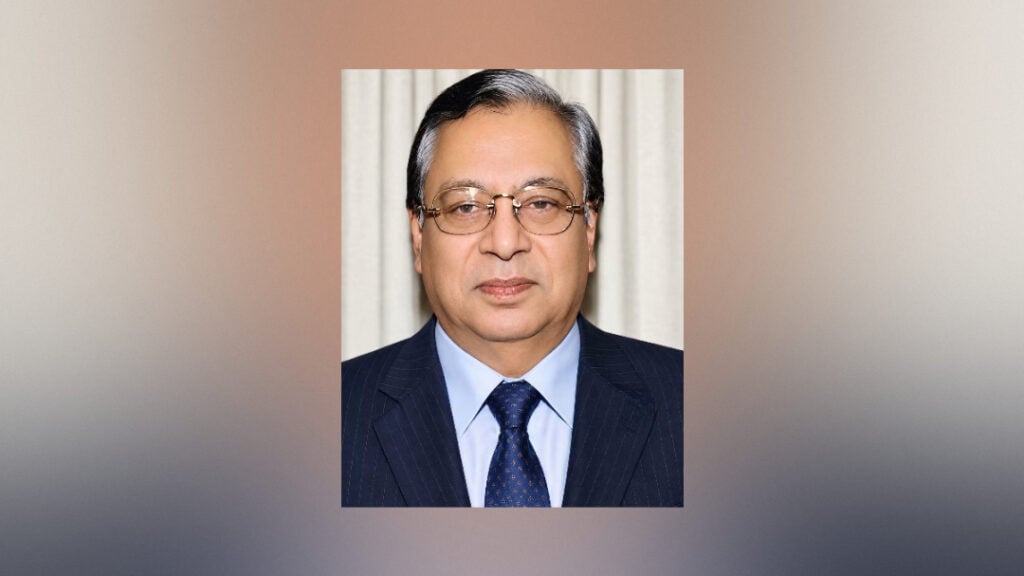
Some individuals rise above personal achievements through their intellect, wisdom, dedication and unwavering love for their country, securing a permanent place in the history of their nation. Their lives represent more than professional success; they become enduring examples of patriotism, sacrifice and service. Humayun Rashid Choudhury was one such distinguished figure in Bangladesh’s history.
An accomplished diplomat, skilled politician, internationally respected statesman and former Speaker of the Bangladesh National Parliament, Choudhury made remarkable contributions to the country. His efforts to build international support for Bangladesh’s Liberation War in 1971 and secure diplomatic recognition for the newly independent nation remain among his most significant achievements.
Born on 11 November 1928 into a distinguished family in Sylhet, Choudhury demonstrated academic ability and a strong commitment to education from an early age. His pursuit of higher studies took him beyond the borders of the subcontinent. In 1947, he graduated from Aligarh Muslim University in India. He subsequently travelled to England to study law and became a member of the prestigious Inner Temple in London. He also obtained a diploma in international relations from the London Institute of World Affairs before pursuing further studies at the Fletcher School of Law and Diplomacy in Massachusetts, United States.
His diplomatic career began in 1953 when he joined the Pakistan Foreign Service. Over the following years, he served in several important international postings, including Rome, Baghdad, Paris, Lisbon and Jakarta. These assignments provided him with extensive experience in international relations and helped establish his reputation as a capable diplomat.
However, the defining moment of his life came during Bangladesh’s Liberation War in 1971.
At a time when he held a secure position in Pakistan’s diplomatic service, Choudhury made the courageous decision to stand with the people of Bangladesh in their struggle for independence. He abandoned the security and professional prospects associated with his position and openly aligned himself with the cause of liberation.
As the head of Bangladesh’s mission in New Delhi, he played a crucial role in presenting the case for Bangladesh’s independence to the international community. He maintained contact with foreign governments, diplomats and influential personalities, explaining the political circumstances behind the liberation struggle and highlighting the need for international support.
His diplomatic efforts helped strengthen international awareness of the atrocities committed during the conflict and the legitimacy of Bangladesh’s demand for independence. He also contributed significantly to creating an international environment favourable to the recognition of the emerging nation.
His decision reflected a profound commitment to his homeland. For him, the freedom of Bangladesh and the rights of its people were more important than personal security, professional advancement or official status. It was this conviction that distinguished him not merely as a diplomat but as a patriot.
Following independence, Choudhury continued to serve Bangladesh with distinction. He worked to strengthen the country’s diplomatic relationships and establish its position in the international community. He subsequently served as Bangladesh’s ambassador to Germany, Saudi Arabia and the United States. His diplomatic expertise, international connections and understanding of global affairs helped promote Bangladesh’s interests and enhance its standing abroad.
One of the most remarkable milestones in his career came in 1986, when he was elected President of the 41st session of the United Nations General Assembly. The appointment was a historic achievement for Bangladesh, placing one of its representatives at the head of a major international forum. It demonstrated the growing recognition of Bangladesh’s diplomatic capabilities and the respect Choudhury had earned through his professional achievements.
His election was also a source of national pride. At a time when Bangladesh was still establishing its position in the international arena, his appointment reflected the potential of the country’s representatives to contribute to global leadership and international decision-making.
Alongside his diplomatic responsibilities, Choudhury became increasingly involved in national politics. He served as Foreign Minister in the cabinet of President Hussain Muhammad Ershad. He was elected to the National Parliament in 1986 and 1988. In 1996, he was elected once again as a Member of Parliament on an Awami League nomination and subsequently became Speaker of the Bangladesh National Parliament.
As Speaker, he played an important role in parliamentary affairs, contributing to the orderly conduct of legislative proceedings and the development of parliamentary institutions. His experience in international diplomacy and public administration brought a distinctive perspective to his responsibilities in the national legislature.
Choudhury’s contributions to international peace and understanding also earned him recognition beyond Bangladesh. In 1984, the College of William & Mary in Virginia, United States, awarded him the Mahatma Gandhi Peace Prize in recognition of his contributions to world peace and international harmony. He was also associated with the London-based International Institute for Strategic Studies, reflecting his engagement with wider discussions on international affairs and security.
Throughout his career, he successfully carried several important responsibilities. He represented Bangladesh on the international stage as a diplomat, contributed to national policymaking as a politician and helped strengthen parliamentary institutions as Speaker. Yet, above all these achievements, his most enduring identity remains that of a dedicated patriot who placed his country’s interests above personal considerations.
Humayun Rashid Choudhury died on 10 July 2001, leaving behind a remarkable legacy of public service. His death was a significant loss for Bangladesh, which lost an experienced diplomat, an internationally respected statesman and one of its most distinguished representatives in global affairs.
As the country observes his birth anniversary on 11 November, his life and achievements deserve renewed attention. His courageous decision during the Liberation War, particularly his efforts to secure international support for Bangladesh’s independence, offers an important lesson for younger generations about the meaning of patriotism and responsibility towards one’s homeland.
His journey also demonstrates how education, professional competence, courage and dedication can enable an individual from a developing nation to make a meaningful contribution to the wider world.
Time may take away individuals, but it cannot erase the significance of their contributions. Humayun Rashid Choudhury remains an enduring example of how one person’s conviction and commitment can help shape a nation’s history and strengthen its place in the international community.
On his birth anniversary, Bangladesh remembers this distinguished son of the soil with profound respect and gratitude.
A humble tribute to a true patriot, Humayun Rashid Choudhury.