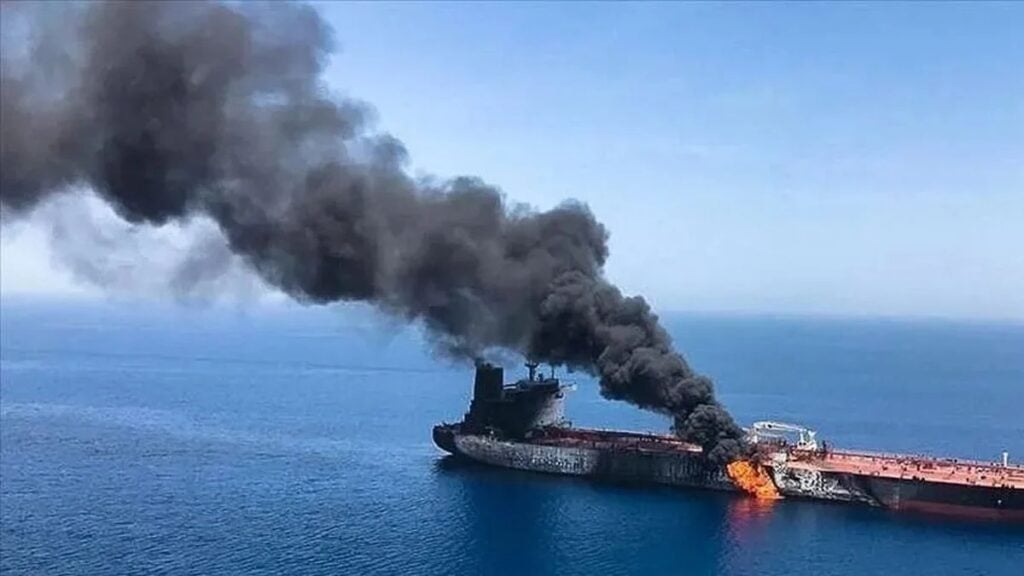
Iran’s armed forces have claimed that four oil tankers caught fire in the Strait of Hormuz after allegedly violating Iranian maritime regulations and ignoring warnings from the country’s naval forces. The incidents were reported on Thursday (12 November), raising fresh concerns over maritime security in one of the world’s most strategically important oil shipping routes.
In a statement, Iran’s Islamic Revolutionary Guard Corps (IRGC) said two oil tankers had been travelling through a prohibited maritime corridor on Wednesday night (11 November). According to the statement, the IRGC Navy repeatedly warned the vessels against using the route, but they continued their journey despite the warnings.
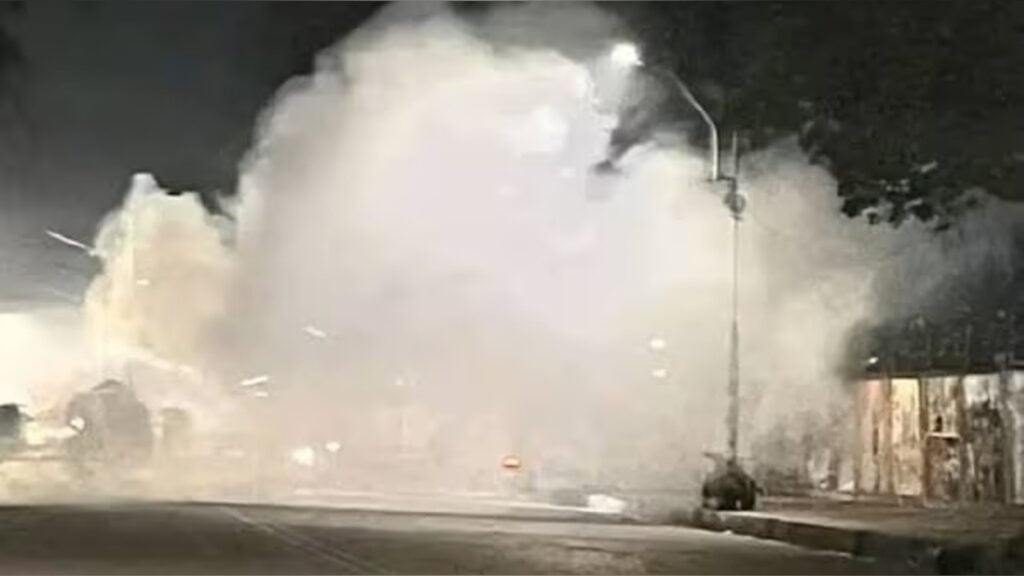
The Iranian military claimed that powerful explosions subsequently occurred aboard both vessels, leaving them unable to continue sailing. The ships were reportedly engulfed in flames following the explosions. However, the IRGC did not provide a detailed explanation of what caused the blasts or clarify whether any external attack was involved.
According to the IRGC, the two vessels were supertankers carrying more than four million barrels of oil between them. If confirmed, the incident could represent a substantial disruption to oil transportation and raise concerns about the potential environmental consequences of damage to vessels carrying such large quantities of crude oil.
The statement also criticised the United States, suggesting that the ships had faced the situation because of what Iran described as excessive confidence in American military protection. The remarks reflect the wider geopolitical tensions surrounding the Strait of Hormuz, where Iranian security policies and the presence of foreign military forces have remained contentious issues.
Meanwhile, Iran’s regular army reported two further incidents involving oil tankers on Thursday. In a statement broadcast by Iranian state television, the military said the vessels were travelling in the eastern part of the Strait of Hormuz and had violated Iranian regulations.
According to the army, both ships subsequently struck naval mines, triggering fires aboard the vessels. However, the statement did not provide details about the origin of the mines, the circumstances surrounding the incidents or the extent of the damage.
Iranian military authorities have not disclosed the names of any of the four affected tankers or identified the countries that own or operate them. There has also been no detailed information about the condition of their crews, possible casualties, rescue operations or the financial losses resulting from the incidents.
The circumstances surrounding the fires therefore remain unclear, and the claims have yet to be independently verified. Further information from the shipping companies, vessel operators and relevant international maritime authorities will be important in establishing what happened.
Strategic Importance of the Strait of Hormuz
The Strait of Hormuz is a critical maritime passage connecting the Persian Gulf with the Gulf of Oman and the Arabian Sea. It serves as a major export route for crude oil and liquefied natural gas from several energy-producing countries in the Middle East.
Saudi Arabia, Iraq, Kuwait, the United Arab Emirates and Iran are among the countries whose energy exports depend heavily on access to the waterway. A significant proportion of the oil transported through the strait is destined for Asian markets, making its security particularly important for major energy-importing economies.
Any disruption to shipping in the area can have consequences well beyond the Middle East. Restrictions on vessel movements, military confrontations or attacks on commercial tankers could affect global oil supplies, push up crude prices and increase shipping insurance premiums.
The possibility of damage to oil tankers also raises environmental concerns. Large-scale oil spills in the region could threaten marine ecosystems, fisheries and coastal communities, while making rescue and recovery operations more complicated.
The latest incidents come amid continuing tensions over maritime security and control of shipping routes in the region. Iran has repeatedly emphasised its authority over security arrangements in waters surrounding its territory, while the United States and other international actors have maintained a military presence in the wider Gulf region.
The reported fires involving four tankers have added another layer of uncertainty to an already sensitive situation. Until the identities of the vessels, the causes of the fires and the extent of the damage are established, the full implications for international shipping and energy markets will remain difficult to assess.