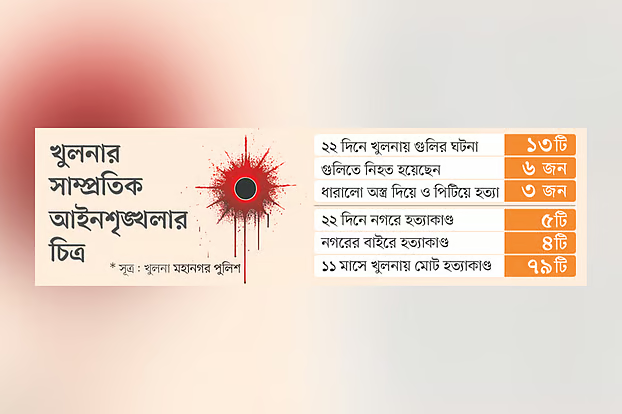
A relentless wave of gun violence and extortion has plunged Khulna into a state of widespread fear, leaving six people dead and six others wounded by gunfire in just 22 days. Criminal syndicates have been opening fire in broad daylight across both the metropolitan area and the wider district, targeting victims on busy streets, inside tea stalls, and outside commercial establishments. Driven largely by turf wars and disputes over the narcotics trade, the escalating armed violence is increasingly catching ordinary citizens in the crossfire.
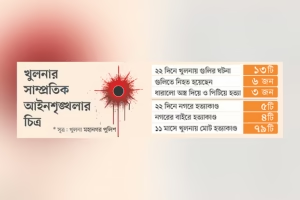
Between 22 October and 12 November, at least 13 separate shooting incidents were recorded across the region. In one brazen attack, armed extortionists fired blank rounds inside a private medical clinic to intimidate staff over unpaid protection money. Beyond the six fatal shootings, Khulna witnessed three additional homicides during the same 22-day window: two victims were hacked to death with sharp weapons, while another was beaten to death. Of these nine total killings, five occurred within Khulna city limits, three in Rupsha upazila, and one in Dumuria. These latest deaths push Khulna’s total homicide toll for the year up to 12 November to 79, comprising 39 murders in the city and 40 across the surrounding district.
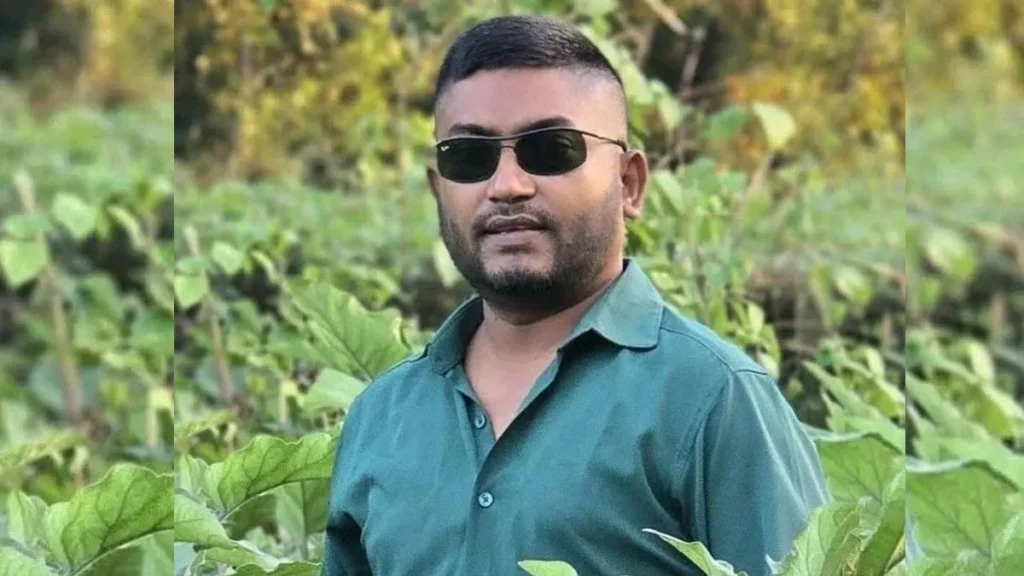
The most recent fatality occurred around 10:15 pm on Thursday, when assailants stormed a shop in Swalpabahirdia village of Rupsha upazila and fatally shot Md Zakir Hossain, 43. A brick and sand trader by profession, Zakir was a member of the TSB Union BNP search committee, a special body formed for the party’s organisational restructuring.
Following Zakir’s funeral prayers at the Uttar Khajadanga Government Primary School ground in Rupsha on Friday afternoon, Khulna City Corporation Administrator and BNP leader Nazrul Islam Manju painted a grim picture of the local security climate. “Khulna is now submerged in terror,” he told journalists. “Killers are murdering people, extorting money, and running open drug markets. Anyone who protests is being executed. So far, they have killed eight to ten of our leaders and activists.” Calling on authorities to compile a list of known criminals and launch joint operations to arrest them, Mr Manju warned that nobody’s life would be safe without immediate, decisive intervention.
The frequency of the shootings has left residents deeply anxious about their daily safety. Although police operations have occasionally resulted in the seizure of firearms and the arrest of suspects, the cycle of killings and intimidation shows little sign of abating. Innocent bystanders are paying a heavy price. Mashiur Rahman, an accountant at the Rupsha upazila education office who was recently caught in an attack, described how a stray bullet meant for someone else struck him just below his left ribcage. “Moving around the city has become unsafe for ordinary people,” he said. When asked why law enforcement has struggled to curb the murders and extortion, Khulna Metropolitan Police Commissioner Md Sajjadur Rahman declined to comment.
Healthcare and Pharmacy Sectors Under Siege
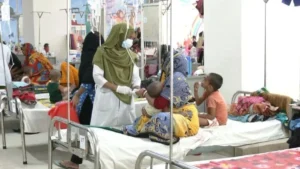
Alongside the bloodshed, businesses—particularly private clinics, diagnostic centres, and pharmacies—have faced sustained attacks, vandalism, and extortion demands. On Tuesday, doctors, nurses, and healthcare staff gathered at the city’s Sat Rasta intersection under the banner of nationalist healthcare professionals to form a human chain in protest. They issued a seven-day ultimatum to police and the civil administration to visibly restore law and order, threatening work stoppages and stricter agitation if security does not improve.
Addressing the demonstration, Khulna Medical College Hospital Director Mostafa Kamal noted that medical professionals are living in constant dread. He alleged that criminal gangs vandalise and force the closure of healthcare facilities whenever their extortion demands go unmet, adding that emergency calls to the police frequently fail to yield an immediate response.
The pharmaceutical retail sector has faced similar coercion. On Thursday, the Chemists and Druggists Association submitted a formal memorandum to the Khulna Metropolitan Police Commissioner demanding urgent action against extortionists. The association reported that several pharmacy owners, including those operating Chayanika Pharmacy in Tutpara and Mallick Brothers in Rupsha, had received death threats alongside demands for large sums of money.
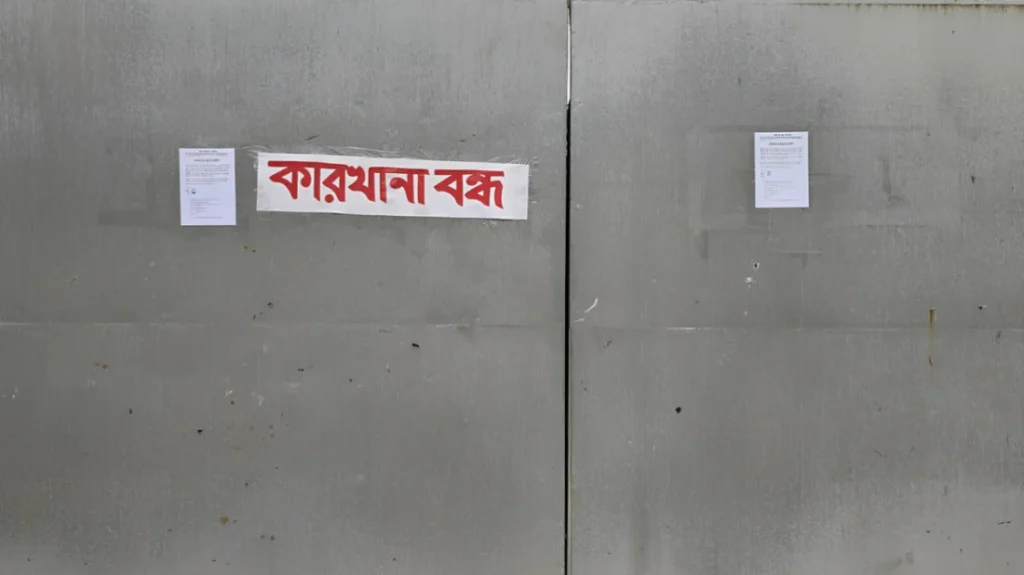
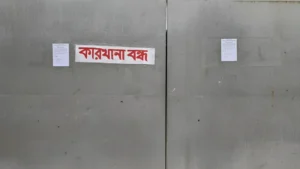
Fear of reprisals forced Mallick Brothers and seven or eight neighbouring dispensaries on Rupsha Stand Road to shut their doors from Monday through Wednesday, reopening only on Thursday after receiving police assurances. However, Chayanika Pharmacy on Tutpara Central Road remains closed after more than two weeks. The association has warned that unless perpetrators are brought to justice within three days, all pharmacies across Khulna will shut down in protest.