Two more children have died with measles-like symptoms across Bangladesh over the past 24 hours, health authorities confirmed on Saturday, 14 November. During the same period, 1,084 new suspected cases were reported nationwide, with laboratory tests confirming measles in 83 of those children.
According to the daily measles situation report released by the Directorate General of Health Services (DGHS), the cumulative toll since 15 March has reached concerning levels. A total of 246,646 children have been identified with measles symptoms across the country during this timeframe. Out of this figure, diagnostic testing has formally confirmed the viral infection in 25,111 cases.
Fatality figures continue to mount alongside the rising infection rate. Since mid-March, 1,201 children exhibiting measles symptoms have lost their lives, including 105 fatalities where the disease was clinically confirmed through laboratory analysis.
A divisional breakdown of the past 24 hours indicates that Dhaka recorded the highest surge, accounting for 452 suspected cases. Chattogram followed with 208 cases, while Sylhet reported 136 and Barishal recorded 100. Lower numbers were documented across the remaining divisions: Khulna registered 71 cases, Mymensingh 57, Rangpur 31, and Rajshahi 29.
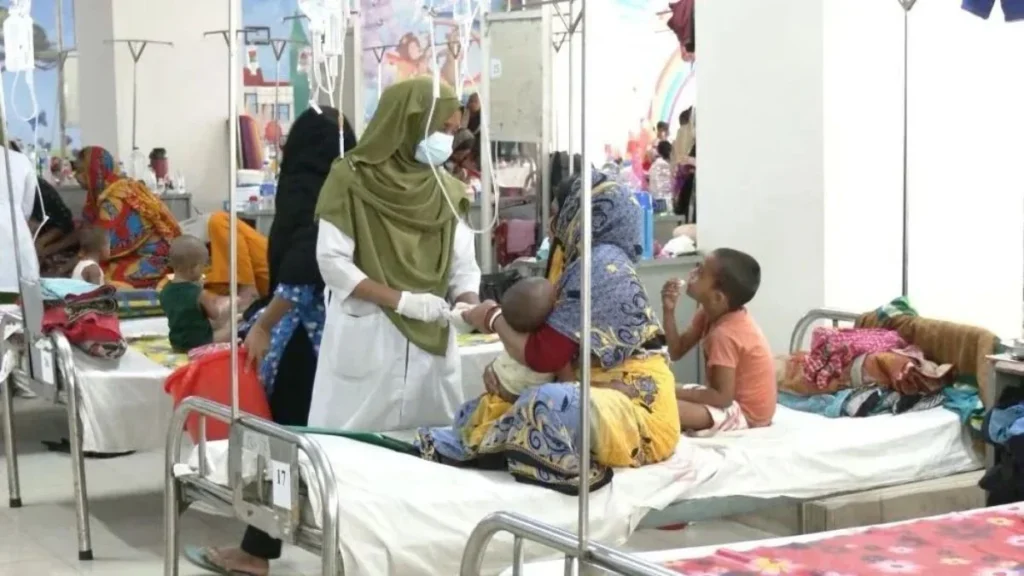
Hospitalisation records provide a broader picture of the healthcare burden and recovery rates. Since 15 March, 220,247 children displaying measles symptoms have required inpatient hospital care. Of those admitted, 211,303 have successfully recovered and been discharged from medical facilities.
Measles remains a highly contagious respiratory illness that poses severe health risks to young children, particularly those with compromised immunity or incomplete immunisation schedules. Complications such as pneumonia, severe diarrhoea, and encephalitis frequently drive mortality among paediatric patients. Public health officials across the country continue to monitor the outbreak closely, stressing the importance of timely medical intervention and routine vaccination programmes to curb transmission and prevent further loss of life.