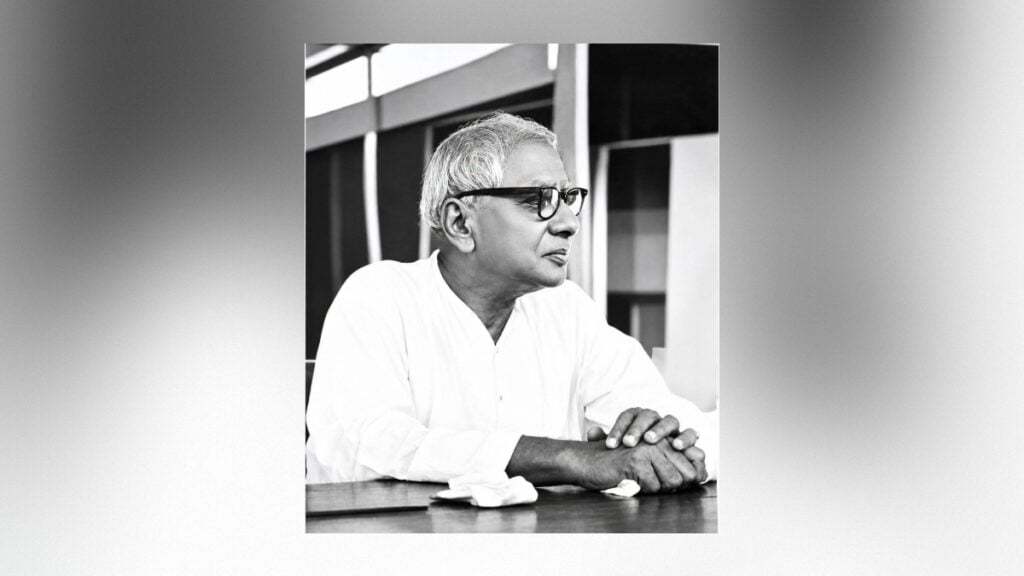
Bengal has produced many remarkable individuals whose contributions to science, medicine and industry have gradually faded from public memory. Among them was Hemendranath Ghosh, a pioneering Bengali medical scientist whose work helped lay the foundations for the indigenous production of sera, vaccines and penicillin in India. His life was defined by scientific curiosity, determination and a commitment to making the country less dependent on imported medicines.
Born on 16 November 1890 in Ashikati village, in the then Tripura district, now part of Chandpur in Bangladesh, Ghosh was the son of Gurcharan Ghosh, a respected member of the community. He began his education at Baburhat High School, near his village. The encouragement of the school’s headmaster, Saradacharan Dutta, played an important role in nurturing his intellectual abilities and academic interests.
He later moved to Calcutta for higher education, completing his Intermediate in Science at Bangabasi College before enrolling at Calcutta Medical College. His student years, however, were far from straightforward. His involvement in the anti-British nationalist movement led to his imprisonment during the struggle against colonial rule. Following his release, he overcame various obstacles and obtained his MB degree in 1918.
In 1919, Ghosh joined the then Carmichael Medical College, now RG Kar Medical College, as its first resident physician. He subsequently received a temporary commission in the Indian Medical Service and served in Dera Ismail Khan. However, his earlier political involvement made it difficult for him to continue working there, and he eventually resigned.
That decision marked a turning point in his career. Rather than limiting himself to clinical practice, Ghosh resolved to devote his knowledge and experience to medical research and the development of India’s domestic pharmaceutical industry.
In 1920, he travelled to Europe to pursue advanced research and acquire specialised knowledge of pharmaceutical manufacturing. Instead of following the conventional route of obtaining British qualifications, he went directly to the prestigious Pasteur Institute in Paris. There, under the guidance of leading scientists, he studied the preparation of sera, vaccines and other biological products, alongside techniques for disease prevention and quality control.
His research in Paris was interrupted by severe financial difficulties. The cost of living and conducting scientific work abroad became increasingly difficult to manage. Help arrived through an unexpected source: Nobel laureate Rabindranath Tagore.
During a visit to Paris, Tagore recognised the importance of Ghosh’s research and learned about his financial struggles. He subsequently wrote to Sir Ashutosh Mukherjee, the then Vice-Chancellor of the University of Calcutta, requesting assistance. Responding to Tagore’s appeal, Mukherjee arranged the Radhika Prasanna Scholarship for Ghosh. The financial support enabled him to continue his scientific work.
After completing his research at the Pasteur Institute, Ghosh travelled to several other European centres of scientific excellence. These included the Robert Koch Institute in Berlin, Behring Works in Marburg and the Institute of Tropical Medicine in Hamburg. The experience broadened his understanding of bacteriology, biological manufacturing and laboratory management.
In 1923, he returned to India carrying bacterial cultures, research materials and equipment needed to establish a small laboratory. Even during the sea voyage, he had to work tirelessly to keep the bacterial cultures alive. His determination to bring practical scientific knowledge back to his homeland was evident throughout the journey.
Upon returning, Ghosh joined Bengal Immunity Company. His research and initiatives helped open new possibilities for the domestic production of sera and vaccines using Indian expertise. One of his most significant achievements was his contribution to the production of India’s first indigenous anti-diphtheria serum. At a time when the country remained heavily dependent on foreign technology and imported medical products, this represented a major advance in indigenous scientific capability.
Alongside his industrial research, Ghosh continued his medical responsibilities. He served as a resident physician at Jadavpur Tuberculosis Hospital, where he contributed to the treatment and care of patients suffering from tuberculosis.
He later joined Bengal Chemical and Pharmaceutical Works, where he became director of its Biological Laboratory. Working in the environment shaped by Acharya Prafulla Chandra Ray, whose pioneering efforts had helped establish India’s indigenous chemical and pharmaceutical industry, Ghosh further developed his research capabilities. It was at this laboratory that India’s first tetanus antitoxic serum was produced.
In 1930, he travelled again to Europe and the United States to expand his scientific knowledge. In America, he worked at the State National Laboratory in Albany, where he gained experience in new research techniques. Two years later, in 1932, he obtained the MSPE diploma in Paris.
Despite his achievements, Ghosh remained dissatisfied with the limited opportunities and inadequate funding available for independent medical research. He therefore decided to establish a dedicated research institution of his own.
In 1935, he transformed the Pasteur Clinical Laboratory into the Indian Institute of Medical Research and became its first director. The institution was among the early national-level medical research organisations established through private initiative in India. It subsequently came under the Government of India and became known as the Indian Institute for Biochemistry and Experimental Medicine.
However, Ghosh’s most remarkable contribution to the pharmaceutical industry was still to come.
With the support of his wife, Anna Ghosh, also known as Neuta, he invested their personal savings and assets in establishing Standard Pharmaceutical Works Limited. Anna was herself trained in bacteriology at the Pasteur Institute in Paris. Her scientific background enabled the couple to develop a close professional partnership, combining their knowledge and experience in research and pharmaceutical production.
Their work on antibiotics eventually led to significant progress in penicillin manufacturing and quality control. Through a pilot production facility developed under Ghosh’s direction, they produced India’s first penicillin using local personnel, indigenous technical expertise and relatively inexpensive culture media.
This was a landmark achievement for India’s pharmaceutical industry. At a time when the country relied heavily on imported medicines and foreign manufacturing capabilities, the initiative demonstrated that sophisticated pharmaceutical products could also be developed and manufactured locally.
The importance of Standard Pharmaceutical Works increased considerably during the Second World War, when international supply chains were disrupted and imports of medicines and medical equipment became increasingly difficult. The company supplied essential medicines to the armed forces, including adrenaline-pituitary preparations and other pharmaceutical products.
Ghosh’s contribution extended beyond research and manufacturing. He understood that the development of a sustainable pharmaceutical industry required skilled workers and practical technical training. He introduced the technology of manufacturing glass ampoules from glass tubing and personally trained some of the industry’s early workers.
During the devastating Bengal famine of 1943, his company also provided employment and technical training to many Bengali women. They were trained in making glass ampoules, filling medicines, packaging pharmaceutical products and carrying out laboratory-related tasks. His industrial initiatives therefore created opportunities for women at a time when employment options for them were considerably limited.
Ghosh also played an active role in professional and industrial organisations. From 1928, he was associated with the Indian Medical Association as one of its founding members and served as an early secretary of its Bengal branch. He also became president of the Indian Chemical Manufacturers’ Association and vice-president of the Federation of Indian Chambers of Commerce. In addition, he served as president of the Chandpur Sammilani.
His scientific interests covered several major public health concerns, including tuberculosis, cholera and diseases of the digestive system. His research papers appeared in medical journals in India and abroad. He was not merely a practising physician but also a researcher, pharmaceutical manufacturer and skilled technical planner.
Despite his professional accomplishments, Ghosh was known for his modesty and reluctance to seek publicity. He quietly helped people in distress and supported struggling institutions. Much of his charitable work remained unknown, sometimes even to his wife.
During the later years of his life, he became increasingly interested in religious and spiritual studies. He spent considerable time reading the Bhagavad Gita, Sri Sri Ramakrishna Kathamrita and the writings of Swami Vivekananda.
In September 1965, Ghosh travelled to Paris once again for research purposes. However, he fell seriously ill during the visit. Despite medical advice, he was eager to return to India. His wife, Anna, brought him back to Calcutta. He arrived in an unconscious condition and died on 12 December 1965.
Hemendranath Ghosh’s life represents an important chapter in the history of Indian medical science and pharmaceutical manufacturing. His achievements demonstrated that scientific research could serve a purpose far beyond individual recognition or academic qualifications. It could save lives, improve access to essential medicines and strengthen a nation’s ability to meet its own healthcare needs.
His journey was also shaped by the encouragement and support of several distinguished individuals. Rabindranath Tagore helped him overcome financial difficulties during his research in Paris, Sir Ashutosh Mukherjee arranged the scholarship that enabled him to continue his work, and Acharya Prafulla Chandra Ray provided an inspiring scientific environment. His wife, Anna, remained an essential partner in his research and industrial ventures.
Yet, at the heart of these achievements was Ghosh’s own determination, scientific ability and commitment to indigenous development. His efforts to establish domestic production of sera, vaccines and penicillin helped demonstrate the potential of Indian scientific and industrial capabilities during British rule.
Today, his name deserves greater recognition in discussions about the history of medicine and the pharmaceutical industry in the Indian subcontinent. His achievements are particularly relevant in an era when access to affordable medicines, domestic research and pharmaceutical self-reliance remain important national priorities.
Remembering Hemendranath Ghosh is not simply an act of paying tribute to a forgotten scientist. It is an opportunity to recognise how knowledge, perseverance and a commitment to public welfare can contribute to the development of an entire nation.
Born: 16 November 1890
Died: 12 December 1965
On the birth anniversary of Hemendranath Ghosh, the distinguished Bengali medical scientist and pioneer of India’s indigenous pharmaceutical industry, we remember his remarkable contributions with profound respect and gratitude.