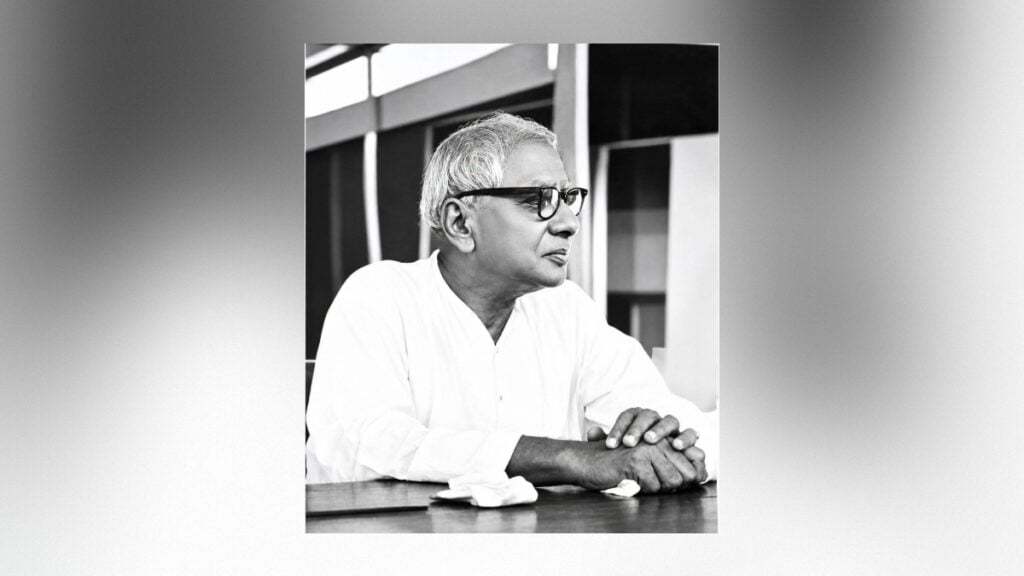
Some individuals leave behind more than personal achievements. Through their dedication, sacrifice and compassion, they illuminate the lives of countless people and inspire generations to come. Philanthropist Ranada Prasad Saha was one such remarkable figure. His life, shaped by struggle, determination, patriotism and an unwavering commitment to humanity, remains an enduring source of inspiration in Bangladesh.
Born on 15 November 1896 in Kachur village of Savar, near Dhaka, at his maternal grandparents’ home, Ranada Prasad Saha came from an ordinary family. His father was Devendranath Saha Poddar, while his mother was Kumudini Devi. His ancestral home was in Mirzapur, Tangail.
His early life was marked by hardship and personal tragedy. He lost his mother when he was just seven years old. She died from tetanus during childbirth, reportedly because of inadequate medical treatment. The experience left a profound impression on the young boy and may have shaped his later determination to make healthcare accessible to people who could not afford it.
His opportunities for formal education were also limited. He studied up to Class Four at a school in Mirzapur before financial circumstances forced him to leave education and seek work. In his early years, he undertook various forms of manual labour, including working as a porter, simply to make ends meet.
During the First World War, he joined the British Indian Army. His courage and service during the conflict earned him the distinction of the ‘Sword of Honour’. After the war, he turned towards business. Through perseverance, honesty, practical judgement and exceptional business acumen, he gradually established himself as a successful entrepreneur and industrialist.
Yet his greatest achievement was not the wealth he accumulated. It was his extraordinary decision to dedicate much of his fortune to public welfare. For Saha, wealth was never merely a means of personal comfort or luxury. He regarded it as a responsibility and an opportunity to improve the lives of others.
This philosophy became the driving force behind his extensive contributions to healthcare, education and social development.
In 1938, he established the Kumudini Dispensary in Mirzapur, named after his mother. The initiative later developed into the full-fledged Kumudini Hospital in 1944. The 750-bed institution became a significant healthcare facility, providing free medical services to poor and disadvantaged patients.
His commitment extended beyond medical consultations. Arrangements were made to provide patients in need with medicines, food and other essential support without charge. His initiative reflected a deeply personal understanding of the difficulties faced by families who were unable to afford treatment. Having lost his mother in circumstances associated with inadequate medical care, he sought to ensure that poverty would not prevent others from receiving essential healthcare.
His contribution to women’s education was equally remarkable. At a time when opportunities for girls to pursue higher education remained limited, he recognised education as a powerful means of empowerment and social progress.
In 1942, he established Bharateswari Vidyapith, which subsequently became widely known as Bharateswari Homes. The residential educational institution was designed to promote girls’ education, independence, discipline and personal development. His vision went beyond providing academic instruction. He wanted young women to develop confidence, responsibility and the ability to become self-reliant members of society.
Saha also made significant contributions to higher education. In memory of his father, he established Debendra College in Manikganj. He played a direct role in setting up Kumudini College in Tangail and supported the development of other educational institutions.
His philanthropic vision eventually took a more organised institutional form. In June 1947, he established the Kumudini Welfare Trust of Bengal. Through this initiative, he brought his wealth and charitable institutions under a structured framework dedicated to public service.
The establishment of the trust was particularly significant because it reflected his desire to create a lasting system of philanthropy. Rather than limiting his contribution to individual acts of charity, he sought to build institutions that would continue serving people even after his death.
This was one of the defining features of his legacy. He did not simply offer assistance to those in need; he created permanent institutions through which healthcare, education and other essential services could reach successive generations.
His approach to humanity was also notably inclusive. He believed that service should transcend distinctions of religion, ethnicity, social class and background. To him, the fundamental identity of every individual was that of a human being. His charitable activities reflected this belief, placing human welfare above social divisions.
However, the life of this extraordinary philanthropist ended in tragedy during the Liberation War of Bangladesh in 1971.
On 7 May 1971, Pakistani occupation forces and their local collaborators abducted Ranada Prasad Saha along with his son, Bhawani Prasad Saha. Neither was ever seen again. Their remains were never recovered, and their ultimate fate remained unknown.
The abduction of Saha was a devastating loss for the country. A man who had devoted his life and fortune to improving the welfare of others disappeared during one of the darkest chapters in Bangladesh’s history. His disappearance, alongside that of his son, remains an enduring part of the nation’s tragic wartime history.
In recognition of his exceptional contribution to society, the Government of Bangladesh posthumously awarded him the Independence Award in 1978, the country’s highest civilian honour. The recognition acknowledged the lasting significance of his philanthropic work and his contribution to public welfare.
More than five decades after his disappearance, his legacy continues through the institutions he established. Kumudini Hospital remains an important healthcare institution, while Bharateswari Homes continues the educational mission he envisioned. These organisations represent more than physical structures or charitable projects; they embody a philosophy built around service, compassion and responsibility towards society.
Ranada Prasad Saha’s life offers a powerful lesson about the meaning of true greatness. Wealth, social standing and personal success alone do not determine a person’s place in history. What matters more is how those achievements are used, how many lives are improved and what kind of legacy is left for future generations.
He accumulated considerable wealth through hard work and enterprise, but he did not regard it as something to be enjoyed solely for himself. Instead, he channelled his resources into institutions that addressed some of society’s most pressing needs, particularly healthcare and education.
His story is also a reminder that meaningful social change requires more than good intentions. It demands commitment, planning and institutions capable of sustaining public service over time. Through his work, Saha demonstrated how personal success could be transformed into a lasting force for collective progress.
Although he is no longer among us, the institutions he established continue to serve people. His name remains closely associated with generosity, social responsibility and an exceptional commitment to humanity.
People like Ranada Prasad Saha are rare. He was not merely a wealthy philanthropist but a symbol of compassion and selfless service, whose contributions occupy a distinguished place in the history of Bengal and Bangladesh.
Date of birth: 15 November 1896
Date of disappearance: 7 May 1971
On the occasion of his birth anniversary, we pay our deepest respect to the memory of Ranada Prasad Saha, a man whose greatest fortune was not the wealth he possessed, but the countless lives he sought to improve.