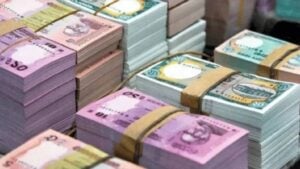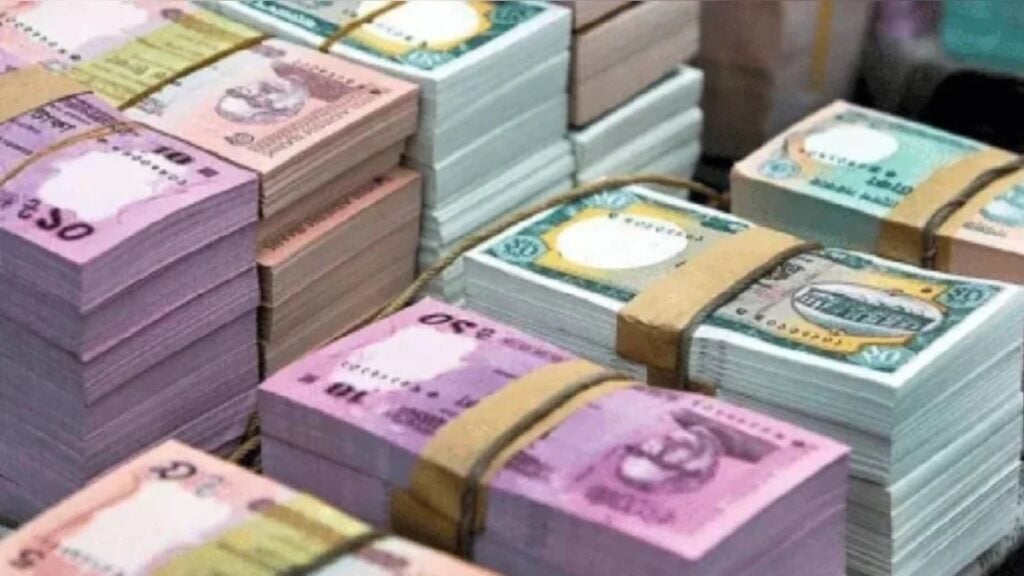
The new notes have already been printed and are expected to be delivered to Bangladesh Bank within the coming week. Once received, the central bank will distribute them through commercial banks for circulation among the public.
The move comes as consumers and businesses continue to face difficulties obtaining fresh, usable notes, particularly lower denominations widely used for everyday purchases, transport fares and small transactions.
However, Tk100 notes will not be issued in a new design for now. They will continue to be printed and circulated in their existing design, according to Bangladesh Bank spokesperson Arif Hossain Khan.
A central bank official said the authorities had initially planned to release the redesigned notes this week. The plan was delayed because security arrangements for transporting the currency could not be ensured amid garment workers’ protests in Gazipur.
Arif Hossain Khan, an executive director and spokesperson for Bangladesh Bank, said printing of the Tk20 and Tk50 notes had been completed.
“The printing of the Tk20 and Tk50 notes is finished. The printing facility is expected to send them to Bangladesh Bank within next week. They will then be distributed through banks,” he said.
He added that the release would begin once the necessary security arrangements, transportation and other formalities had been completed.
Digital transactions encouraged to reduce cash demand
Bangladesh Bank is also encouraging the use of digital payment systems to reduce reliance on physical cash, particularly for small-value transactions.
The central bank is promoting Bangla QR, a QR-code-based payment system designed to facilitate digital transactions across participating financial institutions and payment services.
According to Arif Hossain Khan, greater use of digital payments could reduce demand for small-denomination notes, ease pressure on cash management and help curb irregularities and corruption associated with cash transactions.
The initiative is part of broader efforts to expand digital financial services and make payments more convenient for consumers and businesses. However, cash remains essential for many transactions, particularly in retail markets and areas where digital payment facilities are less widely used.
Who is responsible for printing Bangladesh’s currency?
Bangladesh Bank is responsible for printing the country’s banknotes, including denominations of Tk10, Tk20, Tk50, Tk100, Tk200, Tk500 and Tk1,000. These notes carry the signature of the central bank’s governor.
Tk1, Tk2 and Tk5 notes, meanwhile, are classified as government notes and bear the signature of the finance secretary. Metal coins are also part of the country’s currency system.
Although the two categories have different institutional classifications and signatories, both are printed through Bangladesh Bank.
According to central bank data, the country’s reserve money stood at slightly more than Tk476,000 crore in June. Of this amount, approximately Tk336,000 crore was held by the public, while the remainder was kept within the banking system.
Under the Bangladesh Bank Order, the central bank has the authority to issue currency. Bangladesh Bank sources also say that approval from the Prime Minister is required for the design of banknotes.
Why printing new notes takes months
Producing banknotes involves a lengthy process that begins with procuring specialised materials. At the start of the year, international tenders are generally invited from interested suppliers for the purchase of materials required for currency production.
These include security paper, specialised intaglio ink, security threads and various chemicals used in printing and authentication. Most of these materials are imported, making the process dependent on international suppliers, procurement procedures and delivery schedules.
Eight companies from France, the United Kingdom, Germany, Switzerland, the Netherlands, Spain, Italy and Indonesia are currently listed as suppliers of materials to Bangladesh Bank.
Even after the raw materials arrive in Bangladesh, printing the notes takes around three months, according to central bank sources. The limited production capacity of the Security Printing Corporation (Bangladesh) Limited, commonly known as the country’s currency printing facility, is one of the reasons behind the lengthy process.
Why old and damaged notes remain in circulation
The shortage of fresh banknotes began following the fall of the Awami League government on 5 August 2024. Printing of notes featuring the previous designs was halted, while Bangladesh Bank also stopped releasing its remaining stock of those notes into circulation.
The introduction of new designs required considerable time for development, approval and printing. As a result, the supply of currency fell short of demand, creating shortages that have continued in the market.
Although new notes have gradually been introduced, their availability remains inadequate compared with public demand. Consequently, worn-out and damaged notes continue to circulate, particularly in lower denominations that are frequently used in daily transactions.
The planned introduction of redesigned Tk20 and Tk50 notes is expected to provide some relief. However, restoring a steady supply of usable currency will also depend on the central bank’s ability to increase production, distribute notes efficiently and replace damaged money already circulating in the economy.