His ashes were brought from Paris, France, to Guatemala on 12 November 2026. President Bernardo Arévalo received them at the airport in a ceremony attended by senior government officials, diplomats, members of the Asturias family and prominent figures from the cultural community.
The homecoming ended a long period of separation between the celebrated author and his homeland, which had been shaped by political repression, exile and the legacy of Guatemala’s turbulent history.
Exile following political upheaval
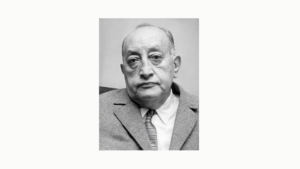
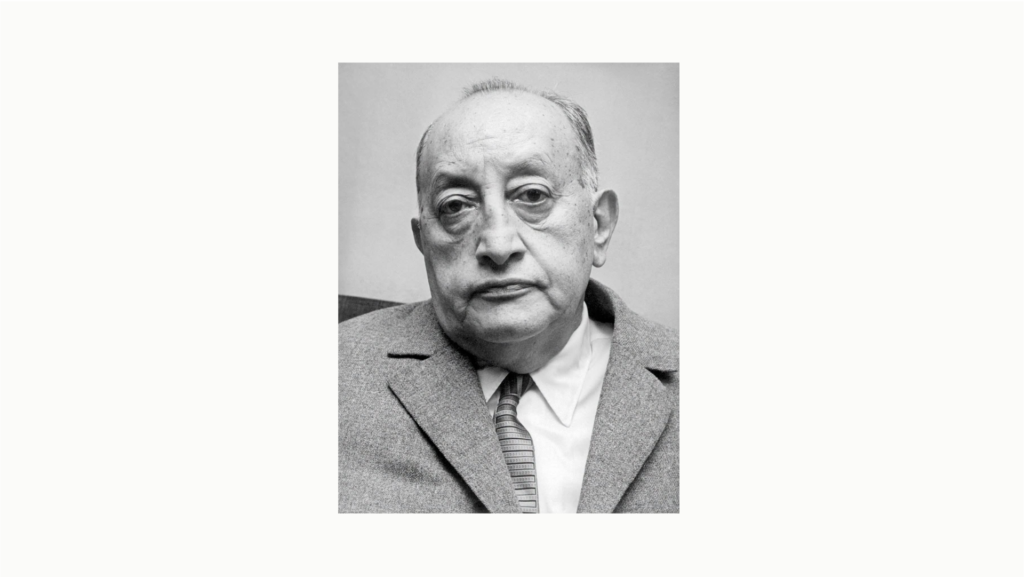
Asturias was born in Guatemala City on 19 October 1899. He was a novelist, poet, journalist, diplomat and humanist whose literary career was closely linked to the country’s political struggles, social inequality and the rights of Indigenous communities.
His life took a dramatic turn following the overthrow of the democratically elected government of President Jacobo Árbenz in 1954, in a coup backed by the United States. Asturias, who supported Árbenz, fell out of favour with the new political authorities. His citizenship was revoked, forcing him into exile.
He subsequently spent much of his life in Europe, particularly France, where he continued to write and develop his literary work. His experience of political persecution and displacement profoundly influenced his writing, which frequently explored authoritarianism, injustice, oppression and the struggle for human dignity.
The forced separation from Guatemala became one of the defining experiences of his life, although his literary and cultural connection with the country remained strong throughout his years abroad.
A literary legacy that crossed borders
Asturias was among the most influential literary figures in Latin America. His writing drew extensively on Maya civilisation, Indigenous traditions, mythology, folklore and the social realities of the region, blending these influences with powerful literary techniques to portray the lives and struggles of ordinary people.
His major works include El Señor Presidente (The President), Hombres de maíz (Men of Maize), Leyendas de Guatemala (Legends of Guatemala) and Mulata de tal. Through these works, he explored the abuses of power, the consequences of dictatorship, cultural identity and the enduring importance of Indigenous heritage.
His novel El Señor Presidente is particularly renowned for its portrayal of authoritarian rule and the atmosphere of fear, corruption and oppression created by dictatorship. His writing gave literary expression to realities that many people in Latin America experienced under repressive political systems.
In 1967, Asturias received the Nobel Prize in Literature, becoming the first Nobel-winning literary figure from Central America. The award recognised the artistic significance of his work and its powerful representation of Indigenous traditions, national identity and the human struggle against oppression.
His international recognition established him as a major voice in world literature, while his writings continued to shape discussions about Guatemala’s history, culture and political experience.
A life that ended far from home
Asturias died of cancer in Madrid, Spain, on 9 June 1974, aged 74. Following his death, he was buried at the Père-Lachaise Cemetery in Paris, where his remains stayed for more than five decades.
The decision to return his ashes to Guatemala was made with the agreement of his family and the initiative of the Guatemalan government. His son, Miguel Ángel Asturias Amado, and other relatives were involved in the historic repatriation.
The return was not merely a ceremonial gesture. It represented a symbolic reconciliation between the writer and the country that had once forced him into exile.
Final resting place at a cultural landmark
On Sunday, 15 November 2026, Asturias’s ashes were laid to rest at a special memorial within the Miguel Ángel Asturias Cultural Centre in Guatemala City. President Bernardo Arévalo and Vice-President Karin Herrera attended the ceremony, alongside family members, officials and representatives of the cultural community.
The memorial incorporates elements inspired by Maya cultural heritage and symbols associated with Asturias’s literary works. Soil from different parts of Guatemala, places connected with his life and cultural identity, was also included in the memorial.
President Arévalo described the author’s return as an act of historical justice, underscoring the significance of bringing a national literary figure back to the country that had once rejected him.
The repatriation carries a message beyond the return of human remains. It reflects Guatemala’s recognition of a writer whose work documented the struggles of its people, challenged oppressive power and celebrated the country’s cultural heritage.
More than half a century after his death, Asturias has finally returned to his homeland. The country that once stripped him of citizenship and drove him into exile has now honoured him with a state reception and a permanent resting place at a cultural institution bearing his name.
His life stands as a reminder that political persecution can force writers into exile, deprive them of citizenship and separate them from their homeland. Yet it cannot erase the influence of their ideas or the place their work occupies in history.
Asturias’s ashes now rest in Guatemala, but his literary legacy has long transcended national borders. His novels, poetry and political reflections continue to speak to readers about freedom, identity, injustice and the enduring power of culture.
His return after 52 years is therefore not simply the homecoming of a Nobel laureate. It is a symbolic recognition of a writer whose contribution to literature and humanity outlived the political forces that once sought to marginalise him.