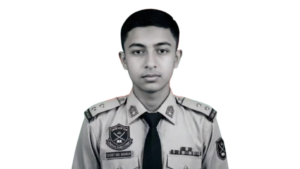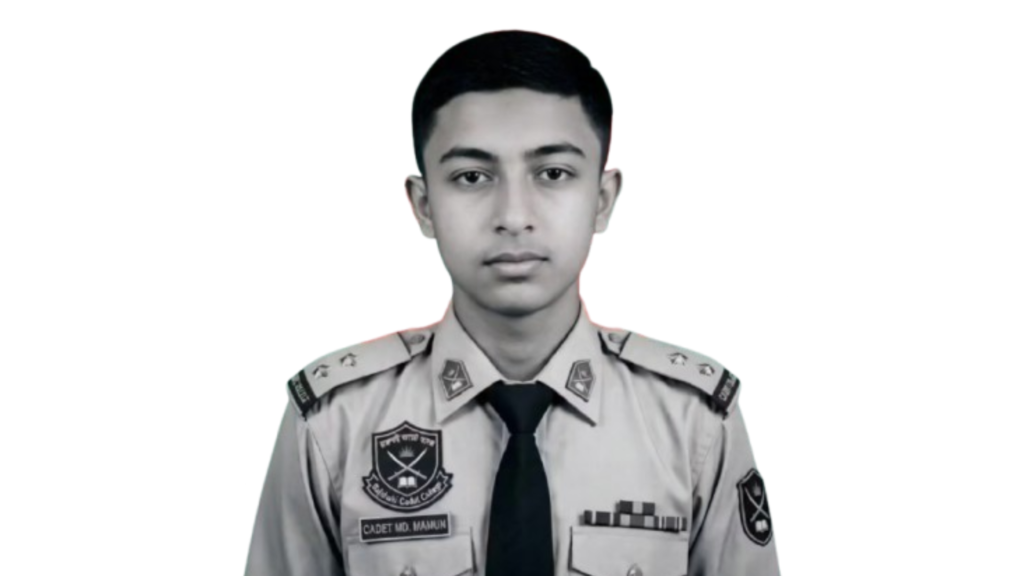
At just 15, Abdullah Al Mamun became one of the youngest known freedom fighters from Naogaon to make the ultimate sacrifice during Bangladesh’s Liberation War in 1971. His brief life, shaped by education, courage and an unwavering commitment to the country’s independence, remains part of the wartime history of Naogaon.
Mamun, as he was known to his family and friends, was born on 1 July 1956 in Ramkura village of Niamatpur upazila in Naogaon. His father, Nazrul Islam, was a physician, and he grew up in an educated and relatively prosperous family.
From an early age, Mamun was regarded as bright and energetic. He received his primary education at Naogaon PTI School before continuing his studies at the historic Government K.D. High School. By 1971, he was a Class IX student at Rajshahi Cadet College. He was also particularly proficient in English.
The outbreak of the Liberation War abruptly changed the course of his adolescence. Instead of remaining away from the conflict because of his young age, Mamun became involved in the resistance movement.
Together with his elder brother Mujahid, he received initial military preparation and training at the then East Pakistan Rifles camp in Naogaon. In mid-June 1971, he travelled to Haflong in Assam, India, where he joined the Mujib Bahini and underwent further military training.
After completing the training, Mamun returned to Bangladesh towards the end of July. Back home, a group of around 10 to 11 freedom fighters was formed. The group worked in different unions and villages of Manda upazila, helping organise preparations and training for the Liberation War. Despite being one of the youngest members, Mamun served as the group’s deputy leader.
His age did not prevent him from taking responsibility. According to accounts of his wartime activities, his courage and leadership earned him the trust of his fellow fighters.
August 1971 brought increasingly intense fighting across the region. Mamun took part in an operation against members of the Peace Committee in the Kalikapur area of Manda upazila. On 26 August, during a grenade attack in Kalikapur, he was captured by opposing forces.
After his capture, he was subjected to severe physical torture by Pakistani forces and their local collaborators. The teenager, who had only recently been a school student, endured the brutality of the war before being killed the following day.
Abdullah Al Mamun was martyred on 27 August 1971, at the age of only 15.
His death became part of the wider story of the young people who became involved in Bangladesh’s struggle for independence. The Liberation War drew participation from people of different ages and backgrounds, including students and teenagers who abandoned the relative safety of ordinary life to join the resistance.
Mamun’s memory has subsequently been preserved through several institutions and landmarks in Naogaon. In 1973, Ghotgari Shaheed Mamun High School and College was established in Manda in remembrance of the young freedom fighter. The place where he was captured was later named Mamun Bazar.
A road stretching from Taj Cinema intersection to the Border Guard Bangladesh camp in Naogaon municipality was also named Shaheed Mamun Road. The municipal market was named Shaheed Mamun Market.
These names serve as reminders of the local history of the Liberation War and the sacrifices made by individuals whose lives were cut short during the struggle for independence.
Had Mamun survived, he would have turned 70 in 2026. Instead, his life remains permanently associated with the age of 15—the age at which his future was taken away by the war.
His story is also a reminder of the personal cost of the Liberation War. A teenager who could have spent his youth studying, building a career and planning a future chose instead to take part in the struggle for an independent Bangladesh.
On 27 August, the anniversary of his martyrdom, Abdullah Al Mamun is remembered as a young freedom fighter whose life ended before adulthood but whose sacrifice became part of the history of Bangladesh’s independence.
His age stopped at 15. His place in the nation’s wartime history did not.