Australia and Papua New Guinea have announced that a long-anticipated mutual defence treaty will not be signed as expected on Wednesday, signalling a postponement in formalising their security cooperation.
The treaty was intended to commit both nations to defending one another against armed attacks in light of “emerging threats” to their security, according to a copy of the draft agreement seen by AFP.
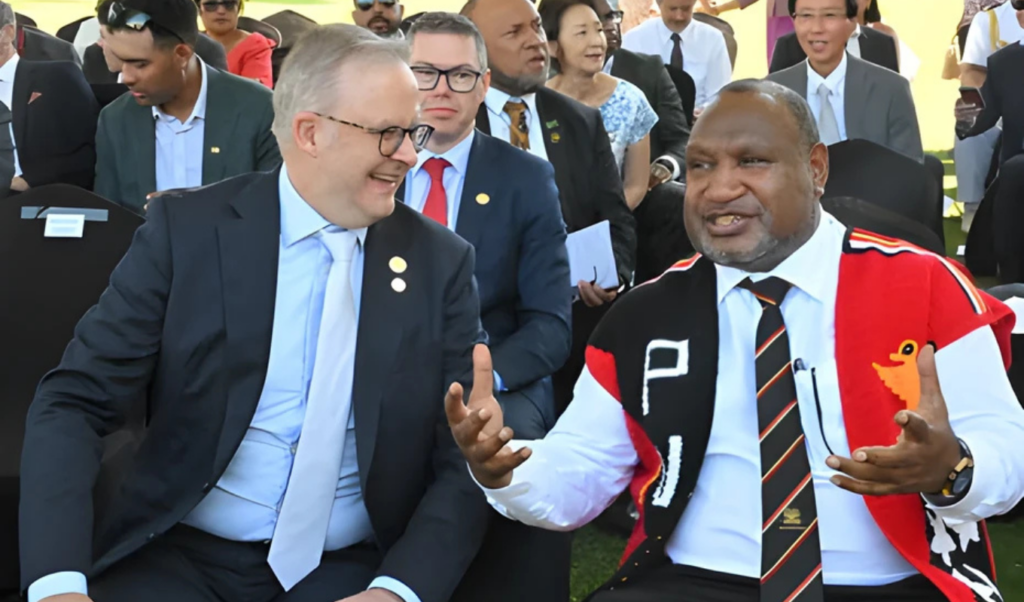
The agreement was expected to be signed in Port Moresby by Australian Prime Minister Anthony Albanese and Papua New Guinean Prime Minister James Marape on Wednesday.
Instead, both governments stated that the signing would occur “following Cabinet processes in both countries”, without providing detailed reasons for the delay.
- Albanese had previously indicated that approval by the Papua New Guinean Cabinet, initially scheduled for Monday, had been postponed due to the country’s independence celebrations.
The joint communique outlined several key features of the agreement:
- Enhanced Defence Cooperation
- Focus on capability, interoperability, and integration of military forces.
- Third-Party Safeguards
- Any agreements or arrangements with other nations must not compromise either party’s ability to implement the treaty, addressing concerns over China’s growing influence in the Pacific.
- Military Exchange Rights
- Citizens of each country will be permitted to serve in each other’s armed forces.
The treaty is being finalised 50 years after Papua New Guinea gained independence from Australia.
Regional Context and Strategic Interests
- Canberra has intensified its engagement across the Pacific region to counter Beijing’s expanding influence.
- Last week, Albanese visited Vanuatu to discuss a bilateral agreement aimed at deepening ties.
- The Vanuatu deal was not signed, with Prime Minister Jotham Napat citing concerns that its wording could restrict Vanuatu’s ability to access critical infrastructure funding from other countries.
Mutual Defence Treaty
| Aspect | Details | Notes |
| Signatories | Australia & Papua New Guinea | Expected: Albanese & Marape |
| Original Signing Date | Wednesday | Postponed due to Cabinet approvals & independence celebrations |
| Defence Cooperation | Capability, interoperability, integration | Strengthening bilateral military ties |
| Third-Party Safeguards | Treaty implementation cannot be compromised | Addresses concerns about China |
| Military Exchange | Citizens may serve in each other’s militaries | Enhances personnel collaboration |
| Historical Context | 50 years after PNG independence | Symbolic reinforcement of ties |
The treaty is seen as a strategic step to bolster Pacific security and maintain regional balance amid increasing geopolitical competition.