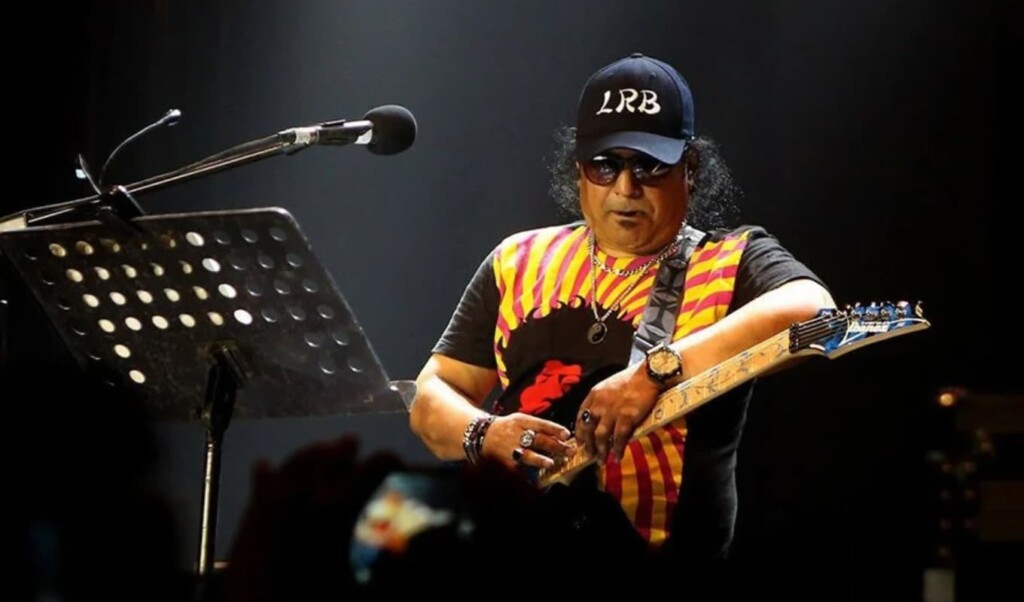
The world of Bangladeshi music lost one of its most celebrated icons on 18 October 2018, yet the powerful resonance of his silver guitar continues to echo across generations. Born on 16 August 1962 in Chattogram, Ayub Bachchu transformed the landscape of Bengali popular music, leaving behind a legacy that fundamentally reshaped the nation’s rock culture.
Raised in a culturally vibrant environment in Chattogram, Bachchu’s fascination with music began in his early adolescence. Self-taught and intensely passionate, he picked up the electric guitar—an instrument that would later become synonymous with his identity. His early professional journey saw him joining the legendary band Souls as a lead guitarist and vocalist. His talent quickly became evident, but his ambitious creative vision sought a distinct path. In 1991, Bachchu took a historic step by founding Love Runs Blind, universally known as LRB. Under his leadership as the frontman, lead guitarist, lyricist, and composer, LRB evolved into a pioneering force, introducing Bangladesh to hard rock, blues, and melodic rock fusion.
Bachchu was far more than an entertainer; he was an innovator who popularised the electric guitar across Bengal. His intricate solos, expressive vocals, and commanding stage presence captivated millions. Beyond band albums, he composed numerous acclaimed tracks for Bangladeshi cinema and solo projects, exploring themes of urban loneliness, heartbreak, existential struggle, and romance. Classics such as ‘Cholo Bodle Jai’, ‘Sei Tumi’, ‘Hashte Dekho Gaishte Dekho’, and ‘Rupali Guitar’ became timeless anthems for the youth.
On 16 October 2018, Bachchu delivered his final live performance at the Rangpur Zilla School grounds, unaware it would be his farewell to the stage. Just two days later, on 18 October 2018, he suffered a fatal cardiac arrest at his Dhaka residence at the age of 56. His sudden passing sent shockwaves through the nation. Ironically, his own poignant lyrics—“One day I will leave far away, leaving behind this silver guitar”—came to pass. Though the maestro has departed, his music remains immortal in the heart of Bengali culture.