Bangladesh Bank has decided to maintain its benchmark policy rate at 9.50 per cent for the October–December quarter of 2026, citing significant underlying risks to headline inflation despite recent moderation.
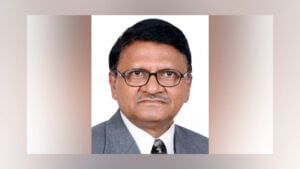
Announcing the quarterly monetary policy statement at the central bank’s headquarters on Wednesday, Deputy Governor Dr Habibur Rahman confirmed that the Monetary Policy Committee (MPC) opted for a cautious wait-and-see stance during its 14th meeting on 23 September. Consequently, the Standing Lending Facility (SLF) rate remains unchanged at 11.00 per cent, whilst the Standing Deposit Facility (SDF) rate stays at 7.50 per cent.
Inflation Dynamics and Structural Pressures
Although overall inflation dropped from 9.16 per cent in June to a ten-month low of 8.26 per cent in August—primarily driven by a sharp decline in food inflation to 7.02 per cent—non-food inflation remains elevated at 9.32 per cent. The central bank highlighted that premature monetary easing could unmoor inflation expectations and delay the convergence towards target levels. Key risks include rising global energy prices, potential supply disruptions in the Strait of Hormuz, upward adjustments in domestic administered fuel tariffs, and the impending cost implications of a national pay scale implementation.
Sluggish Growth and Industrial Contraction
The macroeconomic backdrop remains constrained. Real GDP growth for the 2025–26 fiscal year was estimated at 4.14 per cent, but third-quarter growth slowed sharply to 2.20 per cent, alongside a 0.28 per cent contraction in industrial production. High borrowing costs, power shortages, infrastructure bottlenecks, and persistent domestic and foreign demand uncertainty continue to weigh on economic momentum.
To counter this deceleration, Bangladesh Bank outlined a series of financial support initiatives totaling Tk 60,000 crore, including a Tk 20,000 crore allocation targeted at reopening closed industrial units alongside refinancing schemes for agriculture, cottage, micro, small, and medium enterprises (CMSMEs), and export diversification. However, central bank officials stressed that monetary tools alone cannot resolve supply-side bottlenecks without complementary structural reforms.
Banking Sector Fragility and Private Sector Credit
Despite a 50-basis-point reduction in the policy rate implemented on 2 August, which lowered interbank rates and government security yields, private sector credit demand remains depressed. Credit growth to the private sector stood at a subdued 4.75 per cent in August 2026, constrained by risk aversion among lenders and structural vulnerabilities within the banking industry. Non-performing loans (NPLs) surged to 32.78 per cent of total assets in June 2026, underscoring the urgent need for balance sheet restructuring, capital restoration, and enhanced governance.
External Sector Balance and Economic Outlook
In the external sector, the balance of payments recorded a surplus of $6.6 billion for FY2025–26. However, the first two months of FY2026–27 registered a deficit in the overall balance due to pressure on the financial account. Remittance inflows provided a cushion, expanding by 18.90 per cent and helping to stabilise exchange rates against imported price shocks.
Looking ahead, multilateral institutions present varying forecasts for Bangladesh’s economic recovery. The World Bank projects GDP growth at 4.60 per cent for FY2026–27, whereas the International Monetary Fund (IMF) recently revised its forecast down to 3.50 per cent from an earlier estimate of 4.30 per cent. Bangladesh Bank reiterated its commitment to data-driven policy adjustments, balancing price stability with targeted credit flows to support sustainable economic recovery.